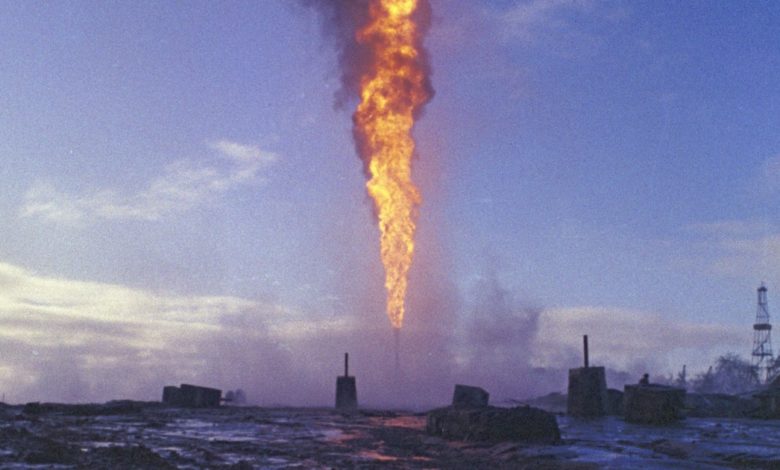
The incident occurred in the small town of Krzywopłoty, located 4.5 km from Karlin in the then province. Koszaliński (today West Pomeranian Voivodeship). Around 17.30 an explosion occurred. A giant fire aroused horror, but ignited hope for an economic revolution.
The oil stream has inflammation. A giant fire. Despite the winter, the surrounding trees bloomed
In the 1970s, Poland, which was part of the Eastern Bloc, desperately sought ways to improve its economic situation. The import of oil, mainly from the USSR through the “Friendship” pipeline, was a huge burden on the state budget. In this context, the search for oil deposits in the country was a priority.
The Daszewo-1 drilling was launched near Karlin. Geologists estimated that the deposit is located at a depth of about 3 thousand. M, but already at 2.8 thousand M drill came across oils and gaswhich surprised the crew.
On December 9, 1980, on a cold winter afternoon, no one noticed methane bubbles in a drilling rinse. “A stream of oil under high pressure flowed out of the drilling opening, which was inflammation. The cause of the eruption was the leakage of the anti -balance head, which was not detected by the drilling crew” – reports Szczecin service24. The ignition, caused by a spark from the pump engine, transformed the drilling into a giant burner. The flame temperature reached 900–1000 degrees Celsius, and the glow was visible from a distance of several kilometers.
The fire that broke out in Karlino was unprecedented on a European scale. Poland did not have experience in extinguishing this type of disaster, and local fire brigades from Karlin, who arrived in place within half an hour, were helpless in the face of the outer scale.
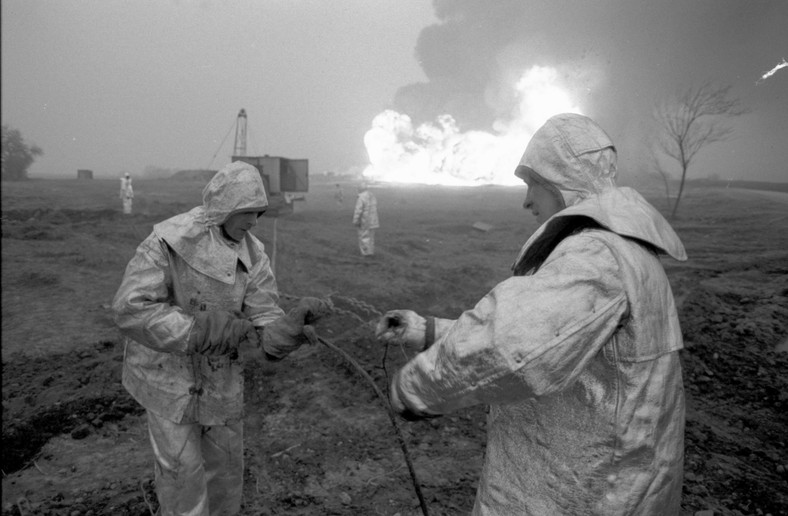
Daszewo drilling fire 1. Action of extinguishing (photo from 1980)
Firefighters from Karlino arrived before 18. The road was closed towards Koszalin and the inhabitants of a nearby farm were evacuated. Soon, more units from Kołobrzeg, Koszalin, Szczecinek and Świdwin, as well as the army, specialists from the AGH University of Science and Technology in Krakow and rescuers from the USSR and Hungary joined the action.
The firefighting action, called the code name “Karlino 80” lasted 32 days and engaged about a thousand people. Firefighters had to struggle not only with flames, but also with difficult conditions -the ambient temperature was -15 degrees C. By the way, an interesting phenomenon occurred. Under the influence of hot, as Newsweek history reminds, “all trees and fruit shrubs bloomed in the destroyed Ziółkowski farm.”
Euphoria did not last long. It was supposed to be different
The key problem was damage to the preventist, i.e. the anti -balance head, which was to prevent uncontrolled outflow of oil. The deposit was found at a height of 200 m higher than originally assumed. The damaged preventist blocked access to the shaft, so the decision was made to destroy it with … artillery. Initially, attempts were made to use 85 mm and 122 mm caliber cannons, but the 152mm gun turned out to be effective, which launched 18 anti -shells.
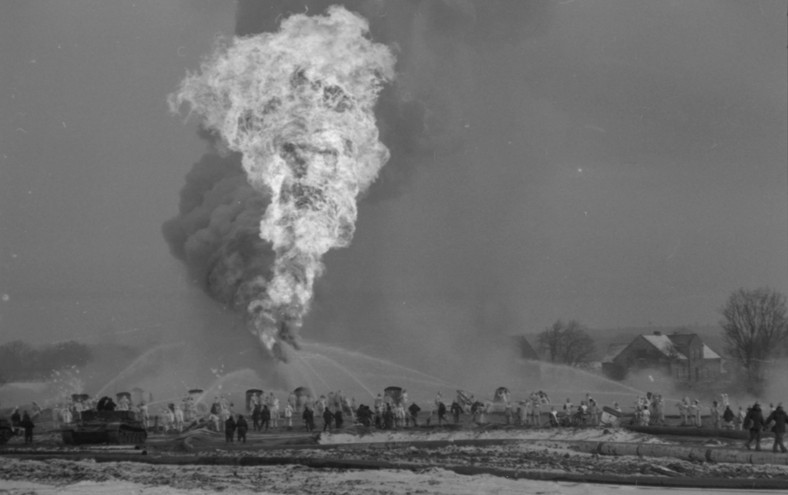
Firefighting action in Karlino
On January 8, 1981, an attempt to extinguish with water plots and AGWT fireplaces, built on the basis of jet engines from MIG-17 fighters, was carried out. After extinguishing the flames, the oil continued to flow under pressure, which threatened to contaminate the environment, so it was decided to set on arson the deposit again. Finally, on January 10, 1981, at 16.30, a new, 11-ton preventist imported from Romania was established, which allowed to master the situation.
A fire in Karlino, although tragic (about 30,000 tons of oil and 50 million cubic gas burned down, caused great hopes in Poles. It began to be said that Poland would become the second Kuwait. Live broadcasts from the scene were conducted by radio and television, which at that time was a sensation.
In the era of crisis, gasoline and foreign debt cards, Poland's vision as kerosene power was like a dream about salvation. There were even rumors about the plot – it was said that the fire was caused by western subversives or that the USSR wanted to take over the deposit for themselves.
Euphoric moods did not last long. Already on January 16, 1981, the first train with 17 tanks set off from Karlin, carrying 780 tons of oil to the refinery in Trzebinia. However, it turned out that the deposit is much smaller than assumed, and medium quality oil, with 0.58 percent. sulfur content. In total, only 248,000 were extracted tons of oilof which 143 thousand tonnes thanks to the insertion of gas to rebuild the complex pressure. In 1983, the operation of small ones compared to the widespread expectations of the deposits.
After extinguishing the fire and the end of exploitation, the Karlino deposit returned to their everyday life. The prosecutor's investigation into the causes of the eruption was quickly discontinued because there were no fatalities and the accident was considered difficult to predict. The costs of firefighting, estimated at PLN 300 million at that time, covered the State Treasury.
Despite the disappointment, however, Karlino gained some fame and from time to time the history of events from the turn of 1980 and 1981 is reminded in the media. In 2010, an exhibition dedicated to these events was opened at the Museum of the Karlin region. You could see on it, among others Oil from the first bucket extracted from the Daszewo-1 shaft.
In the second half of July, information appeared that significant oil and gas resources were discovered near Świnoujście. If Central European Petroleum (CEP) information with at least 22 million tons of minible resources near Świnoujście will be confirmed, then It will be the biggest discovery of the oil deposit in Poland at least from World War II.
In the opinion of Galos, the so -called First oil we can wait for the fastest after 3-4 years, and the investment could increase the annual oil production in Poland to a minimum of 2 million tons. He added that the extraction of the deposit would allow to secure about 4-5 percent. The needs of the Polish economy for oil for several years.