German car manufacturers hoped that several months of lobbying pressure would provide them with additional reliefs in the trade agreement between the EU and the USA. As the dust falls after signing the agreement, they begin to change the course.
The industry strongly pressed the introduction of the export compensation system, under which American import duties would be compensated by models produced in the USA and exported abroad. Another idea that recently appeared in Volkswagen was the reduction of customs duties to the size of investments in the USA.
Hopes for the implementation of these ideas, however, quickly blur.
“In fact, all that was achieved as part of a global agreement,” said Ola Källenius, general director of Mercedes-Benz this week, during a conversation with investors. He added that it is “very uncertain” whether it will be possible to introduce changes to specific sectors or companies.
A commercial agreement, which is still finalized, reduces the duties from 1 August to cars and car parts from the USA with 25 percent. to the basic rate of 15 percent However, not everyone gives up so easily. The CEO of BMW Oliver Zipse is one of the main supporters of the Export Compensation Program – the German manufacturer has numerous factories in South Carolina. He still hopes for talks between the United States and Germany, although only the European Commission can negotiate trade agreements on behalf of the EU.
– It doesn't have to be part of a larger package. This can also be done directly between two countries – he said on Thursday during a conversation with the media. Later, in an interview with investors, he added that the company would continue to press the introduction of the compensation program.
Estimation of damage
Over the past two weeks, all European car manufacturers have published their six -month financial results, which ensured the first insight into the effects of the customs war started in April by Donald Trump. Data clearly show that None of them came out unscathed.
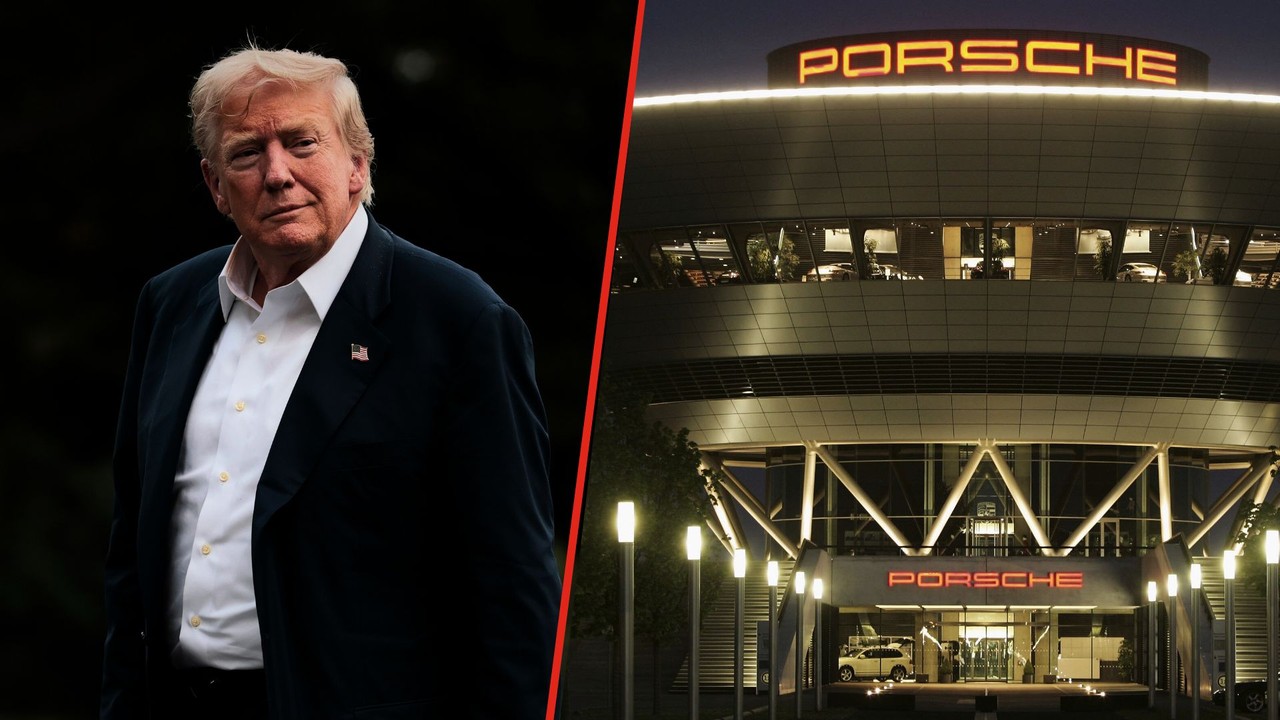
Porsche, which exports all cars sold in the United States with the EU, announced that customs cost it so far 400 million euros (1.7 billion PLN), and The profitability of sales in the first half of the year dropped from 15.7 percent. up to 5.5 percent
The French-Italian-American car manufacturer Stellantis has lost $ 300 million so far. (PLN 1.1 billion). He informed investors that he expected taxes to cost a company $ 1.5 billion throughout the year. (PLN 5.5 billion).
Car manufacturers warn that the losses will persist, because they still have 15 % duties, and they are threatened with rates of 25 percent. for vehicles and parts produced in Mexico and Canada. Lower duties on the EU and Japan cars in a separate contract aroused the anger of the American automotive lobby. It claims that, through higher customs rates imposed on countries in North America, domestic companies now pay more than their foreign competitors.
Continued article under video material
European car manufacturers also hope that the duty in the amount of 25 percent. Still applicable in Mexico, it will be modified. However, Trump has no signs to intend to do it. On Thursday evening he announced an extension of the 25 % rate. Customs by 90 days.
However, it is not everything. In the final agreement, the issue of cooperation between the EU and the USA in the field of car standards should also be refined to help American car manufacturers sell them in Europe.
The high -ranking official of the European Commission claims that the agreement contains “a commitment to cooperate in order to determine in which areas of the norm are already harmonized, and in which closer cooperation should be undertaken to harmonize them in the future.”
ZIPSE from BMW mentioned the need to strive for greater standardization between the two sides. “We would like to appeal to both sides for further work on the opening of the markets, as well as on closer technology regulations,” he said in the press.
Transfer of employees
As part of the EU agreement, she agreed to bear a fee of 10 percent. for cars imported from the United States.
Although this is good news for automotive companies exporting EU vehicles, Ferdinand Dudenhoeffer, director of the German automotive research center, he warned that the costs would be borne by employees. He estimates that by transferring production to the United States to avoid duties It may disappear up to 70 thousand. jobs in car factories and their suppliers.
Customs and related concerns about losing jobs prompted the German Confederation of Trade Unions to convene a automotive summit with the participation of German Chancellor Friedrich Merz.
Also, the EU intends to help the sector who is struggling with problems related to the transition to non -emission cars, growing competition from China, and now also with the tumps imposed by Trump.
In January, a strategic dialogue took place chaired by the chairman of the Ursula Commission von der Leyen. The second session is scheduled for September. During its duration, the presidents of the largest European car and suppliers will present their arguments for activities that can help the sector competitive.
I’m Ashley Davis as an editor, I’m committed to upholding the highest standards of integrity and accuracy in every piece we publish. My work is driven by curiosity, a passion for truth, and a belief that journalism plays a crucial role in shaping public discourse. I strive to tell stories that not only inform but also inspire action and conversation.