The scenario of increased ambitions adopted by the management of the Ministry of the Climate and the Environment indicates Possibility to reduce electricity prices for households by 6 % until 2030, 18 percent until 2035 and 27 percent By 2040, relative to forecasts for 2025. Particularly significant reductions are to apply to industry – 9, 21 and 28 percent, respectively. In turn, for the service sector there are declines at the level of 7, 20 and 29 percent.
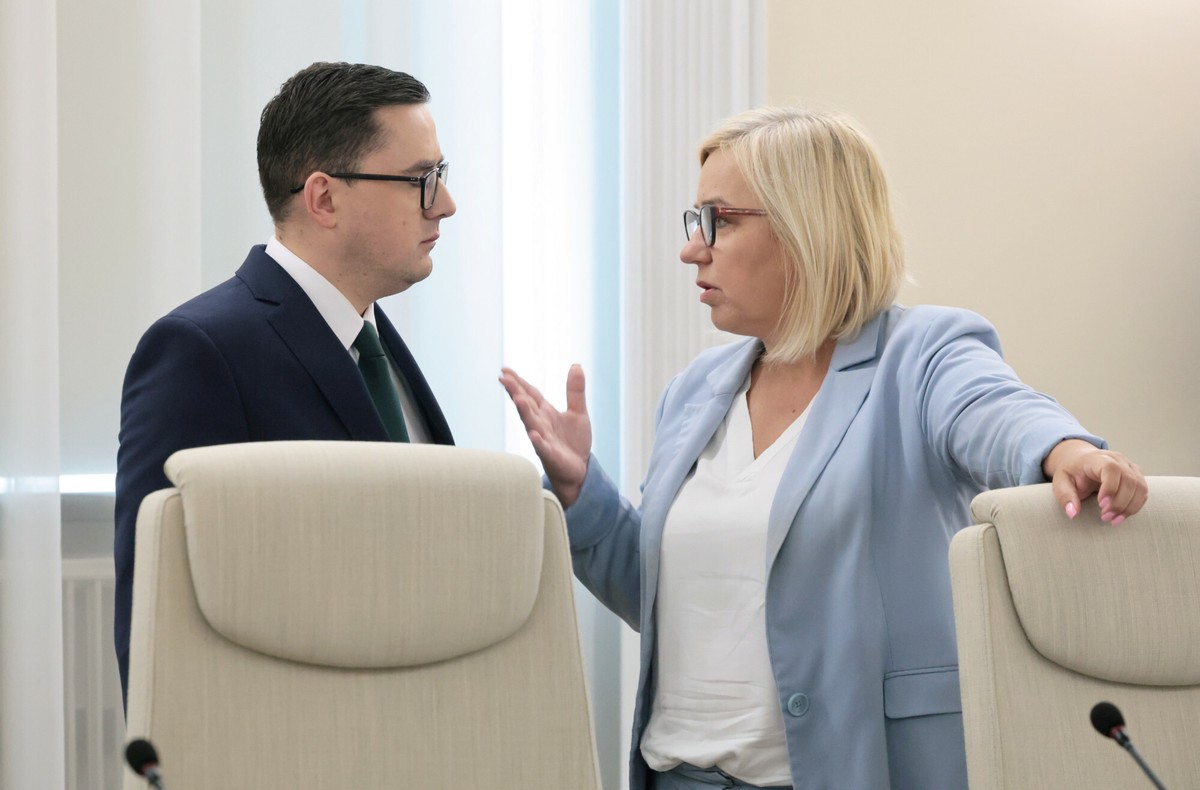
The script also assumes that by 2030 the costs of electricity production will decrease by 11 %, and by 2040 – by 31 percent. As the climate minister Paulina Hennig-Kloska points out, savings will be possible thanks to investments in cheap renewable energy (renewable energy) technologies and a significant reduction in carbon dioxide emissions, which by 2040 are to reduce 54 percent. In addition, the drop in emission will reduce the costs resulting from the EU ETS system.
Read also: Negotiations of the new EU budget are starting. Poland may lose billions [WYWIAD]
Investments and sources of financing
Energy transformation until 2030 is to absorb OK. PLN 1.1 trillwhich translates into average annual expenses of PLN 216 billion. The lion's share of funds will be allocated to the development of new production capacity, modernization of energy networks and thermo -modernization activities. About PLN 350 billion is to come from European funds, including PLN 115 billion from the National Reconstruction Plan (KPO), PLN 25 billion from the Feniks program and PLN 55 billion from the modernization fund.
One of the important sources of financing is also to be funds from the ETS2 ET2 system, which will include sectors of building and transport. Paulina Hennig-Kloska noted, however, that ETS2 may be modified, and in the case of its changes it will be necessary to look for alternative sources of financing.
End of coal in households
The plan of an ambitious scenario predicts that By 2035, coal will no longer be used as the basic source of heating in households. After 2040, the share of hard and brown coal in the entire energy sector is to be marginal, and in importance is to gain biomass and revolving gas, including biomethane.
According to the assumptions presented by the ministry, the import of fossil fuels, including raw materials such as oil or gas, is to be limited by 37 percent. Until 2040, however – as Deputy Minister Zielińska emphasized – “it will be the most difficult to move away from the import of oil, although the double production of biomethane was also foreseen.”
Time for the final version of the plan
Paulina Hennig-Kloska announced that work on KPEiK should be completed in the coming weeks. Although minor corrections are still possible, larger changes would require additional months of work. It is worth recalling that the European Commission has already called the Polish government twice to send an updated plan, the last time in March this year.
The national plan for energy and climate is based on the EU 2018 regulation, which imposes on the Member States the obligation to present a strategy that meets the climate goals of the community. The Polish document, next to the ambitious script (WAM), also contains the base version (WeM), based on current trends.