How much gold and how many riches took the Romans from Dacia. How did the Dacians enrich the Roman Empire

It is said that the Romans left with a huge amount of gold and silver from Dacia after conquering a part of Decebal's kingdom. The historical sources indicate that Traian also found an impressive treasure of the Dacian king. It is certain that after the wars with the Dacians, the Romans filled their vis with.
The Dacian gold and the treasures of King Decebal are a motive of the stories related to the well-roman Daco-Roman wars in the collective mind of Romanians, especially in the contemporary era. It is said that after the conquest of Dacia, Trajan's troops went to Rome with 160 tons of gold, 300 tons of silver, herds of cattle, weapons and around 500,000 prisoners (according to Lydus's writings). For many specialists the figures are exaggerated, especially the number of prisoners. At the same time, the ancient sources, but also the economic realities of the Empire indicate that Rome has enriched the Daco-Roman wars. How much gold did they actually take. The Romans from the Dacians and how rich were the latter? Here are some questions that are still looking for their answer.
What the ancient authors say about the Dacian treasures
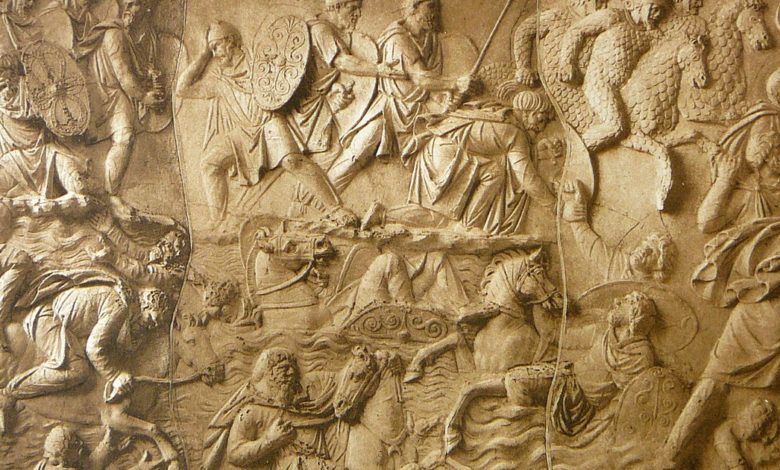
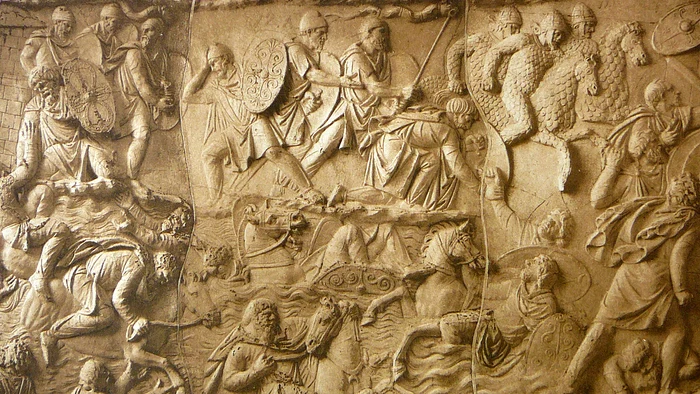
About the prey taken by Romanians from Dacia after the wars of 101-102 AD and 105-106 AD wrote the Byzantine historian Ioannes Laurentius Lydus in “by Magistratibus Reipublicae Romanae”, in the 6th century AD. More than four centuries after these warnings, Lydus is based on the information provided by the Greek Criton environment in Heraclea, contemporary with events, participating in the Dacia campaign. He wrote that the Romans took from Dacia over 1,650 tons of gold and 3,310 tons of silver. To all these, Criton said, a large amount of luxury objects, highly appreciated in antiquity, was added. In fact, on Trajan lui Column are representatives of Roman soldiers by carving in the Desagi, large quantities of objects (especially vessels) probably from gold or silver. For his part, Roman historian Dio Cassius spoke of a huge treasure of King Decebal hidden in the Sargetia River, found by Romans because of Bicilis's betrayal.
“Decebal's treasure was also discovered, even though it was well hidden under the Sargetia river, which was flowing near its palace. With the help of prisoners, Decebal diverted the river, dug into the river and in the hole threw a large amount of gold and silver and other objects of great value that could resist a new humidity. prisoners to store clothes and other objects of this kind in a cave.wrote Dio Cassius.
In addition, Traian would have taken over 500,000 men prisoners, Lydus wrote. Experts say that there was not only one Dacian treasure, but more. However, it is not known how many of them were found by the Romanians. “There is certainly not a single Dacian treasure. If we can assume that an amount of prestigious gold coins and objects were in Sarmizegetusa, the capital of Dacia, as well we can assume that the members of the Dacian elite, who were administering the territories of the kingdom from their cities of the mountain, had a small treasure available. “specified the specialist Andrei Pogăciaș, for Historia. Some specialists, like Alexandru Vulpe, said that the figures advanced by Criton and then by Lydus regarding the amount of gold and silver taken from Dacia were exaggerated. “The legend appears in Criton, Trajan's doctor, and we believe that he was an eyewitness. The figures are exaggerated. However, it is a literary” topos “problem. From here the conclusion was drawn that there was a river named Sargetia. But the story with the hiding of the treasure is also encountered in the elinistic era, somewhere in Anatolia, under the river of the Sargentia river. These are common places, taken from one writer to another. To what extent they are true, it is very difficult to say ””specified the reputed specialist for Historia, in 2014.
However, most specialists agree that Romanians have taken a significant prey from Dacia, although the quantity is not really known. “However, on Traian's Column we see people by carving all kinds of objects, silver pocles, etc.”added Alexandru Vulpe, the former director of the “Vasile Pârvan” Institute of Archeology, for the same publication.
The Roman Empire enriched by Prada of Dacia
The fact that the Romans returned with a rich prey from Dacia is also demonstrated by the economic realities of the Empire. Before the Dacian wars, the Roman Empire had passed through a financial crisis. After the war, Rome's Vistere is suddenly filled. In addition, Traian allows for extravagant expenses. It gives bread and circus to the people, but beautifies with extremely expensive monuments the capital of the empire.
“He gave shows for one hundred and twenty -three days, during which about eleven thousand wild and domestic animals were killed. They fought ten thousand gladiators. Also, during this time, Traian builds stone roads through the fungal marshes, with buildings on the edges and bridges. Both to serve as a grave, as well as a proof of greatness of the works in the forum.reported Dio Cassius. In other words, the Dacian treasures would have managed to recover the Roman Empire from a financial point of view. In addition, many jewelry and household or cultural objects taken from Dacia have been sold or offered to rich citizens of Rome. Clothes decorated with gold and silver, maybe even precious stones, taken from the strong settlements of the Dacian nobility, were deposited as an offering to the altar of Zeus in Antioch. We are not talking about the impressive amounts of Dacian jewelry that would have reached the empire.
Where did the Dacian riches come from?
A legitimate question in this story is where the Dacians had so much gold and silver? Although today's territory of Romania is rich in gold deposits, it is hard to believe that the Dacians have obtained gold and silver from mining activity. It was almost impossible for them to have had an industrial capacity so high that it would produce hundreds of tonnes of gold. In addition, as the specialists show, there is so far archaeological evidence of the exploitation of gold through mining, nor indications regarding the existence of galleries, of some Dacian mines. In contrast, regarding the exploitation of gold by the Romans there is sufficient evidence.
“There have not been traces of some Dacian gold exploitation galleries so far. The Roman exploitations are clear and do not raise problems. But did they-did they exploit gold through the galleries? Did they have the necessary technology? Did they only use chisel/Dorn and hammer? Who were the workers? They were, what happened to them? ”says Andrei Pogăciaș in the article “Dacian gold, the magnificent bimilenary obsession” in Historia magazine.
In other words, many questions do not have a clear answer. There is also the variant of the exploitation of the alluvial gold, that is, by separating the gold from stones and sand with the help of the shoe (rectangular tool made of sanded wood, as a sieve, used to choose the gold from the crushed ore). Even under these conditions, it is hard to believe that the Dacians managed to gather impressive quantities through these process. This is why, the most plausible explanation regarding the origin of Dacian gold is to obtain it as a prey of war or as a result of the stipes (protection fee in exchange).
The Dacians have gathered many objects of gold and silver from the prey of war over the centuries. It is known that the Dacian warriors were doing quite frequent raids both in the provinces of the Roman Empire, but also in the territories of the other barbarian populations that were in conflict with them. Especially from the Roman provinces they were loaded with prey made up especially of gold, pots and gold and silver jewelry. Part of gold was melted and used by local craftsmen.
“Our opinion is that the annual harvest – on the mining – had to be much smaller, but that instead the Dacians had gathered since the time of Burebista huge precious metal through conquest wars, especially against the Celts, great lovers of gold and silver, and that through the mercenary office, they were in the mercen. Gold and silver, both in coins and ornaments, starting from the 5th century BC, but especially in the 2nd and 1st centuries. ”supported the academic Vasile Pârvan, in the volume “Getica”. In addition, many assets were gathered by Dacians and trade, especially the one with fur and slaves.
The Romans took their gold back
Last but not least, the Dacian gold also came from the stipes offered by the Romans over time to the Dacian captains. Basically, the Romanians offered them a kind of expensive protective fee, in order not to invade the provinces. After the peace of 89 AD, Emperor Domitian is said to have spent huge amounts to quench the Dacians.
“Certainly, a good part of the treasure captured by the Romanians was actually Roman gold, from those stipades that the Romanians had paid to the Dacians too long. Let us remember that the Roman sources talk about the stipends given to the leaders and Dacians to pacify. 89 Until 101, the Romans had paid hard money annually to the Dacians ”said Andrei Pogăciaș.
“To the growth of these wealth had also contributed the Roman Empire itself, through the subsidies that, even before the Domitian and even until the first years of Trajan's reign, he had paid to the Dacians to refrain from attacks south of the Danube. Entering the wars for the conquest The considerable Dacian treasure ”wrote Radu Vulpe, in “Trajan's Column”.