
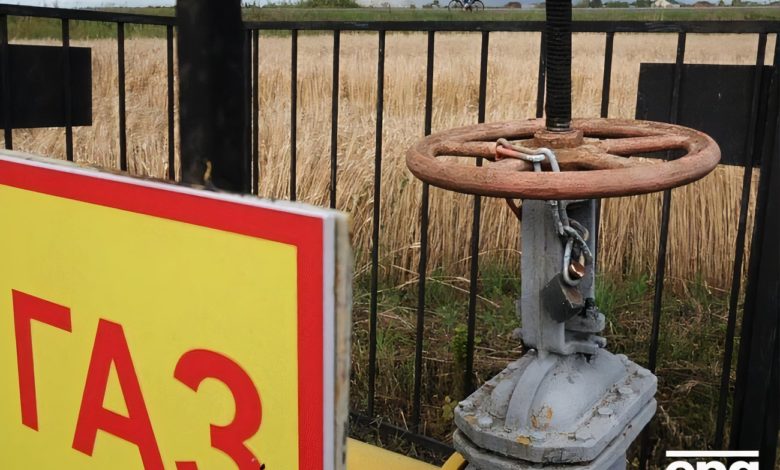
They are talking about the preparation of the European Union for discussing the EU plan to ban Russian gas imports. In particular, after the European Commission presented the “road map” in May, the gradual refusal of the EU markets from Russian oil, gas and nuclear energy until the end of 2027. Now, according to the documents, the Euro -deputies want to speed up this procedure for a year. Amendments according to the EC plan, changing the previously set deadline. These changes were proposed by the Eurodes inese Weider (European People's Party) and Ville Nihnost (Patria “Green Union”).
Diplomats said that governments are unlikely to agree to transfer the ban on the supply of Russian gas a year earlier, but the EU lawmakers can use this requirement as a lever of influence to ensure other changes in negotiations. After all, the initiative also provides for the ban on new contracts for the supply of Russian gas since 2026 and the introduction of sanctions for companies that violate the embargo, including a possible review of energy trading licenses.
It is expected that in the fall the European Parliament will vote for a position before negotiations with the governments of member countries. To make a decision, a qualified majority is necessary, which means that members of the EU cannot be blocked, in particular Hungary and Slovakia, who still import Russian gas through the pipeline and oppose the refusal of fuel from the Russian Federation.
Reuters notes that about 19% of gas to Europe last year came from Russia for the Turkish Stream pipeline and the supply of liquefied natural gas (LNG). It is expected that this indicator will decrease to 13% in 2025 compared to about 45% by 2022, when, after a full-scale invasion of Russia to Ukraine, the EU promised to terminate many years of energy relations with the aggressor.
Context
Before a full -scale invasion of Ukraine in February 2022, Russia was the main supplier of gas in the EU, providing more than 40% of imports. After the start of a full -scale invasion in the Russian Federation, Europe accelerated the abandonment of Russian energy carriers. In 2023, Russian gas amounted to about 8% of EU imports, Bloomberg reported.
The repowereu strategy was first presented in 2022, after Russia's full -scale invasion of Ukraine. It provides for a gradual disposal of dependence on Russian fossil fuel until 2030.
Transit of Russian gas through Ukraine was stopped at the end of 2024.
The Russian Gazprom on the morning of January 1, 2025 stated that the termination of gas supply through Ukraine occurred during the operation of Moscow agreements for the supply of fuel with the “Near European Buyers”, and also complained “to the Ukrainian side to repeatedly and clearly expressed the transit.
On January 8, at that time, the White House in the field of national security, John Kirby, said that Ukraine’s decision to stop the transit of Russian gas became one of the most “most expensive defeats” of Moscow.
On the same day, Siyyarto hinted that Hungary may not support Ukraine’s entry into the European Union due to the refusal to transport Russian energy resources.
On January 20, the European Commission Speaker Anna-Kaisa Ikonen at a press-brofing in Brussels said that the European Commission is developing a plan for the withdrawal of the entire Russian fuel fuel from the European Union market, but gas supply to Europe continues, and Brussels wants to put an end to this.
On January 21, Hungarian Prime Minister Viktor Orban criticized this decision and threatened to “fight back”, Index reported. On the same day, President of Ukraine Volodymyr Zelensky said that it is impossible to continue to buy gas from the Russian Federation and expect help from America.
On May 6, the EC presented a “road map” of the gradual refusal of the EU markets from Russian oil, gas and nuclear energy – parts of the strategy of repowereu.
On June 17, the Supreme EU for Foreign Affairs and Security Policy Kai Callas said that the European Union wants to forever abandon the gas of the country of the Russian-aggressor of the Russian Federation and that it plans to ban its imports until the end of 2027.


