Russia is building a digital gulag. The Kremlin will install the spy application to everyone

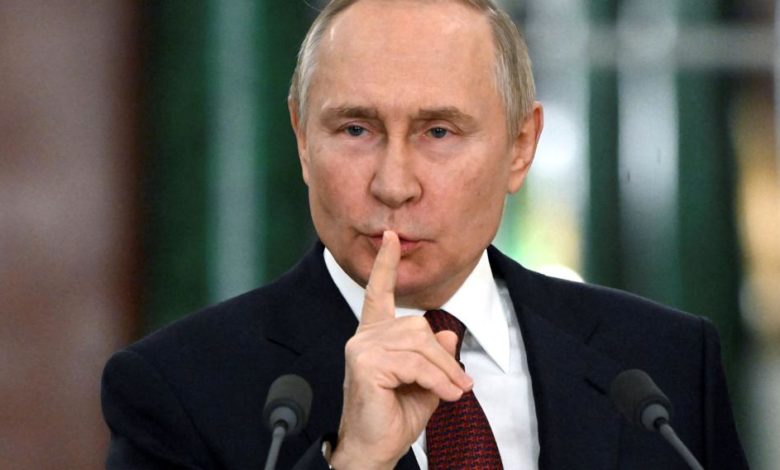
The Max application, developed at the behest of Russian leader Vladimir Putin, will be installed on every digital device sold in Russia from September 1, “Times said. In the opinion of the opposition, this is the next step of the Kremlin aimed at building a digital gulag.
The application, which has been launched in March, allows you to send messages, conduct a video conversation, make mobile payments, use social networking sites and gives access to government services – said the British newspaper on Monday, adding that the application was developed by VK, controlled by the Kremlin.
Critics of the Russian government define the application as spy software that monitors the smartphone user and remains active even after removal. Max is compared to the Chinese Wechat application, used by Beijing for surveillance and censorship on the Internet.
Russian opposition journalist Andrey Okun called Max a key element of the Kremlin for the construction of digital Gulag. “It will be a sterile space in which (Russian – PAP) authorities will have full control over free time, motivations and thoughts of citizens,” he wrote in an article published on the Republika portal, cited by “Times”.
According to analysts, on which the British newspaper cites, data collected by the new application will be easily accessible to the Russian Federal Security Service (FSB). In addition, thanks to this technology, the services will be able to monitor conversations conducted online in real time.
“Times” said that the Kremlin is planning to block the American messenger WhatsApp in the near future to ensure Max's popularity. Currently, WhatsApp is used by about 70 percent. adult Russians. At the moment, they cannot use Facebook and Instagram, belonging to the American technology company META, after the government banned in 2022 just after the start of the full -scale invasion of Ukraine.
The newspaper pointed out that since then the surveillance of Internet users has intensified by the Russian authorities. As reported in the last three years, almost 4,000 people were accused of publishing news criticizing war in Ukraine on the network. The government plans also include the introduction of a new law, which is considered to be browsing websites or content recognized as extremist and illegal materials as a crime. This right can come into force in September – “Times predicts.
In 2024, the Russian government blocked over 420 thousand. websites. As the daily notes, millions of Russians use VPN, i.e. technology that allows users to bypass censorship by hiding their location.
Moscow strengthens censorship on the web
Russia's state pride, the lower Chamber of Parliament, voted on Tuesday, imposing fines on people searching on the Internet and reading content considered by the authorities as “extremist”. The new law is aimed at, among others Eliminating WhatsApp from the Russian market.
The adoption of the law caused a lot of controversy in Russia. As the Reuters agency writes, the new law met with criticism of both opposition activists and some pro -government politicians. His opponents say that the fine provided for in the Act, of up to 5,000 rubles (approx. 64 USD), can open the way to more severe allegations and penalties.
Reuters notes that the list of extremist materials of the Russian Ministry of Justice has over 500 pages. Entities banned in Russia for conducting “extremist activities” include Anti -Corruption Fund of the late Russian opposition Alexei Navalny, “International LGBT Movement” and the American technological giant Meta Platforms.
The new regulations are directed against people who consciously seek extremist materials on the Internet, including via private networks (VPN), which are used by millions of people throughout Russia to bypass censorship and access the content forbidden in the country.
The Act defends the chairman of the Commission for Information Technology Duma Sergei Bojarski. – This act concerns a very narrow group of people who are looking for extremist content, because they are already a step away from extremism – argued Bojarski on Russian television.
The Minister of Digital Development of Russia Maksut Szadajew explains that access to platforms with “extremist content” will not be punished, and law enforcement authorities will have to prove that users intended to watch them deliberately.
Reuters emphasizes that it is not yet known how the authorities will determine the intentions of users surfing the network. Lack of clarity in this matter caused anxiety in many environments related to the development of the Internet. Jekaterina Mizulina, chairwoman of the Russian league for safe internet – an organization founded with the support of the authorities, criticized “unclear wording” in the act and warned that she could cause a wave of fraud, blackmail and extortion.
“For now, the Act only applies to searching for extremist materials, but there is no guarantee that in a few days the list will not be expanded,” wrote Mizulina in the Telegram messenger.
According to Sarkis Darbinian, the founder of the Roskomswoboda organization, dealing with digital laws, many people in Russia will begin to liquidate their accounts in some online portals or channels and delete some applications from their devices.
– I think that this is one of the main goals of the Act: causing fear, creating uncertainty to increase the level of self -censorship among Russian Internet users – said the Darbinian of the Reuters agency.
In connection with the Act, the protest before the headquarters of Duma was organized by the opposition politician Boris Nadieżdin, who unsuccessfully tried to compete with Vladimir Putin in the presidential election last year. – This act caused an unprecedented level of resistance in Russian society – Nadieżdin assessed and pointed out the surprisingly high number of deputies who voted against the new regulations in the Duma, where very rarely opposition to government initiatives.
The Act was adopted by a 68 % majority. votes, there were 14.9 percent against voters. He is to enter into force on September 1, but earlier he must go through the Federation Council, the High Chamber of Russian Parliament.
MZB/ AP/ ZM/ AP/