
At the age of 92, the oldest president in the world is applying for a new term. Are very high chances to get it

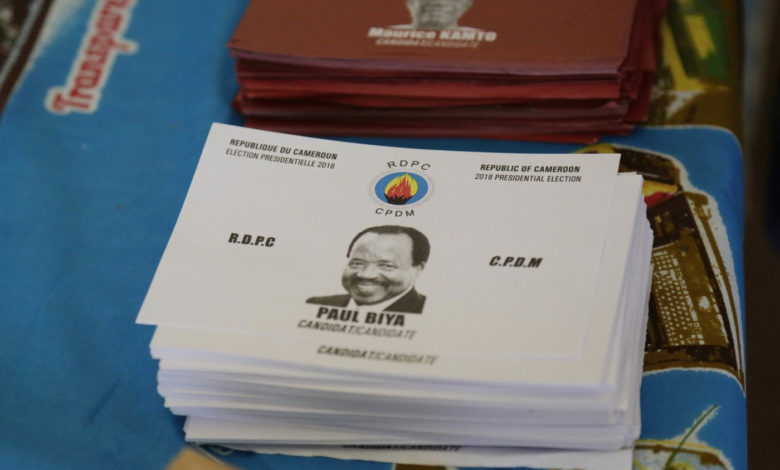
Many voters seem to be tired of the long reign of the President of Cameroon, Paul Biya, but even declining popularity, he controls the institutions that organize the presidential elections in the fall and has, therefore, the first chance to win them, writes The Guardian.
Cameroon President Paul Biya announced last week that he will run for a maximum term in the October elections, in an attempt to extend his stay of almost 43 years in power.
Biya, 92 years old, has assured that the best is just about the camps. “Be sure that my determination to serve is to the serious challenges we face,” he said.
In a country where the average age is 18 and the average life expectancy is 63, Biya remains the detached favorite of the poll.
Biya's reign of Biya has been accompanied by a decrease in voting participation. The rate of absenteeism in the 1992 elections – which are believed to have been fraudulent at the expense of the opposition leader John Fru Ndi – was 19.6%.
Until 2018, absenteeism reached 46.7%.
A “divine” term – for some
Supporters of the popular Democratic Movement in Camero (CPDM), underlined power, have emphasized the general economic performance of the country compared to its neighbors – the second economic growth in the central Africa area – and say they prefer stability instead of the unknown.
Some even believe that Biya's mandate is divine.
“No authority can exist if it does not come from God,” said the Guardian Antoine Nkoa, the author of 51 pages “10 good reasons why you should vote on Paul Biya in 2025.”
Nkoa, who lives in the capital Yaoundé, said he never met the president, but had a vision early in which the oldest president in the world wins again.
“Reach!”
However, such a vision represents a nightmare scenario for Barthélemy Yaou Hourgo, the Catholic Bishop of Yagoua in the Far North region.
“Reach,” he said in January, urging Biya, the son of a catechist, to withdraw.
Christopher Nkong, the Secretary General of the Main Opposition Party, the Cameroonian Renaissance movement (MRC), said in an interview that Biya “exceeded its usefulness”.
“We say,” Father, you did everything you could. Can't you leave, to take another Cameronez? “.
Biya's critics say his supporters are broken by reality.
The endemic corruption and the crisis of the cost of life were aggravated by simultaneous conflicts with the Anglophon from the West, who sent thousands of people to the neighboring Nigeria, with the jihadists from the extreme northern region and the criminal gangs of the so-called death triangle, near the borders with the Centrafrican Republic.
“We are in misery”
Experts say that these crises could make vote difficult in some areas, which would favor Biya. The elections take place a few days after the separatists celebrate the independence of the separatist state Ambasonia.
At least seven people, including a priest, were killed by the Security forces during the 2018 electoral weekend in Buea and Bamenda, the main cities in the Anglophon Cameroon.
In a situation overthrow, two of the old allies of Biya-the influences of Ministers Bello Bouba Maigari and Issa Tchiroma-resigned from the cabinet a few days away from each other in June and declared their intention to run against him.
“We are in misery,” said Tchiroma from his hometown Garoua, in the north, a battlefield for the jihadists from Boko Haram.
In the same month, Léon Onana, Municipal Councilor, filed a trial to force CPDM to organize its first national congress in 2011, on the grounds that “we cannot stay in a party where everything revolves around a single individual.”
A struggle with little chance
MRC hopes to mobilize the undetected and unfounded to vote in large numbers for his candidate, former Minister of Justice Maurice Kamto.
“Everyone feels the effects of the poor administration, of misappropriation, lack of development, low levels of living and poverty (which) knows that it is unpopular,” said Nkong, quoted by The Guardian.
But “removing a dictator is not a day's job,” he added.
Despite the efforts of civil society to mobilize people to register to vote and the initiatives of several opposition parties to join in a coalition, some say that the land has already been arranged in favor of Biya.
The country's electoral commission, Elections Cameroon, for example, consists of several former members of the ruling party and is not considered impartial.
The commission is supervised by the Almighty Minister of the Territorial Administration, Paul Atanga Nji, a supporter of the president, who is nicknamed Moulinex National, after the name of a French blender, for the threats he addresses to Biya's opponents.
Among his critics, Biya is considered a master of the “divide and conquering” strategy. For years, CPDM has been accused of sponsoring political parties to cause confusion among opposition and armed separatist factions to arouse chaos.
The opposition candidate, detained
A law that prohibits parties to campaign less than a month before election seems to not apply in the case of CPDM.
Shortly after Kamto, the opposition candidate, organized a diaspora rally in Paris, at the end of May, he was placed under house arrest. Some of its supporters were also imprisoned in the police cells for two days.
“The police, the gendarmes and the military came,” said a witness who wanted to remain anonymous.
Kah Walla, the leader of the Cameroon's party left party, has similar harassment stories.
“In the last year, my office here has been surrounded by police and water cannon tanks,” she said. “If I cannot organize a normal political meeting, then they can certainly not be candidate for elections, it is an aberration to call these things,” the politician added.
Her party boycotes the elections, as she did in 2018, asking for serious reforms instead.
In some circles, on social networks, there is hope of a “post-biya era”.
MRC urged young people to take an example from their Senegalese counterparts, who remained in the polling stations during the counting of last year's votes to “protect their votes” and contributed to the removal of the Party from power.
Some experts say that another post-electoral scenario could be a repeat of the events in Gabon, where Ali Bongo's re-election in August 2023 triggered disorders and a coup.
There is a feeling that many chamberrs will be satisfied with any of these scenarios, writes The Guardian. “There will be no error in 2025,” Nkong said. “The CPDM time is over,” he added.


