How Trump contributed to changing the perceptions of the Danes to the EU: “Things have changed dramatically in Denmark”


Denmark takes over the EU presidency at a time when the pro-European feeling is stronger among its population and in which Europe recognizes that it has to do more to do it alone, writes CNN, in an analysis of how Donald Trump's presidency has changed perceptions to a country with Eurosceptic tendencies.
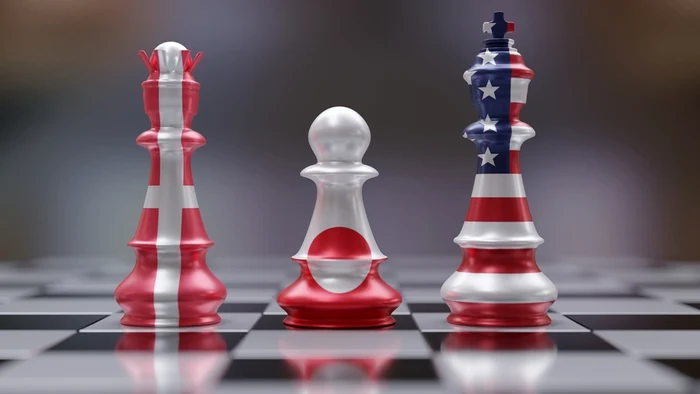
Danes changed their opinions to the US and EU photo shutterstock
According to polls, the Danes are more pro-European than at any time in the last 20 years, a change of opinion that can be attributed, at least partially, to US President Donald Trump.
A survey published in March by Berlingske, a Danish daily, shows that 41% of the Danish consider the US to be a threat. Also, 92% of the respondents were “agreed” or “mostly agree” that the Northern country must be based more on the European Union than on the US for its security.
Since returning to the White House, Trump has spoken aggressively about Greenland, an autonomous territory of Denmark, even saying that the US would hold it, while JD Vance vice -president and the Trump family have done what many consider challenging statements about the largest island in the world.
After Vance's visit to the US military base Pituffik Space Base in Greenland, in March, Danish Prime Minister Mette Frederiksen was forced to reject his assertion that Denmark does not make enough to defend the Arctic, qualifying his country as “a good and powerful ally.”
Against these tensions between Washington and Copenhagen, confidence in the US is shaking.
Lykke Fris, a prominent Danish analyst in international business and former minister, told CNN that the country has suffered “a triple shock”: the Ukraine war, the EU's Great War and Trump's presidency.
“Now we have a different Denmark,” she said.
For her part, in a statement for CNN, Marie Bjerre, the Danish Minister for European Affairs, stressed that the second Trump administration has changed the perspective of Denmark about the US, but also about the EU.
“Things have changed dramatically in Denmark and our attitude towards Europe,” she said, without mentioning the name of the US president.
Denmark would still like to have a strong relationship with the US, “but in a situation where the US is getting more and more … threatens us with rates and criticizes Europe, our freedom of expression and all kinds of things. Of course, in this situation, we must be stronger on our own. she pointed out.
The Danish minister recalled the historical links and the common experiences of the two nations.
“We have always supported the US. We have entered the war with our soldiers in Iraq and Afghanistan … Seeing that our country is criticized because it is not a good ally, it is normal for this to affect our opinion,” Bjerre said.
Denmark lost the second number of soldiers between the US coalition partners who fought in Afghanistan: 43 Danish soldiers died, the equivalent of 7.82 deaths per million citizens, while the US lost 7.96 soldiers to one million.
“I was a very, very transatlantic country. Now the feeling is … that we simply cannot trust it,” she said.
A change of attitude towards the EU
From a historical point of view, the southernmost Scandinavian country had Eurosceptic tendencies, never having a deeply pro-EU feeling, explained Fris for CNN, describing the relationship with Brussels as a transaction, based on “pragmatic cooperation”.
Denmark had concerns about the EU mixing in the life of the Danes, worrying especially for its relatively unregulated labor market. Thus, the country has various derogations from EU policy, including non -failure to the single EU currency, euros.
“We do things differently than other European nations,” Bjerre said.
Politicians and citizens feared that the EU “will become too dominant and too strong,” said Fris, but now “fear is exactly an opposite.” The Danes now believe that the community block is “too weak” to cope with Putin in the east and Trump in the West, she said.
Fris also described the prime minister's change as “huge”, stressing that Frederiksen was “very skeptical of the EU.”
In fact, in June, Frederiksen announced that Denmark is leaving the so-called “Frugal Four”, an informal group of EU countries advocating for limiting common expenses, stating that “the most important thing is the re-armament of Europe”.
Presenting the priorities of Denmark for the EU presidency at the end of the same month, she reiterated this point of view: “Now more than ever, Europe must mobilize and remain united. We must build an even stronger Europe, a safer Europe, where we can protect our democracies.”
The biannual polls commanded by the EU show a clear trend of increasing confidence in the EU in the last two decades, from 46% in the spring of 2005 to 74% in the spring of this year. Increases can be observed during Trump's first term, after Ukraine's widespread invasion by Russia and at the beginning of Trump's second term.
The Ukraine war had a significant influence on the Danes' opinions on the EU. “The fact that a war took place in our vicinity has created a completely new atmosphere for Security in Denmark, people are worried.
The Danish Minister for European Affairs stressed that in taking over the EU Presidency, for the next six months, Copenhagen will give priority to a “stronger Europe and a changing world”, in which it will have a real focus on the Security.