How did the production of Japanese silk worms saved the Japanese economy, turning it into a world leader, but in completely different fields

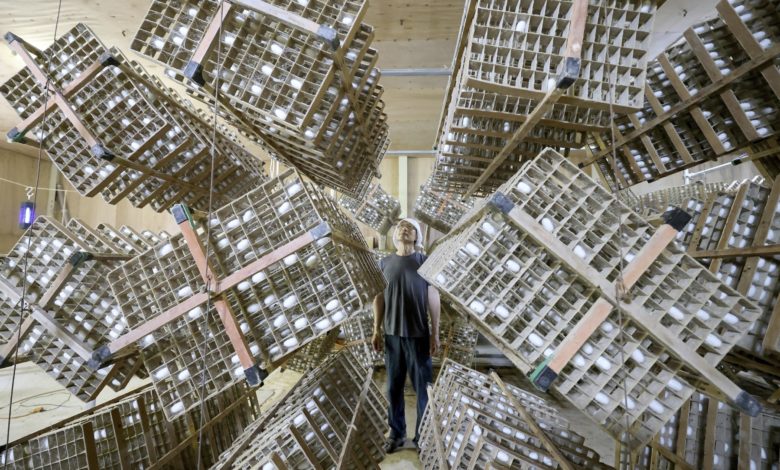
Some readers can remember the scene that takes place in a house in the “1900” movie by Bernardo Bertolucci, a film about the class conflict in rural Lombardy and the ascent of fascism and communism in Italy.
In the scene, the young Olmo (the son of a tenant farmer, whose adult version was played by Gérard Depardieu) and the young Alfredo (the son of the owner, whose adult version was performed by Robert de Niro) speak on the background of the non -ceaseless noise of the silk worms that rontate the leaf so that the leaf so that the rack roof.
The largest silk-producing country since modern times was Japan, which had a long history in the manufacture of silk textiles, because it “imported” serumulture (ie the growth of silk worms) in Korea in the 7th century, but its silk industry has reached its peak in the early World War. In the 1950s, Japan was the largest world silk exporter (both gross silk and silk textiles), and the silk was the largest export product, writes Ha-Joon Chang in Edition Economics.
The Japanese were not satisfied. They wanted to face Americans and Europeans in the steel industry, naval constructions, cars, chemicals, electronics and other “advanced” industries.
However, their country was technologically returned, so there was no way to compete in these industries. Therefore, the Japanese government protected the internal producers from these industries from foreign competition by imposing high rates, ie import fees (thus making imports of these very expensive goods) and by banning foreign companies to operate these industries in Japan.
Also, he had to help the national companies in these industries, forcing banks to channel loans to them, instead of engaging in more profitable activities, such as mortgage loans, consumer loans or (less profitable) the granting of well -established industries, such as the one.
These policies were criticized intensely not only outside Japan but also inside
Critics have stressed that Japan would be more advantageous if it would only import products such as steel and cars and focus on the manufacture of products such as silk and other textile products, which was good, Chang says in his book.
If you protect your ineffective producers, say, cars (such as Toyota and Nissan), by imposing customs tariffs for foreign cars, consumers either have to pay more than the price on the world market to get better cars from abroad, or drive lower Japanese cars.
Also, by artificial sewerage of bank loans to inefficient industries, such as car production, through government directives, they added, take funds from efficient industries, such as silk, which could use the same amount of capital to produce much more.
This is a correct argument – to a point. In the long term, a country can change its productive capabilities and can become better in areas that are not good today.
This does not happen automatically – it requires investments in better machines, improvement of workers and technological research – but it can happen. It happened in Japan – in the automotive industry, steel, electronics and countless other industries.
In the 1950s, Japan simply could not compete in the international market in these industries, but by the 1980s it was world leaders in many fields
It took at least two decades to significantly change the capacities of a country to produce, and such a change cannot happen under free exchange conditions. Under free exchange conditions, inefficient and immature producers from the new industries will be quickly eliminated by higher and higher foreign competitors.
The protection of immature producers from an economically returned country, in the hope that one day they will become better, is known as the “incipient industry” argument.
The term suggests a parallel between the economic development and the development of the child. We protect and raise our children until they grow up and can compete with adults on the labor market. The argument dictates that the government of an economically returned country should protect and cultivate their young industries until they develop their manufacturers' capabilities and can compete with higher foreign competitors on the world market.
The theory of the incipient industry was not created in Japan. In fact, it was invented in the US-by none other than the country's finance prime minister, Alexander Hamilton-this is the face on the ten dollars bank, who is currently facing an unexpected rebirth through the Hamilton by Lin-Manel Miranda. Hamilton claimed that the US government should protect the “industries at the beginning” (its words) against higher English competition and other European states, because otherwise America would never industrialize.
The plot is confused: Hamilton was inspired by the protectionist policies of the eighteenth-century Britain, especially those during Robert Walpole, when the country began its ascension to global industrial supremacy.
Contrary to their public image today as the fate of free exchange, the United Kingdom and the US have been the most protectionist countries in the world in the early stages of their economic development. They adopted the free exchange only after reaching industrial supremacy. The same is true for most other rich countries.
Except for the Netherlands and (until the First World War) of Switzerland, all the rich countries of today-from Belgium, Sweden and Germany at the end of the 19th century to France, Finland, Japan, Korea and Taiwan at the end of the 20th century-used the protection of the incipient industry for the substantial period to promote.
All this does not mean that the protection of incipient industries guarantees economic success. As with children, incipient industries may fail to “mature” if they are increasing. In many developing countries, in the 1960s and 1970s, the protection was excessive, making satisfied domestic producers but not offering any incentive to improve their productivity. Countries that have mostly used the protection of incipient industries, such as Japan and Korea, have tried to prevent this type of situation by reducing protection over time, in the same way that parents must gradually reduce protection and ask for more responsibility from children as they grow up.
Without the protection of incipient industries, all those countries that once were economic “shrimps”-such as the United Kingdom in the eighteenth century, the US, Germany and Sweden in the 19th century or Japan, Finland and Korea in the 20th century-could not have turned into the “big fish” of today's world economy.