Return al-Qaeda. Expert: Trump can focus on tactics “mowing grass”

Among the many global challenges facing the United States, one of those that do not enjoy the public opinion too much is the revival of Al-Qaeda in Central Asia and the Middle East. Currently, there is already an active network with a range as extensive as before the terrorist attacks of September 11, 2001.
This does not mean, however, that Al-Qaida promotes its global presence and ambitions, as the Osama bin Laden did in his infamous declaration of 1998, in which he called the United States a “paper tiger” waiting for overthrow. Contemporary Al-Qaeda is less visible on the international arena and does not speak so openly about the fight with the West. It also does not seem to have the ability to conduct activities on a global scale. However, Islamic terrorists have the same purpose as the creation of the caliphate, and if they are not stopped, they can become a threat to the region's stability from South and Central Asia to Africa.
The United States adapts their reaction to this threat, combining limited actions targeted under anti -terrorist programs with integrated measures with regional strategies.

Revival of terrorism
The last few events indicate the growing significance of al-Qaeda, which conflicts with the expanding global initiatives of the new American administration under the leadership of President Donald Trump.
Syria
During a recent trip to Saudi Arabia, President Trump agreed to abolish sanctions against Syria at the request of US regional partners. Washington reduces his involvement in the fight against terrorism in northern Syria. At the same time, the president turned to the new government in Damascus to normalize relations with Israel and the possible joining of Abraham's agreements.
Part of the forces that led to the power of Abu Mohammed Al-Jolani [znanego jako Ahmed asz-Szar]a combat Islamist who became the president of the Syria Proimous Government, they are extremists associated with Al-Qaeda who oppose Abraham's agreements and continue to destroy Israel. They can rebel or Jolani may subject to their demands. For the United States, the development of the situation is worth observing, because Al-Qaeda has a strong position in this country.
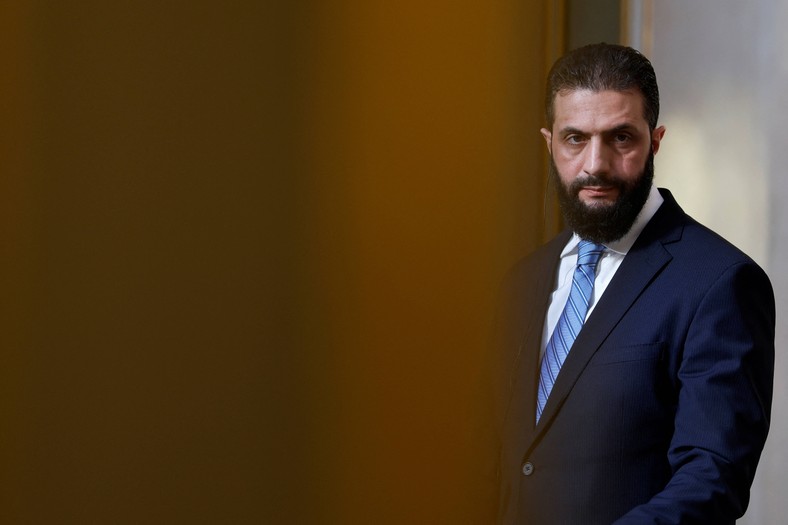
The duties of the President of Syria Ahmed Ash-Szar during the official visit to the President of France, Paris, May 7, 2025.
Iraq
The Iraqi government is becoming more and more concerned about Sunni extremists related to Al-Qaeda and has changed the course-instead of demanding from the United States a reduction in forces in the country, currently perceives Americans as a stabilizing factor and protection against caught in regional conflict.
For their part, the United States has set demands to the government in Baghdad, such as combating corruption, promoting economic development and limiting the influence of an armed militia, which the Iraqi regime seems reluctant to accept. The situation is dynamic, and is complicated by the growing pressure of Israel and the United States to Iran and less likely prospects for the conclusion of a new agreement between the USA and Iran.
Iran
Iran allows Al-Qaida free flow through its territory. The regime in Tehran, which openly declares his intention to destroy Israel and is the largest state sponsor of terrorism, still tolerates Al-Qaeda. Mulłów perceive this group as potential protection against opponents of Iran and this policy will probably not change in the near future, unless the regime changes.
Afghanistan
Al-Qaeda and Hakkani-Sunni Islamic combat organization operating mainly in Pakistan-are deeply rooted in the government managed by the Taliban. Al-Qaida has safe shelter on the borders with Iran and Pakistan and active training camps throughout the country. It is not possible for the Taliban to ever cut off from Al-Qaeda or Hakkani.
There is also a part of the community dealing with human rights, which believes that commitment would lead to greater access to the country. Although the Taliban would like to recognize by the United States, there is no chance that they would ever compromise on al-Qaeda or human rights. In addition, they will not allow supervision over aid measures to the country. The probability of normalizing relations between Washington and Taliban is close to zero.
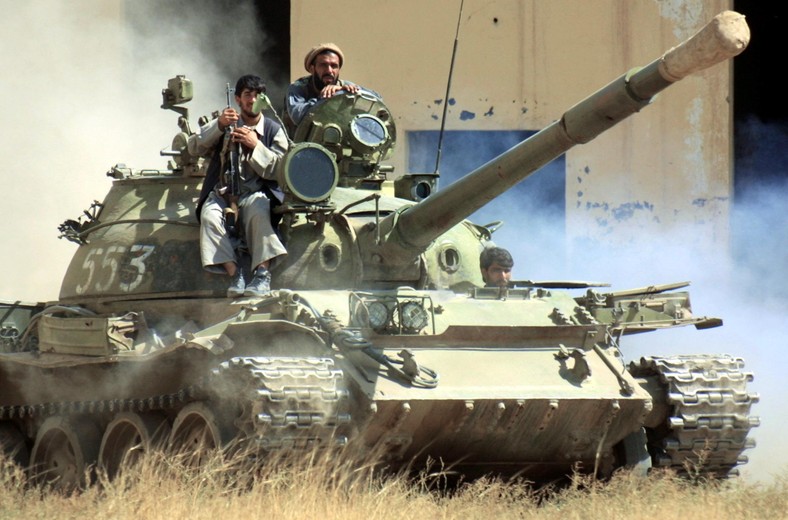
A tank of Afghan forces of the northern coalition on the front line against the Taliban at the former main air base of the USSR in Bagram, 25 km north of Kabul, Afghanistan, September 25, 2001.
Pakistan
Pakistan's foreign and security policy has always remained under the strong influence of the army and inter-fervices Intelligence. There are competing fractions in security and military services; Some of them are associated with extremist groups that strive to threaten India, while others are aimed at calming national extremists and act as an tool of influence in Afghanistan. This situation has not changed for 40 years and will probably not change in the near future, especially after the recent Pakistani-Indian crisis.
China is a factor complicating the situation in Pakistan; The influence of Beijing in Islamabad is very deep. The Chinese probably do not trust Pakistanians, but they consider them useful in distracting India and stopping extremists from threatening China. Because Beijing supports the Pakistani economy and provides military support, Islamabad has no reason to ever change its behavior.
Scenarios
All this indicates that Al-Qaida has an unlimited space from South and Central Asia to the Middle East. There is also an active threat from Islamic extremists in Africa, especially in the Sahel region. They are not geographically connected directly, but Sahel is the second most active theater of Islamic extremism.
The most likely: Washington will routinely react to a threat as needed
It should be expected that the US approach to global terrorist threats will be highly centralized, and the National Security Council will exercise control; Anti -terrorist activities will resemble routine “mowing grass” [utrzymywanie sytuacji w ryzach, na stałym poziomie, bez całkowitego likwidowania jej fundamentalnych przyczyn]. Washington focuses on the global terrorist threat on the part of Islamists and these are balanced actions. Although Trump's team is not indifferent to the situation, he is not interested in dealing with the sources of extremism, conducting another global war with terrorism, deep involvement in these regions or bombarding countries foreign help.
Active global operations should be expected, both in the field of armed operations (liquidation of direct threats) and recognition of the situation, using a number of active partnerships in the Sahel and North Africa region, the Middle East and Central Asia. The presence of the US in the field will be limited to strategic, key places with regional range.
The purpose of the US will not eliminate global extremism, but to protect the homeland, build firewalls and suppress threats before they become global or threaten regional stability in places important to American interests.
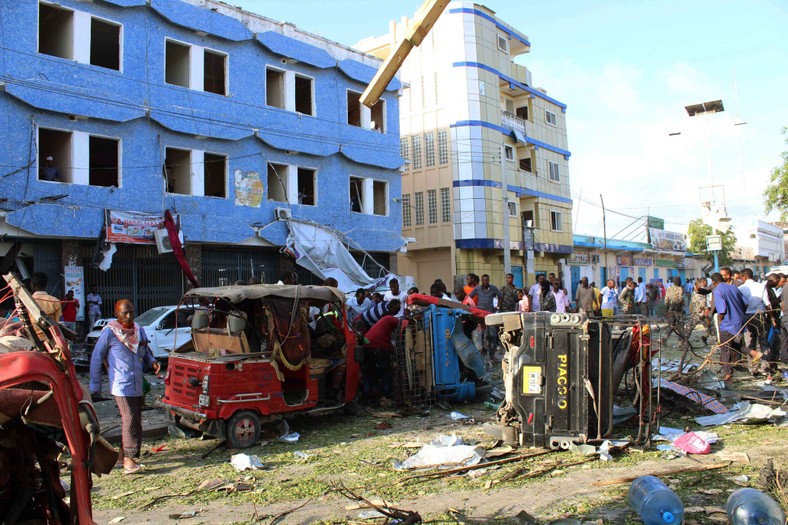
Destruction after the explosion of a car bomb in the center of Mogadiszu in Somalia, on March 23, 2018, a local group of Al-Szybaab fighters, associated with Al-Qaeda, admitted to the attack
Probable: Washington will encourage rapprochement between regional powers
Washington will press Abraham's agreements as a constructive way to stop the threat. Over time, the United States will probably also deepen their involvement in the Southern Caucasus and Central Asia, while specifying specific requirements and responsibility in all regional bilateral relations.
The United States will take a harder position towards disobedient partners, such as Iraq. Normalization of relations with Iran is unlikely, unless Tehran goes to significant concessions or the government changes. Any agreement would have to cover not only allies, but also Al-Qaeda itself.
Sure: the United States and India will cooperate to counteract threats in South Asia
Strategic partnership with India is essential for the United States and will have priority over all contacts with Pakistan.