For a large part of the Romanians, the restaurant has already become an exception, not an custom. From August 1, it could also become an effort. Increasing VAT to 19% for restaurants and cafes risks carrying the payment note over the bearable threshold and over the business return.
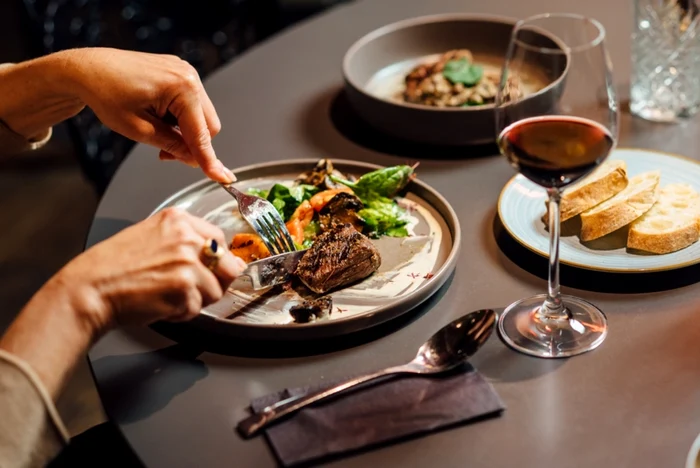
Photo: Shuttersc
Increasing VAT from 9% to 19% for restaurants and terraces, announced for August 1, promises to change the menu. Not just on its own. The small entrepreneurs from Horeca talk about chain closures, decrease the frequency of meals in the city and the risk of returning to tax evasion. While customers become more calculated, restaurants are looking for survival recipes.
Customers become more selective
The founder of the mother, Cătălin Mahu, warns that VAT change could destabilize the entire industry. “I think this forecast increase in VAT will lead to increase in prices throughout the chain. That is, from supply, to sale, by more than 10%. The prices want the waterfall, leading to a higher increase. Which will mean less money in the client's pocket and will lead, to a lower consumption. Profitability to the level at which, it will have to close the business, because it is a simple calculation. National media statistics on the Romanian profit economy, the Romanian entrepreneur is 8%, the disappearance of 7% of the profitability (and we are talking about a statistical average, because some restaurants have a higher margin and some restaurants have a lower average profit, each one of them, 7 percent) will obviously lead to the end of the profit, if not even 20%. Of current restaurants, this country will close.explains Cătălin Mahu for the truth.
Who resists and who gives in: The pressure is on the small premises
In his opinion, all the types of business will be affected, but especially the Romanian ones because the big chains, especially the imported ones, have some very high profitability margins with which they can “play”. “If we take into account the reduction of VAT from 19% to 5%, which happened in 2015, we should remember that the officials at that time have stated that the lower share of VAT has brought more money to the budget, which means that a large part of the tax evasion that happened at that time to be a great time. Party to fraud.“He adds.
According to him, in Romania, there are about 40,000 restaurants, less than they are in Paris. “An example, maybe not the best, instead of developing the restaurant industry, such a measure will lead to adjustment, they say so. I expect in maximum a year to disappear about 20%, as I said, among the restaurants existing today. I think the only category that will not be affected will be given by those people with a lot of money. Warning of the price increase (…) I do not think the problem is to disappear from the environment because regardless of the preparation they will suffer, they will have the same impact This will lead to a decrease in the number of customers because at least for a period of time they will wake up that they have less money in their pocket than they need, for daily living, and then, the visits will be left at the restaurant. says Cătălin Mahu.
In turn, George Alexe, Senior Business Advisor at Krugman & Partners, says that “VAT increase will directly influence the final voucher and consumption behavior, especially among customers with medium budgets (families, employees, urban areas) who will not give up the outings in the city, but will adjust the frequency and value of the orders, becoming much more selective, while the high-end segment retains their custom In the Middle Market area, every 10 lei can become a filter in choosing the premises. “Independent restaurants, without scaling plans and without a clear cost strategy and rotation, are the most exposed. As are the seasonal terraces or business in small cities, where the purchasing power is limited. The large chains, on the other hand, can absorb the shock through operational efficiency and negotiation on the supply chain. Business ”, He believes.
It will probably follow closures, according to it, especially in the case of already financially fragile business, and in the less controlled areas there is a risk of returning to informal practices; Some of the consumption will move to deliveries, fast food or cooking at home, but restaurants that offer real value through experience, comfort and feeling of belonging, will be able to keep their customers.
“The menus will become smarter, not necessarily shorter. The preparations with weak rotation, the unstable or low margin ingredients disappear. The products that bring volume, profitability and differentiation are maintained. At the table, the customers will be more attentive to the final note: less” aperitif + main course + dessert “, more”. It is a repositioning of consumption, not a total contraction ”, he completes.
Romanians will not give up restaurants, but they will adjust their behavior, George Alexe says. In the big cities, going to the table is part of the lifestyle, but it changes the way in which the reservations are consumed, it becomes more calculated, the land offers are gained, and the loyalty is directed to the restaurants that communicate transparent and offers clear value. “The most affected category remains the low average class. At the opposite end, the premium public will maintain its habits, but it will become more demanding”, Adds Senior Business Advisor Krugman & Partners.
Fewer commands
“It is very likely that this change will lead to a real decrease in the frequency of meals in the city, not only to a simple adjustment. The prices will increase by about 9% directly (depending on how the tax burden will be transferred), and given that the food inflation remains high, the Romanians will tend to the city, cheaper or with promotional offers and, on the other hand, reduce the value of the average voucher, ordering less or avoiding the more expensive dishes (desserts, wines, appetizers) ”, He reports Ciuca Alina Mihaela, manager of RS Caffee.
In his opinion, the most vulnerable will be: independent and neighborhood restaurants, with smaller margins and price-sensitive customers, seasonal terraces, which depend on a large volume in a short period and cannot easily adjust prices without losing traffic, family restaurants, with high fixed costs and without supporting a national brand or chain. “Large fast-food or casual dining chains will have a better adaptation capacity, through price negotiations with suppliers, automation and offers. However, they are not completely immune.”
Fiscal evasion could increase, especially in small premises, which could be tempted not to completely tax sales to keep its clientele, she says. At the same time, migration to deliveries and fast food will continue, as these options remain perceived as more convenient. “Selective closure wave, not a total collapse, but marginal restaurants, with weak debts or sales, can decide to close or reduce their activity. International examples: in Hungary or Greece, VAT increases in the Horeca sector have decreases up to 10-15% in the frequency of meals in the city Maria.
According to it, customers will most often give up: separated desserts, premium wines and drinks, extra disorders (appetizers or soups) and some places could eliminate small margin preparations (eg soups/broths, cheap lunch menus), if not sustainable to the new VAT.
Rarer outputs at the restaurant
“The Romanians will not completely give up the restaurant, but their behavior will change by reducing the frequency, they will come out less. More precisely” reducing the expenses on the table – a single order, water instead of wine, migration to offers/menu, especially among the corporatists. neighborhood ”, Complete the RS CAFFEE manager.
At the same time, Paul Vrabie, the Burgers partner, says: “VAT increase is not a simple adjustment on paper is felt directly in the final price and, inevitably, in the client's behavior. We already see signs of caution in consumption: customers choose more carefully, they are oriented towards the best value for money. without sacrificing the quality ”.
According to its statements, each category will feel the pressure in its own way, but the most vulnerable are the independent premises and neighborhood restaurants, especially those operating at the limit, without solid financial support. “In the case of large chains, there is a financial buffer, but the volume pressure is huge. The seasonal terraces can lose customers if it does not offer a justified price experience. The market suddenly becomes more competitive, and the difference will make authenticity, not just the price. I have seen in other markets that such measures, if they are not doubled for the entrepreneurs, for the entrepreneurs, Delivery and meals will gain land, but they cannot completely replace the experience of a city output. he continues.
At the same time, in his opinion, VAT growth will push the restaurants to simplification. Specifically, premium ingredients, artisan preparations or experimental menus risk being removed or rarely ordered. „ClThe junipers become more calculated, and we, as a business, will have to adapt without becoming banal. In us, we will not cut the quality, but we will adapt the portions, the seasonal ingredients and we will introduce more accessible options, without compromise. Romanians will not give up completely, but they will refine their habits. We will see a lower frequency, maybe more fast meals in the city, to the detriment of the weekend dinner with the extended family. (…) The market will react, in our turn, we are preparing adjustments. We will probably see several optimized lunch menus, combo, “happy hours” or “light” variants that keep the taste but reduce the cost. Customers are not just looking for a low price, looking for quality. If we offer them this, along with transparency and an authentic vibe, we can cross this period with the forehead up,“He concludes.