Wedlock operation: hunting for a Russian spy in the heart of British secret services. “Extremely unusual, the longest in recent and probably the most expensive history.”

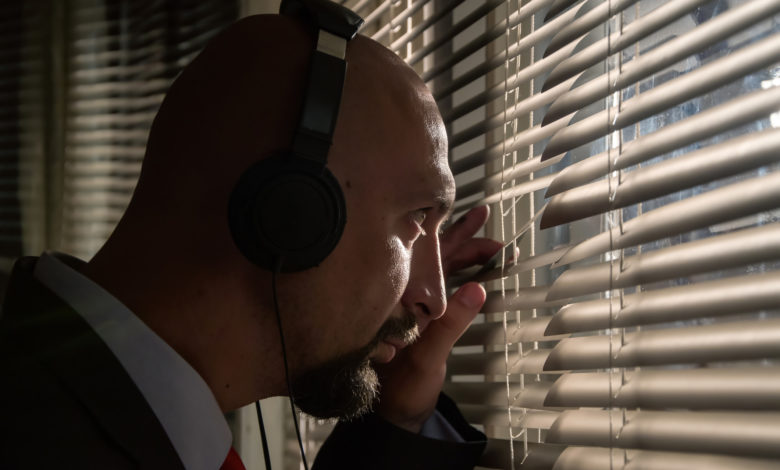
Heads of British secret services were forced to launch one of the most delicate and risky investigations after the Cold War, because of fears that a senior officer of the Foreign Intelligence Service was Russia's double agent, The Guardian reports.
The extended hunt for the alleged spy, called the Wedlock operation, was led by the Sister Agency of MI6, MI5, which mobilized a team of up to 35 agents, who traveled worldwide, writes news.ro.
According to the information obtained by The Guardian, a whole surveillance team was sent to the Middle East for more than a week, where the officers were staying in a CIA conspiracy house. It seems that this travel was particularly dangerous, because the agents traveled to that country without the knowledge of its government, which would have been illegal in accordance with international law.
In one form or another, the searches lasted up to 20 years, but MI5 could not determine whether the British secret services had a mole, which raised the possibility of an agent for Russia to have escaped.
“I thought we were dealing with another Philby,” said a source, referring to Kim Philby, the famous double agent of Mi6 who was part of a group of British recruited by the Soviet Union, known as the Cambridge spy network.
The MI6 Information Service is the British espionage agency responsible for collecting information from abroad and managing agents. MI5, the Security Service, is the Agency for Information that evaluates the threats to the national security of the United Kingdom.
Tip coming from CIA
The MI5 investigation started in the 1990s and seems to have continued until at least in 2015. Then the officer targeted by the Wedlock team left MI6, who had 2,500 employees at that time.
The information about the alleged spy came from the CIA, the US spy Agency, who was convinced that a British official from the secret services, who worked in London, transmitted secrets to Russia.
At one point, when the investigation was in progress, the Russian Secret Service, FSB, was led by Vladimir Putin.
The operation began in the mid-1990s, after the CIA informed its counterparts in British secret services.
A recently published book, “The Spy in the Archive: How One Man Trried to Kill the KGB” (the spy in the archive: how a single man tried to kill the KGB), written by the former Security Correspondent of BBC Gordon Corera, refers to this episode.
The book says that the CIA was worried that an MI6 officer had been “recruited by Moscow”, but that it was not clear who he was.
The supposed Russia spy, identified and watched
The Guardian discovered that the UK would eventually identify the alleged spy, and a team of MI5 specialists was pregnant to follow him.
The team did not operate from the ordinary headquarters of the Mi5. The sensitivity of the operation was so high that the officer leading the spinning was informed about the operation in a church, according to a source.
Some of those chosen to participate in the operation, they were initially told that they will participate in a training exercise and the reference terms were communicated only when they were outside the Thames House, the MI5 headquarters.
The Wedlock surveillance team was based in a Wandsworth building in southern London, near the MI6 building on the river bank.
The officers operated there under the cover of a false security company. At that time, the team was informed that the target held an important function within the MI6 and had access to a wide range of extremely sensitive materials.
Listening and video disposition, installed in the house of alleged spy
The team of technical operations of the MI5, then known as A1, secretly entered the house of the MI6 officer and installed listening and video devices.
The images were transmitted live to an operations room. An MI5 car in front of his house was equipped with a room hidden in a towel box, a source said.
Intense supervision highlighted some behaviors that aroused concern, but they were not related to the espionage, according to The Guardian. During the operation, the surveillance teams followed his movements abroad, following him in cities in Europe, Asia and the Middle East, a very risky movement, because the team operates outside the MI5 jurisdiction.
The Guardian learned that the team was sent to a country with real passports under false names, and the agents were warned that if they were detained for any reason, they will be on their own.
“We can't help you,” he was told. But the concern about the alleged spy was so great that the heads of the intelligence services considered that they had no other option.
According to a source, there were suspicions that the supervised man did not work alone. Two other people, also from London, helped him.
A British Information Agency actually spit another British agency
The Guardian source said the Wedlock operation was “extremely unusual, the longest in recent and probably the most expensive history.”
The fact that a British intelligence agency was actually spying on another British agency was extraordinary, the source said. “MI5 has never achieved the conclusive proof he was looking for,” she added.
Under these conditions, the source drew attention that if the respective person was not spotted, then Mi6 “still has a spy to find”.
One of the concerns of those who worked on the operation was that the target, himself a specialist, could have realized that he was supervised.
Photo source: dreamstime.com