The child wants to stay all summer in the house, on electronics! How we break the circle of digital isolation, without destroying the relationship with the teenager

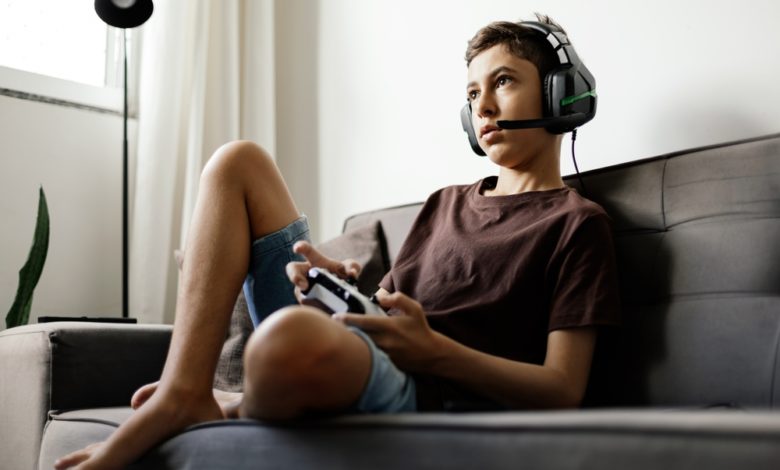
The summer vacation started and many parents of teenagers wonder: why does the child not want to go out, see with friends, go on trips? How do you prefer to be isolated in the room, with your eyes on the phone or on games? When is it just a form of relaxation and when we are talking about a real emotional problem? Answer, with clear examples and solutions, dr. Laura Popescu, pediatric psychiatry specialist, Mindcare Center.
“Better leave me alone, I'm fine here.” This reply, said in a low or sometimes high voice, is familiar to many teenage parents. Summer is theoretically about relaxation, exploration, friendship. But for some teenagers, the holiday means withdrawal, screens, isolation in the room and a constant refusal to participate in family life. And the parent feels caught between guilt, powerlessness and a desire to reconnect his child with the real world. We explain why this happens and how we can react – empathetic, balanced, but also firm – without breaking the connection with the child.
When digital relaxation becomes dangerous isolation
First of all, here's a test for parents. Tick what matches the child:
- No longer exits the room until he is hungry (and sometimes even then)
- Refuse any exit, no matter how cool it seems
- He plays 8 hours, but he says “just started”
- Gets angry if interrupted from the scroll
- No more visual contact with anyone in the house
3 or more ticks? It may not be just a “relaxing” holiday …
Today's teenagers no longer have clear borders between relaxation and escape. “Access to the screens is inevitable, especially on vacation, but parents must pay attention to the signs that indicate imbalance,” warns Dr. Laura Popescu, pediatric psychiatry specialist at the Mindcare Center.
Among the alarm signals:
- The child completely avoids friends, activities and interactions with family;
- long periods are closed in the room;
- it becomes irritated when restricted access to devices;
- sleep badly or eat less.
All this indicates not a mere “digital relaxation”, but possible emotional difficulties or even the beginning of addiction.
“The teen's brain works on the principle of pleasure, attracted by immediate gratification, without the mature control necessary to say stop,” explains Dr. Popescu. And the digital space, with instant feedback and easy socialization, becomes a perfect shelter – especially for those with social anxiety or low self -esteem. Unfortunately, this virtual refuge isolate them even more than reality.
Negotiation, no prohibition: How we set a balanced program
The solution is not the “confiscation of the phone”, but the construction of a program by negotiation. “The negotiation increases cooperation,” says Dr. Popescu. The teenager must be involved in establishing a daily program in which to have time for devices, but also for sleep, sports, outdoors and family life.
The open discussions are the key: “Parents can honestly express what they feel and why they concern their time spent online, without an accusatory tone. Thus a connection is created, not a break,” says the doctor.
It is useful to establish clearly clear rules (for example, a total number of hours at screens, divided as the child wants), but also consequences assumed by both parties. It is important for the parent to respect the established rules, not to change them arbitrarily, and to support the adolescent when he tends to deviate from the initial plan.
Routine, goals and autonomy – without pressure, with support
Many parents wonder if they do not put extra pressure if they ask the teenager to organize their time. “It is very useful, as long as the support does not turn into control,” says the doctor. The teen's brain does not yet have a mature long -term planning skills, but can practice them by gentle training.
Therefore, it is beneficial for the parent to encourage him to organize his exits with friends, time for hobbies, creative or learning activities. There is no need for a rigorous agenda, but supporting in testing, wrong. “The purpose is not to make the child's program, but to guide him in doing it alone and to learn from your own attempts.”
Friends on the screen or in real life? Socialization face to face is essential
Even if the Z generation lives with friends more online, real socialization remains vital. “Only through direct interactions do adolescents learn empathy, emotional regulation and interpretation of nonverbal language,” explains Dr. Popescu.
If the teenager is reluctant, the parent can propose gradual meetings, in small groups or at home. Patiently, this social discomfort can decrease. It is important not to accept that “it is ok, I see myself online with them” to become the only form of interaction – because social development is done in real life, all with its clums, frustrations and teaching.
How we avoid conflict and keep in touch
The most common mistake do parents make? The sudden prohibition. “Remove the screen, the crisis comes, then the conflict. Repeated daily, it destroys the parent-child relationship,” warns the doctor. It takes notice, transition time and observing the rules already negotiated.
Other frequent mistakes: threats without consequences (“next time I take your phone!”) Or label (“You are addicted”, “You don't know how to behave with people”). They feed the teen's shame and isolation.
Instead of criticism, it proposes a dialogue. Ask questions, listen actively, show interest for what he is passionate about, even if he looks trivial for you. Instead of “you play all day?”, Try “What do you like about this game?”. The relationship is built, it is not required.
The power of example is essential. A parent always on the phone cannot ask the child to let him down. “An adult who recognizes his vulnerabilities and imposes limits offers an authentic balance model,” concludes Dr. Popescu.
What the child says. What does he mean, in fact
Sometimes the teenager seems to speak a language completely different from ours. He says short, dry, seemingly meaningless things – and yet, behind them are real emotions and needs. When he does not want to get out of the room or respond monosyllabically, it is not (just) challenge. It is often a form of protection, avoidance, indirect communication. To make it easier for us to translate the language of teenagers on vacation, here is a pocket dictionary with the most common replies – and what they could actually mean.
“I'm ok…” means, actually: “I feel disconnected, but I do not know how to say ”
“Leave me alone” means, actually: “I have no desire to control, but I may need support ”
“I like to stay in the house” means, actually: “I have no desire to control, but I may need support ”
Realistic Holiday Plan: How do you get it out of the room without daily wrestling
A holiday plan for comfortable teenagers must have realism, humor and a bit of parental strategy. And to no longer hear replicas typical of the age of adolescents: “He refused to come to the sea. The wifi was stupid last year.” Or “he asked us if there are sockets in the tent.” or “I proposed to him to go out in the park. He told me he had no signal there.” Let's set up a realistic holiday plan for teenagers who take refuge in front of the screens. Here are three attractive ideas:
1. The day with snacks: Give him the idea to invite a friend at home. Socialization begins with Nachos. For an adolescent reticent to face to face interactions, the first step does not have to be a camp with strangers or a whole day at the pool with relatives. It can be something much simpler: a meeting on his own ground, in his room, with someone known, without pressure, without the “social event” label. A trusted friend or colleague, a good movie, a bag of chips and zero uncomfortable questions from parents can do wonders.
What helps? To leave space, but create the frame: “If you want, we can take some Nachos, juice, something good-and you can call someone.” No need to turn into party organizer. Just show availability and encourage the idea of bringing the real world a little closer. Socialization should not be spectacular, but natural. And in the post-pandemic and post-discomposive age, a friend in flesh and bones, on the couch, can be more valuable than a thousand likes.
2. Motivational exits: just for what it attracts-Escape Room, Gaming Café, water beating. Something he feels “his”. If you want to get it out of the house, forget about the generic proposals like “Come on a walk” or “we go out”. Adolescents need a personal and relevant reason – something to arouse their real interest, not just tick a “healthy” activity. Escape rooms, themed cafes with games, gaming tournaments or even an ad-hoc organized water in the park can be effective triggers.
The key is not to start from what you think you should like, but from what you already know that it is exciting it-even if you don't understand why. Is the games with VR fascinated? It can be an experience in two, with you as partners. Do you like anime? It can be a thematic festival or a manga bookstore. It is important to feel that the exit is not an obligation imposed, but an extension of his world, brought outside the screen. This is how the re-monitoring begins: not what we want to be, but from what is already.
3. Digital challenge: An evening without screens a week – for all family. The most creative way of not boring is awarded. It is perhaps the hardest step and it doesn't have to come first. If the “day with snacks” and “motivational outputs” begin to work and you manage to rebuild contact with the adolescent, you can propose – as a game, not as a punishment – a digital challenge. An evening without screens for the whole family. Including parents. Yes, and without “just an email” or “check something fast in the group”.
You can turn everything into a funny stake contest: who comes with the most creative offline activity receives a reward chosen by others (eg: don't clean Sunday, choose Friday, receive an extra pizza). Boardgames, karaoke, absurd games like “Don't be upset, brother – family version 2025”, DIY, cooking viral recipes from memory – whatever is allowed, with one condition: not to involve any screen.
Work? Not always. But it is a good chance to discover that, beyond the scroll, there is still curiosity, humor and the real need to be together. If you miss it once, it's nothing. Next time, change the stake: who looks at the screen first, wash the dishes.
Not all teenagers will accept this from the first. But the wifi does not always work perfect. We reconfigure the route together.