Like the metals of rare lands, they have become a key bargaining card. China's domination is not an accident, but the result of decades of planning

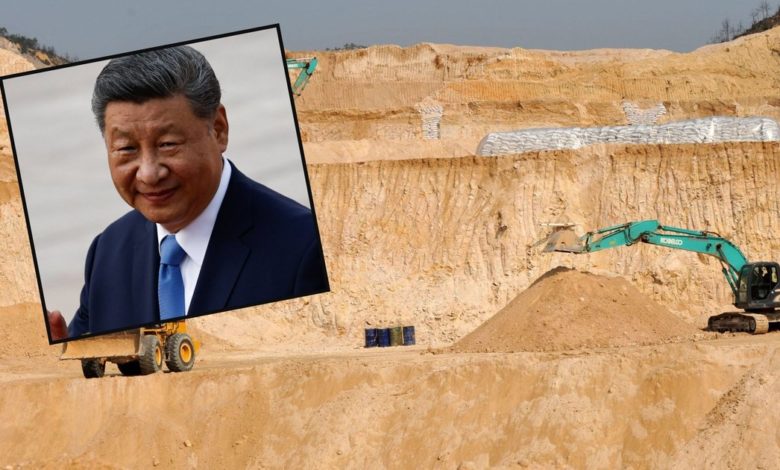
Without these chemical elements, modern technology does not work: smartphones, wind turbines or electric cars. Although the market of rare elements is small compared to the heavy metal market, their importance and demand around the world are growing. In 2024, the production amounted to 390 thousand. tone.
However, the elements of rare lands are extracted only in a few places. Global deliveries are unstable, and competition in the field of extraction, refining and recycling is intensive/fierce. What exactly are the metals of rare lands? And what role do they play in geopolitics?
A group of rare earth elements consists of 17 chemical elements, all with similar, and at the same time unique electronic, magnetic and catalytic properties. Their world resources are estimated at about 120 million tons. For comparison: global copper resources are about 980 million tons.
Despite their name, the elements of the rare lands are widespread in the earth's shell and – except for a radioactive Promet – they occur more often than gold or silver. However, their concentration is rarely high enough to make extraction profitable. The largest deposit in the world is in the Chinese province of Bayan NIEK. The elements of rare lands are enclosed in carbonate rocks, which arose as a result of the termination of magma.
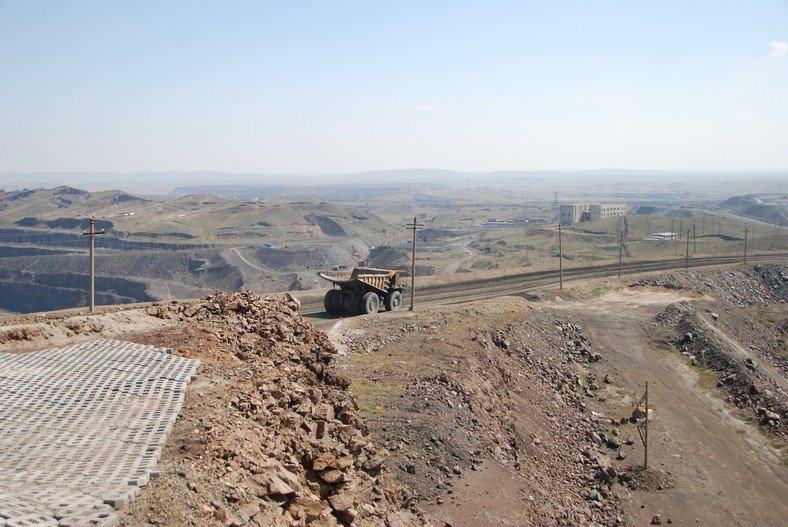
The Metal Mine of Rare Lands in Bayan NIEW in China
The elements of rare lands are often obtained as a by -product during heavy metal extraction. After their extraction, crushing and separation, a mixture remains, which in a complicated chemical process is separated into individual elements of rare lands.
2: China produces, the west remains dependent
About 70 percent The world production of rare lands comes from China. If you add to this raffining imported metals and their further processing, The Middle Kingdom controls 90 percent global supply chains. Most exports leave the country in the form of finished products, such as batteries and magnets.
The United States with an annual production of 45,000 are in second place. tons (for comparison, China produces 270,000 t). Once an important Mountain Pass mine in California was closed in 2002 due to unprofitability, but in 2010 it was re -opened, among others to reduce dependence on China. To this day, however, there is a lack of processing power, which is why raw materials are sent to China.
The third power is Mjanma, which produces 8 percent, and Australia, Thailand and Nigeria after about 3 percent.
3: Why is China's plan working?
China's domination is not an accident, but the result of decades of planning. Since the 1970s, this country has been investing huge resources in raw material technologies and currently has the most patents in this field. At the same time, competitive production in the United States and Europe almost completely ceased due to strict regulations regarding environmental protection and high production costs.
New development projects are difficult to implement: investment periods are long, high environmental requirements, and low prices of a Chinese product make foreign projects unprofitable. The position of the monopolist gives China a strategic advantage, and at the same time is a popular means of pressure.
In the commercial dispute from the USA, Beijing reacted immediately, introducing export restrictions to seven strategically important metals of rare lands. In turn, the United States, which needs about 400 kg of rare lands to build one F-35 combat aircraft, try to reduce their dependence and find alternative sources of supply, for example through a contract on the supply of raw materials with Ukraine or search projects in Greenland.
4: Metals of rare lands for environmental consequences
Neodym, disroach and paseodym are needed for the production of durable magnets, which are mounted in electric car engines. The International Energy Agency estimates that as part of the zero net emission strategy, the demand for rare lands will double until 2040. At the same time, their extraction is an environmental burden.
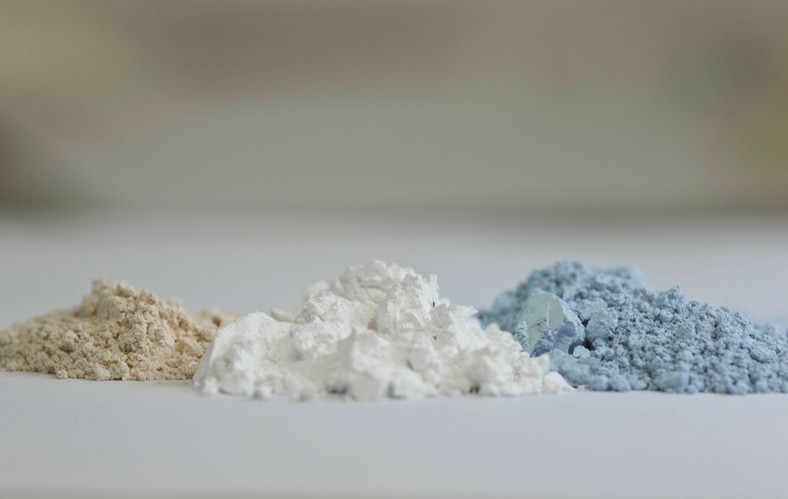
Curo oxide, ITR oxide and neodymium oxide – rare elements – photographed at Tradium GmbH in Frankfurt am Main in Germany
When extracting from deposits, radioactive elements, such as track and uranium, are released, which mostly remain unprocessed and get into the air, water and soil. The chemical separation of individual elements of rare earth also requires the use of various acids, whose remains are toxic and difficult to recycled. There are up to 2,000 T contaminated waste for each ton of excavated elements of rare lands. And although there are technologies that limit pollution emissions, they are not used on a large scale.
5: Recycling as an opportunity for Europe – but also China is leading here
The recycling of rare Earth metal recycling is only about one percent around the world. In addition to inefficient collection, the chemical separation processes are responsible for this. This is to change: the EU intends to cover 25 percent by 2030. own demand for seven strategically significant metals of rare lands through recycling.
This requires research and innovative solutions, such as those developed by a PhD student from the Federal University of Technology in Zurich Marie Perrin, a recently awarded Young Inventors Prize. It proposed a simple process of recovering rare elements of rare lands, such as Europe and Itt, from luminophores. However, most patents in the fight to recover the rare lands are reported by another country: China.
Conclusions
The global race for access, processing and innovation has been going on for a long time. While China dominates, the West is looking for answers – in recycling, research and better international coordination. However, until balanced, and above all independent value chains become reality, the world will remain addicted to expensive raw material, in which China plays a key role.