Experts of the RynekPierwotny.pl portal especially for Business Insider have looked at the housing situation in a different way from standard analyzes. Among others Instead of focusing on the number of dedicated premises and houses, they took into account their usable area. – This approach takes into account the very large differences in the average size of the completed residential premises (approx. 51 sq m in 2024) and a single -family house (approx. 130 sq m) – explains Andrzej Prajsnar, expert on the RynekPierwotny.pl portal.
Analysis of experts of the RynekPierwotny.pl portal confirms that in addition to municipalities beating subsequent records (often located in large agglomerations), on the map of Poland we will also find municipalities where Nothing is being built anymore.
Read also at Business Insider
Apartments put into use
| RynekPierwotny.pl / Rynekpierwotny.pl
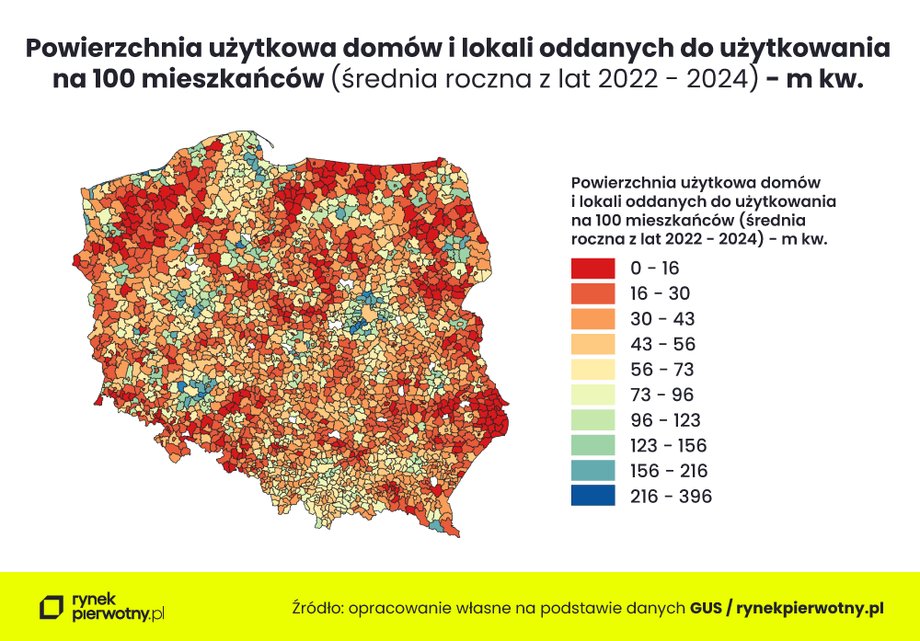
The analysis covered the average annual utility area of houses and premises commissioned to use per 100 residents of the commune in 2022-2024. The results turned out to be surprising. – Based on this data, it can be stated that from 2022 to 2024. In some municipalities per 100 inhabitants on average a year was the area of a completed single -family house (sometimes a large). In turn, other municipalities on average annually were characterized by 100 people with a metro corresponding to a typical studio, and even a single room – says Andrzej Prajsnar.
Tourism and agglomerations are driving a boom
The national average from 2022-2024 amounted to 53 sq m of premises and houses a year put into service per 100 people. Municipalities that can be divided into two categories: popular tourists and located near large urban centers are found much above this level.
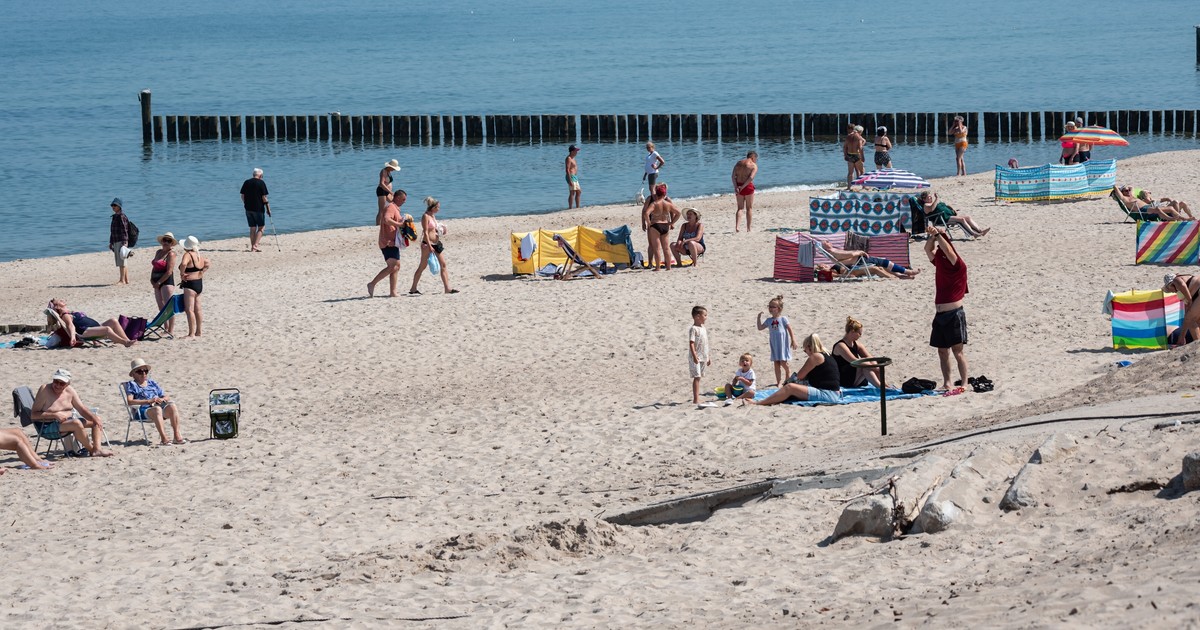
Mainly seaside tourist towns were in the lead. Satellite municipalities of Warsaw also took high positions.
The following municipalities include the top national leaders:
Dziwnów (urban -rural commune) – 396 sq m,
Ustronie Morskie (rural commune) – 296 sq m,
Mielno (urban -rural commune) – 293 sq m,
Nadarzyn (rural commune) – 286 sq m,
Raszyn (rural commune) – 283 sq m,
Miękinia (urban -rural commune) – 265 sq m,
Serock (urban -rural commune) – 260 sq m,
Lesznowola (rural commune) – 260 sq m,
Osielsko (rural commune) – 256 sq m,
Czernica (rural commune) – 240 sq m,
Żabia Wola (rural commune) – 236 sq m,
Kosakowo (rural commune) – 233 sq m,
Sztutowo (rural commune) – 216 sq m,
Międzyzdroje (urban -rural commune) – 216 sq m,
Cisna (rural commune) – 210 sq m.
These municipalities, although enjoying dynamic development, often struggle with problems accompanying the rapid increase in the number of inhabitants and the housing resource. However, as the expert emphasizes, many Polish municipalities could envy similar problems.
Dramatic results of eastern Poland
At the opposite pole there are municipalities where housing has practically froze. Areas with results below 16 sq m per 100 people are not only eastern Poland, but also significant parts of the West Pomeranian Voivodeship, Lower Silesia and even Greater Poland.
The results of municipalities such as:
Told (rural commune),
TELATYN (rural commune),
Nurzec-Station (rural commune),
Bisztynek (urban-rural commune),
Korsze (urban-rural commune),
Budry (rural commune).
– The above municipalities over the last three full years have usually been characterized by the number of houses and premises put into use at the level from scratch to one or two per year, which, per 100 people, meant a size close to zero. Regardless of the size of the commune, such results may indicate a serious demographic crisis Prajsnar indicates.
Warning signal for demographics
Such drastic differences in construction activity can be an expression of deeper demographic problems. Municipalities, where new apartments are practically not built, often struggle with the outflow of population, the aging of society and the lack of developmental prospects.
Read also: Our children will live in 20 million Poland. We have a big problem
Voivodships such as Greater Poland or Mazowieckie are an example of huge regional differences, where areas in stagnation operate next to dynamically developing municipalities. This dualism of the Polish housing market may deepen, creating more and more developmental disproportions between different parts of the country.
Although the CSO official data may not reflect the actual population in individual municipalities, the general picture remains disturbing. Polish housing is clearly divided into boom and stagnation areas, which can have long-term consequences for the socio-economic development of the whole country.
I’m Ashley Davis as an editor, I’m committed to upholding the highest standards of integrity and accuracy in every piece we publish. My work is driven by curiosity, a passion for truth, and a belief that journalism plays a crucial role in shaping public discourse. I strive to tell stories that not only inform but also inspire action and conversation.