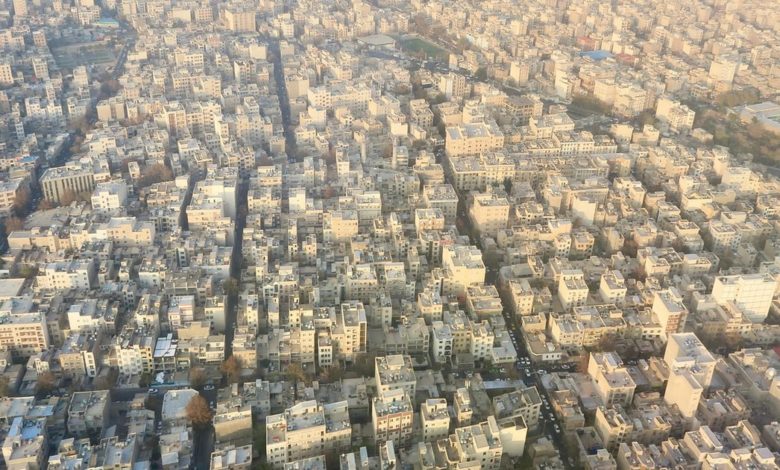
It is a country with 90 million inhabitants, bordered by Iraq and Turkey to the west, the golf monarchies to the south, Armenia, Azerbaijan and Turkmenistan in the north, Afghanistan and Pakistan to the east. Rich in oil and formed in half of ethnic or religious minorities, Iran is thus surrounded by areas of conflict, open wars and Sunnite states with which this cradle of chism has always been in competition.
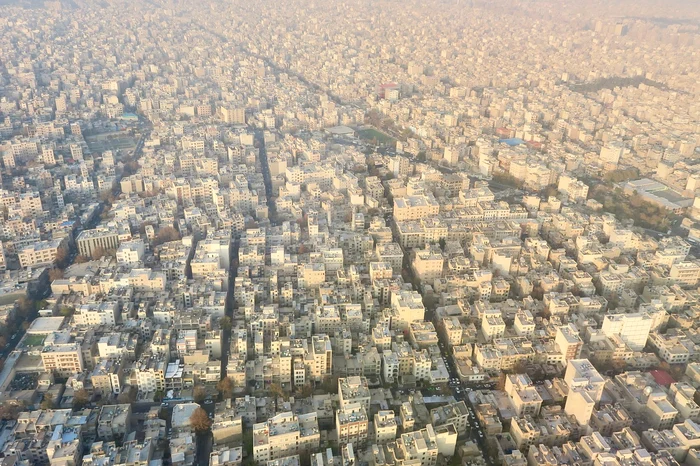
Panoramic image of Tehran Photo Pixabay
The former Persie against whom Muhammad has unified the Arab peninsula in the new Islamic faith has thus become a clock bomb. There are every reason to fear that the collapse of its regime will soon cause such internal shocks that the entire region will be affected.
The danger is immense and the only way to avoid it would be for the Iranians to manage to organize a political transition between agonizing theocracy and the freedom regime that they aspire to so ardent.
This was the case of Spain between the end of Franchism and the establishment of democracy. Of course, Europe had nothing in common with today's Middle East. Spain was in a period of peace, Iran is not, but, half a century away, the Iranians benefit from the same advantage as the Spaniards.
Like them yesterday, they have the advantage that within their dictatorship a margin of people who broke the orthodoxy of the existing system, reformers who wanted real or sufficiently lucid changes to see their need.
In Spain, it was mainly technocrats trained in the United States or in European capitals. In Iran, these men, and sometimes women, all believed in the Islamic Revolution that some of them defended until participating in mass repression, but whose corruption, blindness and regional adventurism could no longer tolerate them. Many have discreetly marked their difference in Parliament, in the press, in culture or even in the highest echelons of the device. Others actually broke the theocratic system, applying as reformers declared to elective functions, town hall, deputies or the presidency of the Republic.
Those whose candidates have not been forbidden by the theocratic authorities thus became opposites inside the regime, rapidly marginalized, such as Mohammad Khatami, the reformer chosen and re-elected president in 1997 and 2002, or even placed under house arrest, such as Mir Hossein Moussavi, candidate for the 2009 presidential elections. Ahmadinejad, in favor of which the urns were filled with fake ballots.
Thus, there are several battalions of reforming, declared or hidden frames in Iran. Their number varies considerably depending on the administrations, but they are even among the clergy. It is a situation very similar to the one revealed in the USSR by Perestroika to Mihail Gorbachev, and these people – to hope, to keep the fists – they could play for a period of successors that should normally belong to organized opposition forces, which have not existed for a long time.
In this formerly politicized country, the political parties and currents were all destroyed by the arrests, executions and mass murders led by this ruthless theocracy.
Apart from the reformers from the regime, there are currently no forces prepared to take over power, but that does not mean that there are no opponents in Iran.
Artists, lawyers or writers, this country counts many personalities admired for the courage they have risen against molluscs. Not only will these dissidents have an influence in future debates, but the struggles that have constantly provoked the Islamic Republic in the last three decades have also formed countless men and women in the struggle for freedom.
The older ones, who are already over 50, have known mobilizations for the choice and re -election of Mohammad Khatami. The youngest went out after death, in 2022, of a young woman killed by the regime militia because she did not wear the veil long enough. It was the moment when the movement of “woman, freedom” was advised and, meanwhile, the “green revolution” of 2009 took place, with huge protest manifestations against the fraudulent re -election of Mahmoud Ahmadinejad.
Each time, the power has managed to take control by an increasingly ferocious repression. Only in the last year, the mulls performed over 500 capital executions, but this constant struggle between the real country and the legal country transformed Iran into a total paradox. While the dictatorship is so ferocious and the Republican institutions are totally controlled by the religious institutions embodied by the Supreme Guide, in no other country there are so many citizens who benefit from such a political experience.
Iran is, par excellence, the country of warned citizens. In order to avoid a chaos that could become bloody, it would be enough for the most respected reformers and dissidents to call together to a peaceful transition that allows the establishment of a political painting and organizing free elections. Time presses us. It's a matter of a few days.