China develops the first electronic war technology with 6G: The system would be able to annihilate the F-35 aircraft radars in a few seconds

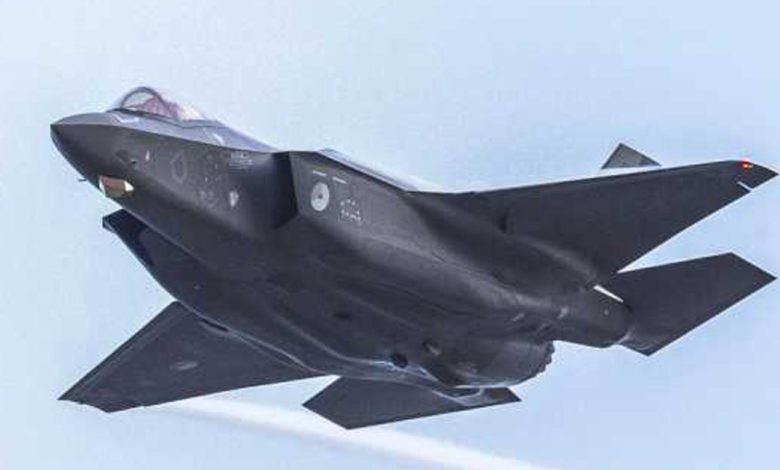
In full global technological competition, China announces an achievement that raises question marks in Western capitals. Defense researchers have developed an electronic war platform (REB) based on 6G technology, which states that it can neutralize, almost instantly, the most advanced American radar systems, including those used on F-35 invisible aircraft.
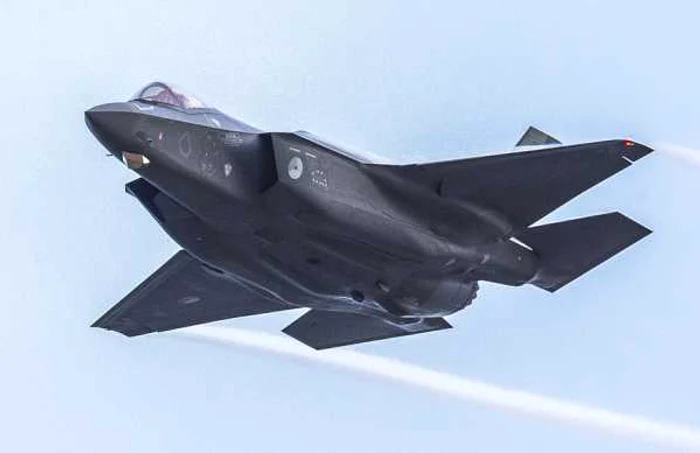
F-35/ photo fighter plane: Profimedia
The information was published by South China Morning Post, which cites a recently published article in the scientific journal Acta Sinica. At the base of the project is a research team coordinated by Professor Deng Lei, from the University of Science and Technology Huazhong. The project has benefited from a financing of almost $ 10 million from the Chinese state, the army and large technological companies.
Photonic Technology for a new type of electronic war
The system, described by developers as the first of this kind confirmed publicly worldwide, combines photonic technology with 6G communication in a compact ensemble, capable of functioning simultaneously as a signal disturber, passive radar and high-speed communication device. Unlike traditional systems-often bulky and limited to a single function-this device integrates analysis, jamming and transmission into a modular, small size architecture.
According to the quoted sources, the system is able to intercept and burst the high frequencies of the X band, where the advanced radar of AN/APG-85 operates on the F-35 aircraft, a radar recognized for the difficulty with which it can be counteracted by conventional methods. The Chinese platform generates thousands of false signals – over 3,600 “ghost targets” – designed to confuse Radar systems and enemy pilots.
Military communication capacities with over 300 platforms simultaneously
In addition to jamming functions, the system also works as a state -of -the -art communications hub, capable of transmitting and receiving huge volumes of real -time data, using high -speed optical networks and connecting up to 300 military platforms. One of the key innovations is the ability to communicate full-duplex (simultaneous two-way) on the same frequency-technological performance considered particularly difficult to achieve so far.
Strategic ambitions in a new geopolitical landscape
Beyond the technical details, the stakes of this innovation is a geopolitical one: China tries to strengthen its leading position in the field of 6G communications, with direct applications in the sphere of defense. According to the authors, this technology not only changes the rules of the game in the electronic war, but announces the beginning of a new stage in the military rivalry between the great powers.
Independent sources, such as the interesting engineering portal, confirms that the article published in Acta Sinica brings relevant details and a level of transparency rarely encountered in Chinese military research projects. So far, the system has not been tested under fighting conditions, but the technological potential is obvious-especially in a context in which the Western air superiority is directly questioned.
Regional context and emerging partnerships
Against the background of the strategic approach between Beijing and Moscow, developments in the Chinese technological field also attract attention to Russia. Recently, Russian special forces have used Chinese LASS laser systems against Ukrainian drones, in a demonstration meant to emphasize the closer collaboration between the two states of military technology.
At the same time, the Chinese press recently reported on another impact innovation: a plasma air excitation technology, which would increase the efficiency of high altitude drones by up to 88% – another signal that Beijing builds, step by step, a portfolio of capacities capable of counteracting NATO's technological superiority.