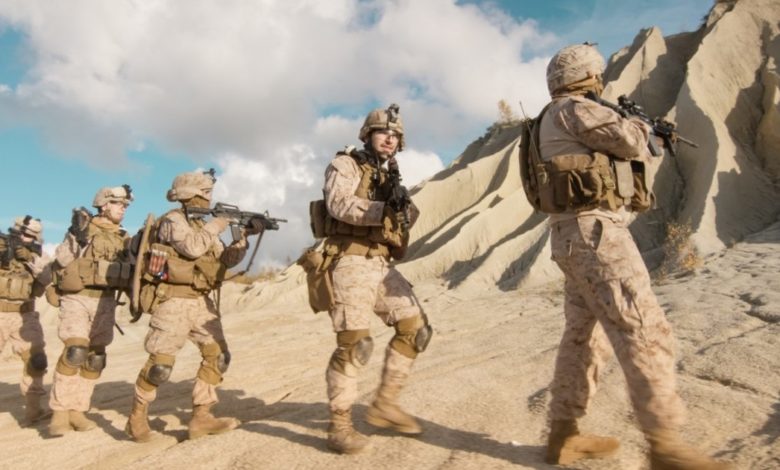
Officially, the Trump administration does not want to send the land troops to Iran. Unofficially, however, things are much more nuanced.
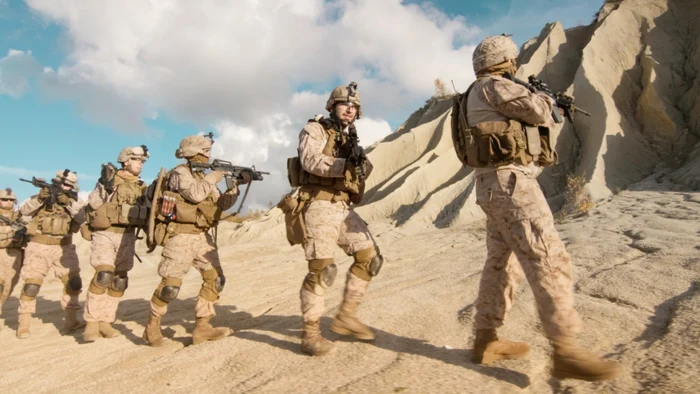
Soladti Americans/photo: AFP
The statements made on Sunday by JD Vice Vice -President and Secretary of State Marco Rubio seem to close the subject: the United States will not soldiers in Iran, they do not want a prolonged conflict, and the air attacks on the Iranian nuclear infrastructure would be sufficient a warning. “We are not afraid of climbing,” Vance said in an interview for NBC News-a message almost opposite to the one transmitted in April, when Iran launched ballistic missiles to Israel.
But the reality in the field often ignores official statements. Iran is not going to leave this American blow unanswered. Ayatollahul Khamena, the supreme leader, has just suffered one of the biggest strategic humiliations of the last year – an air offensive that questions not only Tehran's defense, but also the legitimacy of the regime itself. At such times, decisions are no longer taken with cold blood.
Iran launched Monday rocket attacks on American military bases in Qatar, in response to American bombings on its nuclear sites and escalating stresses in the unstable region. The Qatar condemned the attack on the Udeid air base, but said he had successfully intercepted missiles and that no victims were reported.
British officials warn of an intensification of the terrorism supported by Iran
There are already worrying signals in Europe: British officials warn of an intensification of terrorism supported by Iran, while MI5 confirms that threat is “credible and growing.” Even more alarming, some sources talk about potential Iranian attacks asleep right on the US. If any of these were activated, the American response would become inevitable – and probably harsh.
This is the real stake of the question “Will American soldiers be sent to Iran?” The official answer is no. But if the strategic interests of the US are attacked – if the Americans are injured or killed, if the Ormuz strait will be blocked, if Iranian missiles will hit embassies – then the answer changes. Not because the administration would like, but because the geopolitical realities will impose it.
An eventual closure of the Ormuz straits would lead to a complex military reaction, which would involve not only planes, but also naval forces and, inevitably, special troops on the ground. Moreover, such a crisis would consume from the already limited resources of the American missile defense – essential resources and in the case of a possible future confrontation with China around Taiwan.
The truth is that a terrestrial intervention in Iran is not a desirable scenario for the White House, but it is one prepared on the Pentagon table. US special forces – such as those already used in Syria or Afghanistan for punctual missions – could become the first line of contact. The CIA has, of course, similar capacities, but an extended scale confrontation requires more.
Finally, Trump can refuse. May decide not to climb. But if Iran manages to impose the rhythm of the game, if the initiative passes into the hands of Tehran leaders, the internal political pressure on the US president will become unbearable. The rhetoric “America First” will no longer take place of strategy in the face of direct and lethal challenges.
The promises that there will be no “Boots on the Ground” – American soldiers in Iran – are soothing for the electorate. But in reality, they are promises that can be shattered by the first attack with victims.