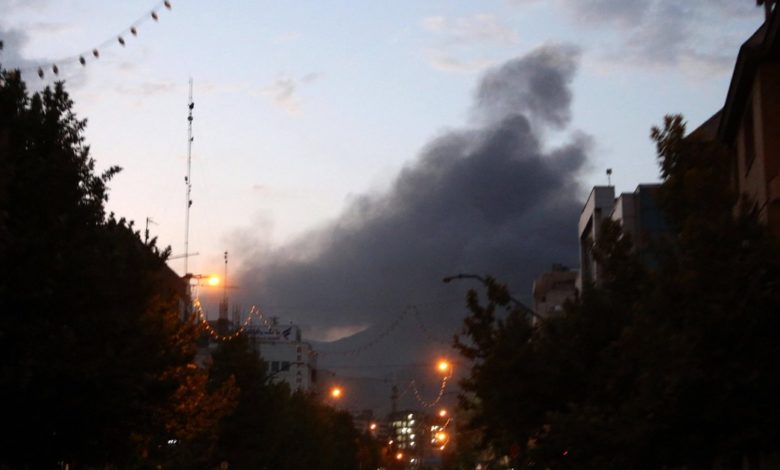
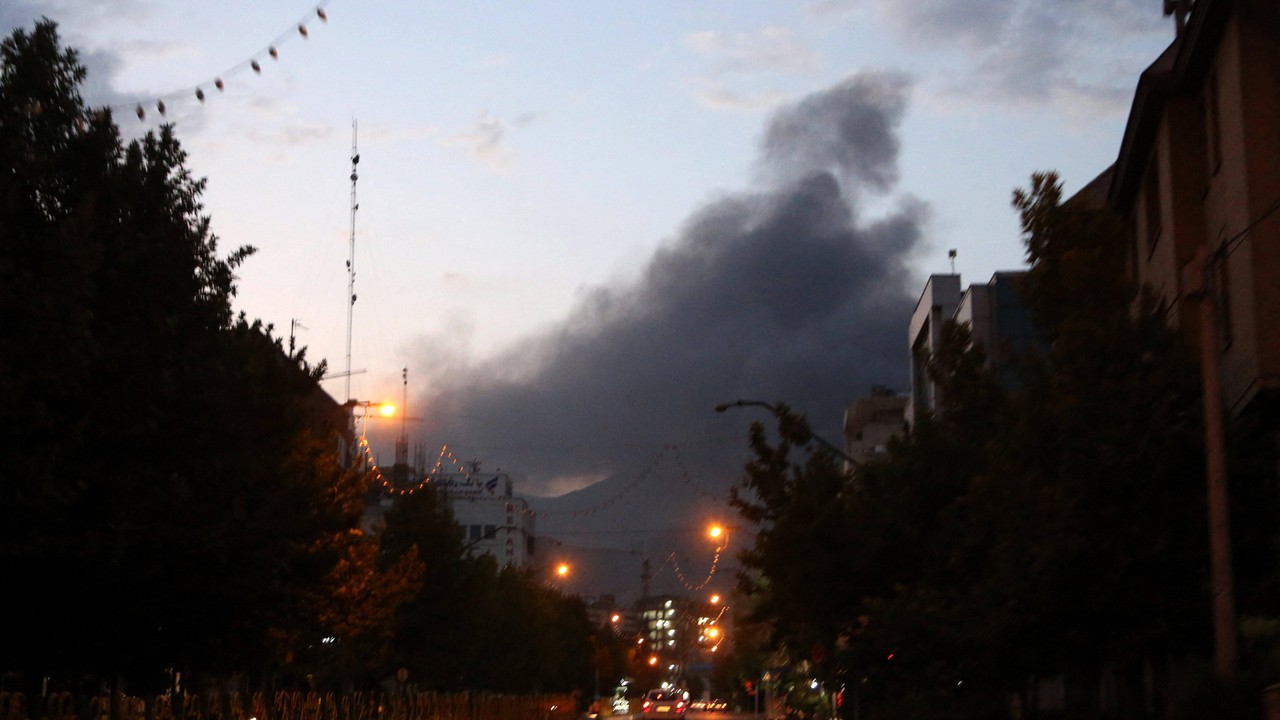
The rabbis of Isfahan made condolences to the “noble Iranian nation” because of the martyrdom of the victims of Israeli raids and expressed the conviction that “the proud and honorary Islamic Republic of Iran would give the crushing answer to the Zionist regime and will make him regret his shameful actions.”
The Ministry of Health Iran said that 224 people were killed in Israeli attacks since Friday, and 1277 were hospitalized. Over 90 percent civilians are the victims. 24 inhabitants of Israel died in Iranian attacks.
Currently In Iran, he lives – according to various estimates – from 8 to 20 thousand. Jews. They constitute a very small minority, but their situation in a theocratic Muslim state, where human rights are violated on a daily basis, is not bad.
There are about 30 synagogues in Iran, 10 kosher restaurants, and in the capital there is also a Jewish rabbinical seminar, in which young men are educated to rabbis and teach the rules of ritual slaughter, and the Macy Factory, which is of great importance when celebrating the Pes Festival. In recent years, the Jewish community has achieved several significant successes: it has been won, among others, so that classes in Jewish schools did not take place on Saturday (Sabbath) and a modern self -cleaning ritual bath (skewer) in Tehran was renovated.
The relatively good situation of Jews in Iran is based on completely cut off from Israel. The condition for acceptance and tolerance by the authorities is absolute loyalty to Iran and emphasize the distance to the “Zionist regime”, as is the case in the statement of Isfahan Jews about the war.
In an interview with the Israeli magazine “Israel Hajom”, a specialist in Iranian matters Dawid Nisan, born in Tehran, said in February that “the biggest challenge for the Jewish community in Iran is the need to separate Judaism from Zionism.”
The expert also drew attention to the Iranian law, which “following the Muslim law (Sharia), sanctions discrimination between Muslims and non -Muslims.” Despite this, many community members are not planning to emigrate.
– Those who want to leave Iran can do this – says Nisan – but most Jews (in Iran) do not see Israel as a better alternative, worth leaving everything behind them, mainly for cultural, economic reasons, and also related to safety.
The Jewish community in Iran maintains a strong sense of pride – both cultural and national, despite the fact that its members must struggle with a lack of trust and are perceived as a “suspicious element”.
– Jews do not suffer from persecution or violence and can lead life in accordance with the principles of Judaism without the interference of the authorities. Their rights as an official religious minority are protected by Iranian law and the constitution, they also have their representation in parliament [irańskim Zgromadzeniu Konsultatywnym] – convinces Nisan.
Jews have been living in the Iranian area for millennia
The Jewish diaspora in today's Iran is one of the oldest in the world – the presence of Jews in these areas dates back to about 2700 years. Judaism is one of three minority religions officially recognized by the constitution of the Islamic Republic of Iran, next to Christianity and Zoroastrianism.
At the time of the creation of the State of Israel in 1948, around 150,000 lived in Iran. Jews. Only a third of them immediately went to the newly created Jewish state, mainly for economic reasons. Starting from the 1950s, the Jewish community in Iran was experiencing the period of greatest prosperity, especially in economic and intellectual dimensions. Although they were only a fraction of society, the Jews were strongly represented among members of the Iranian Academy of Sciences, academic lecturers and doctors.
At the time of the outbreak of the Islamic Revolution in 1979, around 90-100 thousand lived in Iran. Jews. Due to the difficult situation during the revolution, most of them emigrated – mainly to the United States, part to Israel and Europe. Ayatollah Ruhollah Chomeini, however, published a fata, in which he separated the Jewish community in Iran from “ungodly Zionists”. Based on this fatal, Jews should be protected and tolerated as loyal Iranian citizens, unless they identify with Zionism.