Israel succeeded in Iran in 48 hours what Russia wanted from the beginning, but did not obtain at any time in Ukraine

Israel now controls an important part of the sky above Iran, which allows it to bomb, more efficient and cheaper, the desired targets, say officials and experts quoted by Wall Street Journal and New York Times.
Just 48 hours after the first Friday morning attack against Iran, Israel announced that it had obtained the air superiority over the western part of the country, including on Tehran. This is after, starting last year, Israeli forces have repeatedly struck and decommissioned Iranian anti -aircraft systems.
The Israeli war planes have therefore started to throw bombs from the Iranian airspace, instead of based on expensive long -range missiles.
It is an achievement that the reducible Russian air force has failed to reach Ukraine in the three and a half years, stresses the Wall Street Journal.
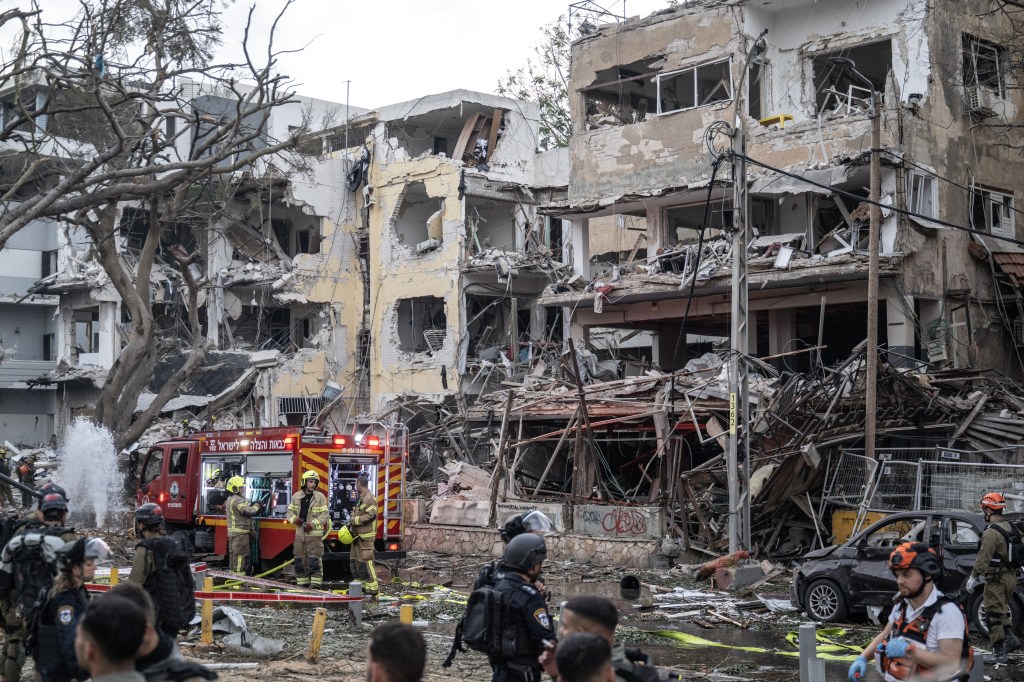 Live wave of Iranian missiles on Tel Avivului and the Haifa port city, a resulting resubutant and hundreds of wounded, Israel threatens with a hard answer / Israeli army says it now has full air superiority above Tehran-Video
This failure was one of the reasons why Moscow troops stuck in a positional war, on the ground, suffering huge losses.
On Sunday, Israel has exploited his advantage, saying he destroyed dozens of soil-air missiles in western Iran and that he killed the head of the Secret Services of the Guardians of the Revolution.
The fundamental importance of aerial superiority
The two wars are very different in many respects – for example, the Israeli campaign in Iran does not have a conventional terrestrial component.
But the experience of these two conflicts, observed closely by armies around the world, strengthens what military strategies have known for decades: control over air space is everything – if you can get it.
“The two campaigns demonstrate the fundamental importance of air superiority to achieve your general military objectives,” the Wall Street Journal Lieutenant of US Air Force David Depul, dean of the Mitchell Institute for Aerospatal Studies, which supervised the aircraft operations against the Taliban and Al-Qaeda in Afghan and Al- 2001.
“In the case of the war between Russia and Ukraine, it is seen what happens when none of the parties can achieve air superiority: Impas and degeneration in a war of wear,” he said.
 The major mistake made by Israel in front of Iran: now “Iranian missiles manage to penetrate all the layers of Israel's aerial defense systems”
“In the case of the war between Israel and Iran, this allows them to be unrestricted to attack where they have aerial superiority on some segments in Iran,” he said.
The first attacks used F-35 aircraft. Subsequently, the F-15 and F-16 planes joined the struggle
The first Israeli air attacks used F-35 aircraft from the fifth generation, improved with Israeli changes.
Now that most of the Iranian anti-aircraft defense systems have been neutralized, older fighter jets, such as F-15 and F-16, join the fight.
Israel also began to launch, with devastating effects, short -range bombs, which are cheaper and in larger numbers than rockets.
“In the last 24 hours, we obtained an air route to Tehran and held an air battle of defense. gender. Eyal Zamir, quoted by Times of Israel.
The result was that now, the Israelis have the ability to use the entire range of offensive weapons.
“Where is our anti -aircraft defense?”
Israel has no total operating freedom in Iran, and Iranian officials have claimed that they have dropped Israeli drones in recent days, writes New York Times.
Some of the Iran's aerial defense systems remain intact, forcing Israeli pilots to navigate through carefully mapped air corridors, according to an Israeli official in the field of defense, which spoke subject to anonymity to discuss sensitive information.
The Israeli army, said the official, is based on real -time information to follow the possible threats to his aircraft as they enter and exit the Iranian airspace.
But the Israelis now have the ability to fly through most of the Iranian airspace almost as easily as they can do it above Lebanon and Syria, according to Zohar Palti, a former superior in Mossad, the Israel's Foreign Intelligence Service.
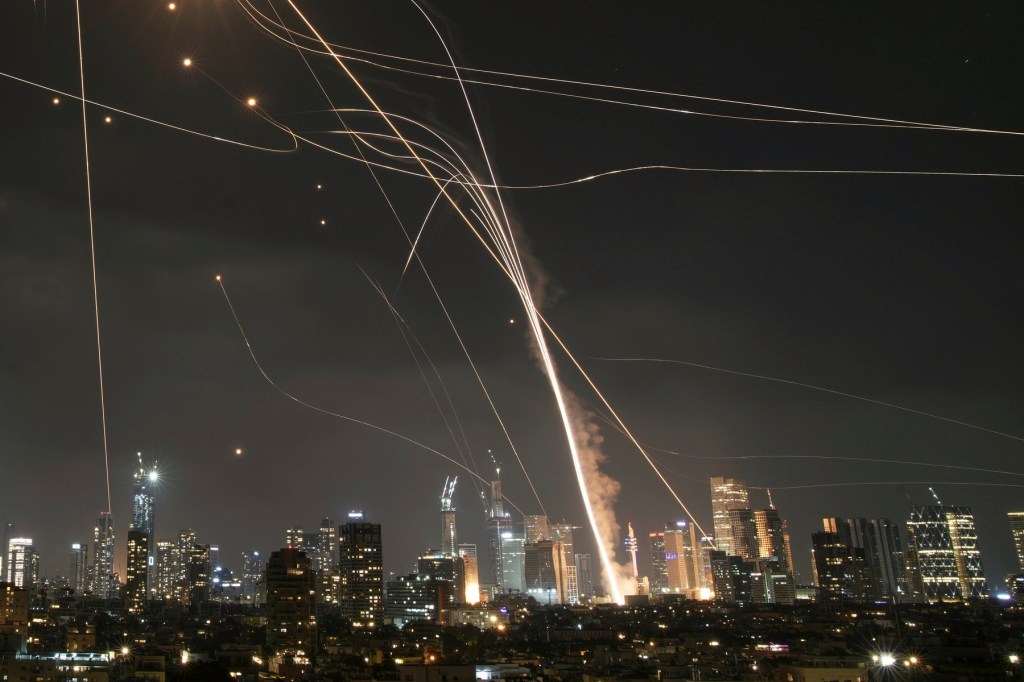 The last nights showed why Israel is afraid of the destructive Iranian ballistic missiles / how many rockets does Tehran have and what IDF can do to stop them
Even Iranian officials have recognized deficiencies in their defense.
In the private text messages seen by the New York Times, some officials wondered: “Where is our air defense?” And “How can Israel come and attack whatever he wants, to kill our peak commanders, and we are unable to stop him?”.
The Israelis are simply better than the Russians. Ukraine, better than Iran
The Israelis certainly learned from Russia's failures – and from the successes of Ukraine – while planning their own campaign against Iran.
But, say military officials and analysts, the most obvious lesson so far is that Israeli air forces are more capable than the Russian ones, while Ukraine is much better than Iran.
“Israel has managed to surprise and overcome the anti -aircraft defense of Iran, which represented a much easier target than the Anti -Aerian defense of Ukraine from almost all points of view,” said the Wall Street Journal Kofman, senior researcher at Carnegie Endowment and expert in the Russian and Ukrainian armies.
“Asymmetry in terms of qualitative capacity between Israeli and Russian air forces is also vast and can be easily observed,” he added.
Like Ukraine, whose Soviet fighter jets were substantially outdated in 2022, Iran does not have fighter jets capable of surviving air fights with the enemy.
Unlike Ukraine, however, Tehran has spectacularly failed in organizing terrestrial anti-aircraft defense in a way that could significantly have hindered the ability of enemy planes to operate above its territory.
A fatal error
This was primarily the result of a fatal political calculation error. For decades, Tehran has invested insufficiently in the anti -aircraft defense and has instead relied on the power to discourage their own missile forces and its regional allies.
“Iran has never based only on anti -aircraft defense to reject such attacks. The idea was always to use discouragement,” said Fabian Hinz, military expert at the International Institute for Strategic Studies.
But the main component of Iranian discouragement – the Hezbollah militia in Lebanon – was decimated by Israel last year and then physically separated from Iran by collapsing the Assad regime in Syria.
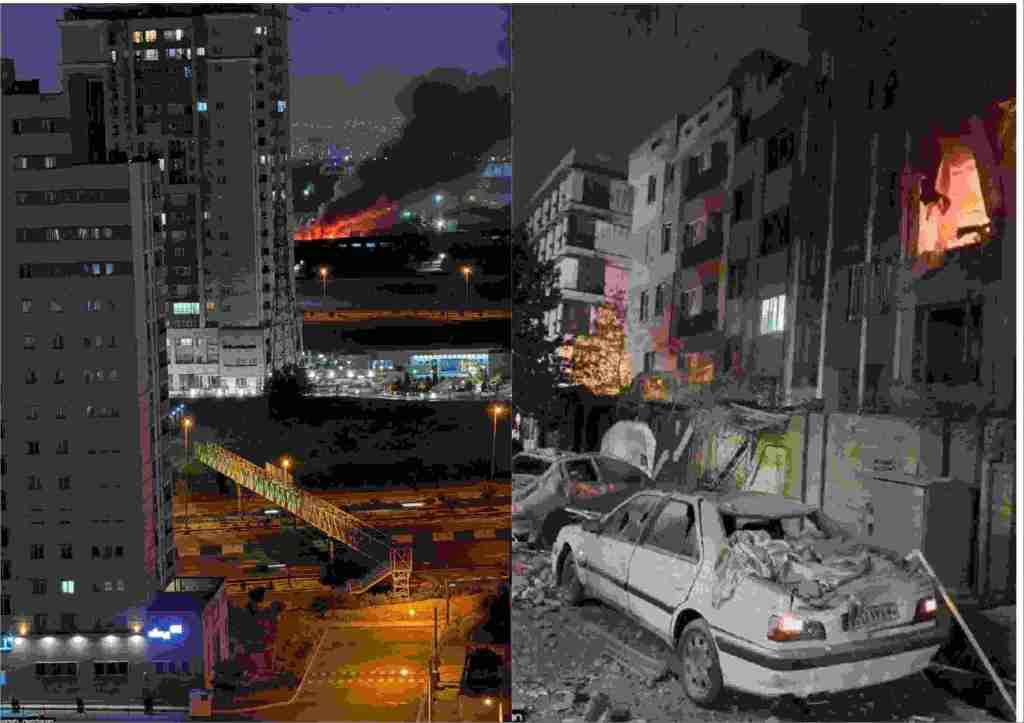 A secret base of drones located by Mossad near Tehran and six waves of air raids: how did the massive attack of Israel and what follows after the surprise that upset Iran
Subsequent Israeli attacks on Syrian anti -aircraft defense installations have created a highway that Israeli aircraft can use unstoppable on their way to Iran.
By comparison, the Ukrainian anti-aircraft defense systems-mainly Soviet S-300 and Buk-were much more robust and better integrated in 2022 than they proved to be the Iranian ones once Israel attacked.
Tehran is based on a mixture of S-300 systems, Chinese batteries and locally manufactured anti-aircraft defense systems.
The surprise of the Israeli attack
Equally important was the element of surprise. Due to the warnings of American intelligence services regarding the imminent invasion of Russia, the Ukrainian military command dispersed and hidden most of its mobile anti -aircraft defense systems in February 2022.
After a few Russian aircraft were shot down above the Ukrainian cities, Russian planes ceased to operate beyond the front line – a situation that remains unchanged today.
In order to hit targets deep inside Ukraine, Russia must rely on limited stock of cruise or ballistic or drones, which are slow and have a limited useful load.
Unlike Ukraine in 2022, Iran was taken by surprise – part of Israel's misleading threats if the US and Iran negotiations for June 15 will not make progress.
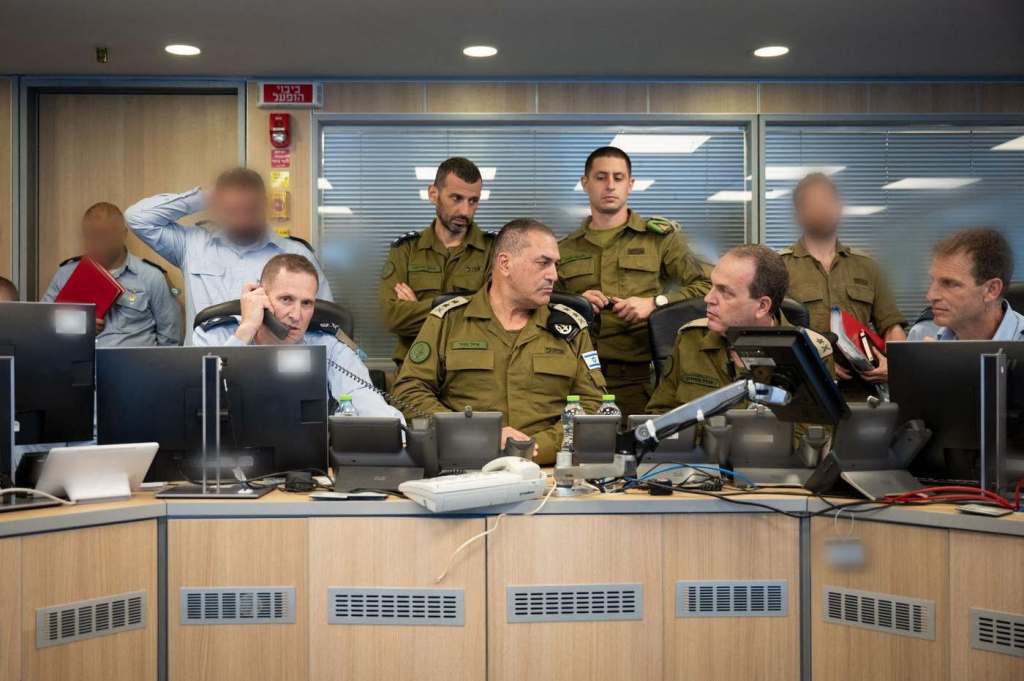 “A perfect smoke curtain.” How the Israelis fooled the leaders of Tehran, before the devastating attack of this night in Iran
Instead, the war started two days earlier.
In addition, the special Israeli operations teams secretly entered Iran and destroyed the main means of Iranian anti -aircraft defense with short -range drones at the beginning of the campaign, using a method similar to the one by which the Ukrainian secret services, just two weeks earlier, destroyed several strategic bombers.
At the same time, Israel managed to assassinate much of the military leadership of Iran – another possible operation due to the superior espionage activity.
“Basically, what Israel did with Iran is what Russia wanted to do with Ukraine: they thought they could perform a secret operation, infiltrate and decaize the Ukrainian regime,” said Michael Horowitz, Israeli geopolitical analyst.
“But it has been shown that Ukrainian society has resilience and cannot be so easily penetrated – while, in terms of Iran, the regime is so unpopular that it is easy to find people there who will agree to collaborate with Israel,” he told Wall Street Journal.