How correct is the idea that poor countries are poor because their inhabitants don't work enough?

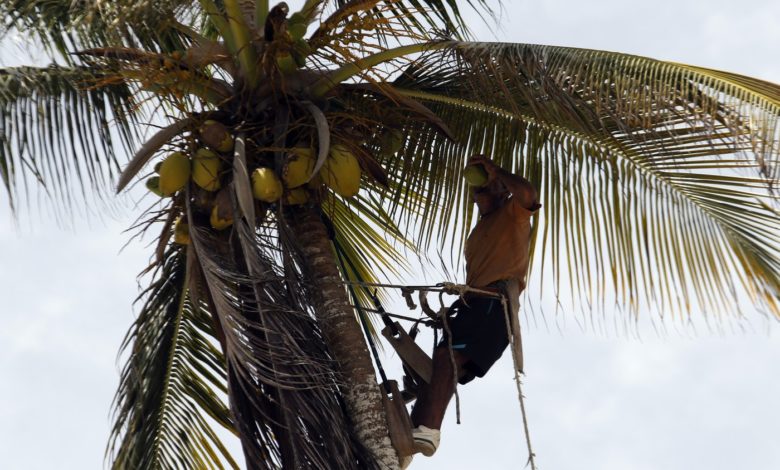
In the minds of many, the coconut is like a kind of tropical banknote: the symbol of natural wealth, but also the favorite “excuse” for poverty in the tropical areas.
A common assumption in rich countries is that poor countries are poor because their inhabitants do not work hard.
And considering that most poor countries are in tropical areas, people bind the lack of work and living easily by the abundance offered by the tropics- fruits increase everywhere, and high temperatures reduce the need for resistant shelters. Or the need to have many clothes, writes Joon Chang in “Edible Economics”. This idea is often expressed in an offensive way using the image of coconuts: tropical countries are poor because the “natives” are under coconuts and wait for coconuts to fall, instead of trying to produce various things.
A pretty plausible story – it's just completely false
To begin with, few rational residents of tropical countries would extend under a coconut, even if they wanted a free coconut. If they did, there is a danger that the coconut that falls to crush their skulls (people are killed by the coconut that fall, so much that there is an urban legend that coconuts kill more people than sharks, which is not true).
So, even if you are the “lazy” fictional native, you would not stretch under a coconut-you would wait (stretch, if you prefer, although it is not obligatory to do it) elsewhere and check if any coconut has fallen under the tree, Chang confesses.
In fact, people in poor countries work much longer than those in rich countries.
According to the World Bank data, in 2024, the rate of participation in the labor force (the share of the occupied population in the age group in the total population of the same age group) was 84% in Tanzania, 74% in Vietnam and 68% in Jamaica, compared with 61% in Germany, 62% in the US and 63% in South Korea. In fact, the World Bank classifies countries and depending on the income, showing that in low -income countries it works more than in high income.
In poor countries, a huge proportion of children work instead of going to school. A UNICEF report from June 2025 shows that nearly 138 million children were employed in 2024, including dangerous work that could endanger their health, safety or development. Of these, two thirds are from the areas considered tropical.
In Ethiopia, almost half of the children worked (49%), while in countries such as Burkina Faso, Benin, Ciad, Cameroon and Sierra Leone the weight of children working was about 40%
Moreover, in the rich countries, the vast majority of people between eight and twenty -four, who are in the peak of age, are in tertiary education (college, universities and others). The percentage of those who are in tertiary education in the relevant age group could reach up to 90% in some rich countries (such as the US, South Korea and Finland), while in forty poor countries is less than 10%.
This means that, in rich countries, most people work only after spending good years in universities, learning things that may not directly increase their economic productivity, even if those things are very valuable for other reasons-literature, philosophy, anthropology, history and so on.
In poor countries, a lesser proportion of people survive up to the retirement age (between 60-67 years, depending on the country) than in the rich countries.
In addition, the elderly in poor countries tend to work over the average retirement age because many of them cannot afford to retire much later than their homologists in rich countries, because many of them cannot afford to retire.
Even when they work, people in poor countries work much more than those in rich countries. People in poorer, more “hot” countries, such as Cambodia, Bangladesh, South Africa and Indonesia work about 60-80% more than Germans, Danes or French and 25-40% more than Americans or Japanese (which, by the way, works less than Americans).
If people in poor countries work much more than their counterparts in rich countries, their poverty cannot be a matter of misfortune. It is rather one of productivity. These people work many more hours for a much longer period of their lives, compared to those in rich countries, but they produce much less, because they are not as productive.
This low productivity, in turn, is not even due mainly to the qualities of individual workers such as education or health
Take individually, the workers in the poor countries are as productive as their counterparts in the rich countries. This aspect is easy to see if we think of immigrants from other Asian areas, which, once you come to Bucharest, experience an increase in productivity upon arrival, despite the fact that they do not acquire additional skills and do not experience dramatic health improvements in the migration process.
Or Romanians who work more or less at home but once in the West become more productive. This is because they work with better technologies in better managed production units (for example, factories, offices, stores), supported by a high quality infrastructure (for example, electricity, transport, internet) and more functional social arrangements.
It's like a rally pilot who used to drive a Logan would have moved to a Ferrari. The driver's skills matter, of course, but the winner of the race is largely determined by the engine of the car.
Now, the reason why the poor countries have less productive technological and social arrangements, which lead to low productivity, is a complex story: from the history of colonial domination that has forced the countries to specialize in primary goods with low value to the difficult political divisions, political leaders deprived of vision or corrupt.
Therefore, the inhabitants of the poor countries are not poor due to individual shortcomings. And, let alone because he wouldn't want to work.