Szymon Majewski, Business Insider Polska: We talk at the conference of the Polish Wind Energy Association. How do you see the future of this industry and renewable energy as such?
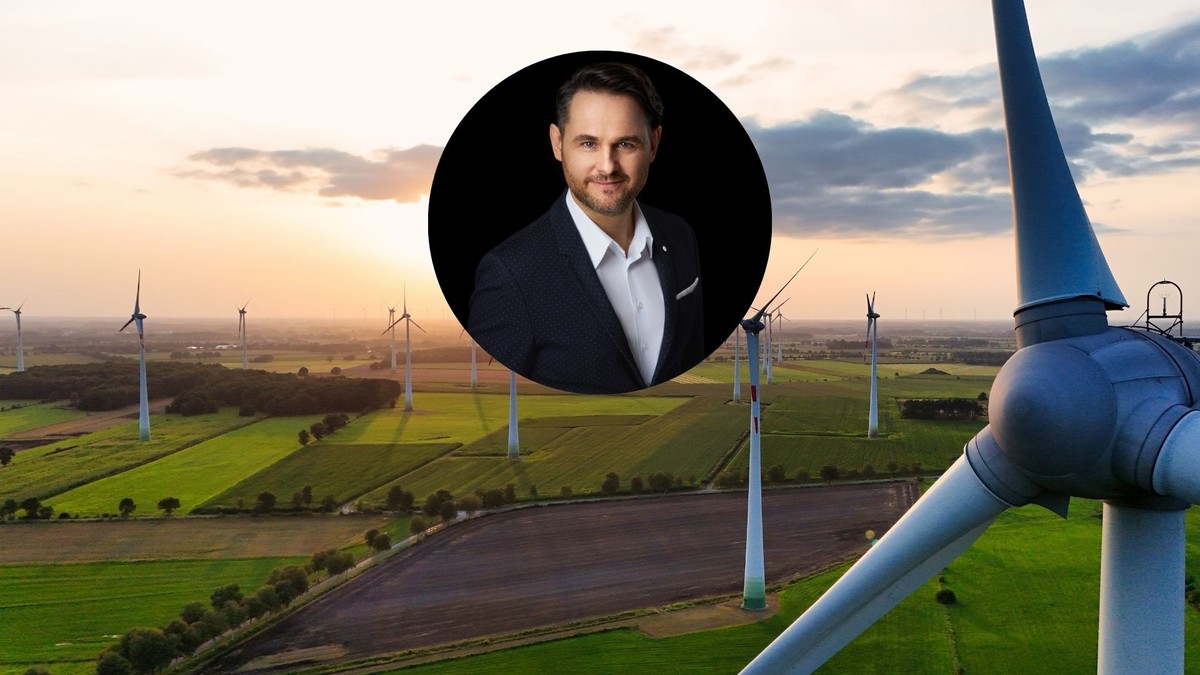
Tomasz Guzowski, president of OX2 Polska: Renewable energy has its challenges, but in my opinion, its future is positive. As Poland, we should definitely go towards its development – primarily because of security. The largest amount of electricity should be generated from its own and independent sources, which are resistant to geopolitical situation, turmoil on global raw materials markets and supply chain disorders.
According to the project of updating the national plan in the field of energy and climate, 56 percent should come from renewable energy in five years. electricity.
The project is not approved all the time – the question is what its final version will look like. Undoubtedly, however, we have a lot to do. If this or similar goal is to be met, we should clearly accelerate in a very short time, especially with permits for renewable energy sources.
For wind energy on land, the project sets the goal of 19 GW. What are the chances of achieving this level with current regulatory conditions?
Part of the wider wind generation will be secured from offshore projects. At the moment we have three final investment decisions and there are no major threats to their implementation. However, there is a lot to be done on land. It seems that the potential of land wind energy is much easier to unlock than involving the next phase of complex and cost -consuming wind energy projects at sea. Again, however, we must return to the key issue of accelerating procedures and implementing even regulations resulting from the EU directive Red III. RES projects should be treated priority.
What is the biggest problem in your current large projects?
I will repeat myself, but it is permitting. Investors should be able to implement projects not on the basis of a specific sequence of permits as it is today, when, for example, a building permit can be issued only after obtaining a positive environmental decision. Allow the procedure of these issues in parallel.
To what extent can the matter to be facilitated by accelerated areas of RES development, where all the procedures are to last for no more than 12 months?
The rules regarding their functioning are not entirely clear, it is also imposed on the confusion related to the reform of spatial planning. Many municipalities and specialists are just learning to proceed with new rules, including adopting general plans, there are also interpretative differences. As a result, the entire permitting process begins to extend. Wind technologies are still discriminated against in some way – the path of their procedure in planning documents is extended compared to the shortened path for PV sources. It is also not known whether wind investments will be able to use the next tool introduced by the reform, i.e. the integrated investment plan – the type of local plan adopted by the commune at the investor's request. There are different opinions on this subject in various local governments.
Spatial planning issues are close to social acceptance. What should investors do to convince local communities to wind projects?
From the perspective of over twenty years of experience in the renewable energy industry, I think that when it comes to the attitude towards wind energy, there was a lot of progress after all. Social acceptance for this branch of renewable energy is much greater than it used to be. Saturation of wind installations in Poland is so large that when going to the neighboring province, and sometimes the neighboring poviat, we have a chance to see how they function in practice. Direct contact with residents of municipalities but also local governments is very important.
Read also: The State Forests want to put windmills in … forest. Residents are protesting
Certain myths still require overthrow. It is good that there are initiatives such as training for employees of the Regional Directorate for Environmental Protection organized jointly by the Polish Wind Energy Association and the General Directorate for Environmental Protection, during which OX2 specialists could share their experience and explain the complexity of RES projects. This is a chance to deepen knowledge for administration employees, but also for a better understanding of administrative perspective for specialists working on projects.
As OX2, we also participated in an interesting meeting with local government officials in Podkarpacie. There were even very basic questions there – municipalities, for example, do not always realize that wind farms, also located on private lands, are associated with additional tax revenues. We see that communication on wind energy should use different channels. Since opponents reach for them, we have no choice and we must do it too. Direct meetings and the use of a simple language, explaining complex technical issues, play a very important role. We cannot use specialized jargon, which we use in the industry on a daily basis. You should speak simply and vividly. Direct talks with local government officials are perfect for this.
What role can PPA contracts play for business, but also local governments?
For companies, signing long -term PPA contracts is a way to secure a price guarantee. Price pressure on the side of energy consumers is high. The lack of certainty as to the formation of prices means that such contracts gain value. Especially larger players decide on them, who also have adequate legal capabilities, and at the same time want to build a long -term ESG policy, securing products produced in their supply chains using green energy.
Entities that have both wind and sunlight in their portfolio can provide customers with a more flattened and safer supply profile. In our case, having assets in both technologies gives you the ability to tailor a better product for potential recipients.
More and more is said that the path that the entire renewable energy industry should follow is hybridization.
Hybridization also ensures greater stability for the entire system. Again, however, we return to the fact that the pace of changes in this direction is too slow. We could proceed with some matters much faster and, for example, automate hybridization by adding energy warehouses to the production sources.
I would also like to add that the obligation to ensure stability should not only rest with the manufacturers. It is no less important to create this dynamics on the side of recipients who can sometimes reduce or increase their energy consumption. This is served by, among others Dynamic tariffs introduced.
Where can the renewable energy industry look for a way to develop excess energy? What about the production of green hydrogen?
From my point of view, due to quite high costs, the production of green hydrogen even medium -term will not be a perspective direction to develop surpluses. We have over 20 GW in solar sources, of which 50 percent falls on prosumers. The question is whether there is also much incentives to install energy storage. Just a few years ago, nobody expected that the dynamics of the development of this market segment would be so large.
In July, there will be auctions for the sale of energy from renewable sources (the auction winners conclude a differential contract with you, which guarantees the equalization of the difference between the market price and the reference price set in the auction – editor's note). How do you assess this support system?
Perhaps separate baskets for projects should be created, which, in addition to manufacturing installations, also use warehouses. This would serve as an even greater encouragement to hybridization and greater stabilization of energy production. From a purely technical side, it is also worth using appropriate solutions for inverters that respond better to what is happening on the web.
As for PV sources, the Auction Support System again turns out to be more popular than PPA contracts. A sudden increase in energy prices in connection with the outbreak of war in Ukraine meant that the auction system lost its attractiveness, because the manufacturers had to pay extra for the price set in the differential. However, this has already changed. At the current price level on the energy market, auctions are more attractive.
Energy vision 100 % based on renewable energy and energy warehouses – e.g. in the perspective of 2050 and at that time the atmospheric neutrality – it still has its supporters. What do you think about her?
Cooperation, penetration and flexible management of powers from various sources are a guarantee of Poland's security in the next decades and in ensuring the competitiveness of the native economy. The target, zero -emission mix should be based on a combination of renewable sources with nuclear energy. Without an atom in the long run, guaranteeing stability will be a challenge. At the same time, you need to provide a sufficiently high level of renewable power.