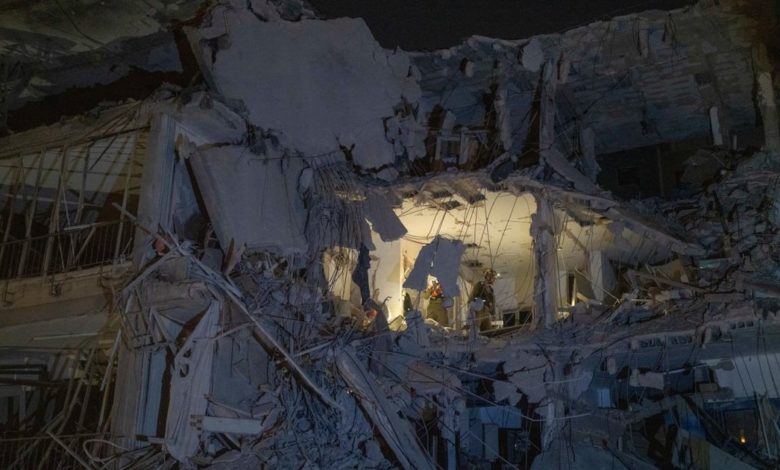
The tensions between Israel and Iran, which initially seemed limited to the two states, risk turning into a regional crisis with global implications. From the United Nations Tribune and the great Western capitals, calls have been made. But what happens if these calls are not listened to? BBC asks.
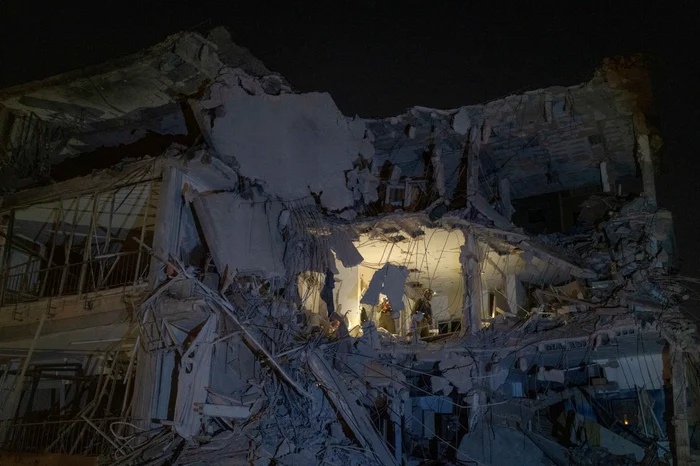
Desided building in Tel Aviv/Photo? X
USA in danger of being attracted to conflict
Officially, the United States avoided assuming direct involvement in Israel's attacks on Iran. But obviously, the Tehran regime perceives American support – whether tacit or logistical – as a reality. This transforms any American objective in the region into a potential target: Gulf military bases, special forces in Iraq, diplomatic representations.
The American administration has preventively withdraw some of the staff and issued explicit warnings. But if an American citizen had killed in an attack on Tel Aviv, or in another corner of the Middle East? At that moment, the Trump administration would be put in front of a heavy decision, despite the promises to avoid a new “endless war”. However, there is a real political pressure among the Republicans to support Israel not only in military action, but also in the eventual objective – the change of regime in Iran.
A direct US involvement would mark a turning point and climbing with hard to anticipate consequences.
Golf countries – also exposed
If Iran fails to cause significant damage to the Israeli army, it could redirect the fire to the gulf neighbors. Countries such as Saudi Arabia or United Arab Emirates – although involved in recent reconciliation with Tehran – host American bases and, in some cases, have provided logistical support to Israel.
History is not encouraging: in 2019, Iran was accused of attack on Saudi petroleum infrastructure, and in 2022, Houthi rebels – supported by Iran – attacked the Emirates. A new wave of attacks could force these countries to ask for American intervention, extending the conflict at regional level.
Iran escapes with intact nuclear program
There is also the risk that, from the point of view of Israel, the military operation will fail. Some Iranian nuclear installations are located deep under the ground, in places that are hard to reach even with penetration bombs. There is already uranium enriched at 60% – one step from the military. If the reserves are well hidden and cannot be destroyed, Israel may be tempted to continue the series of attacks. On the other hand, Iran could interpret this aggression as a justification to accelerate, without money, the race to the nuclear weapon.
This is a dangerous spiral. Israeli analysts call this type of strategy “grass trimming” – an expression that masks, in fact, the idea of a permanent and repetitive confrontation.
Global economic blockage
The conflict has already influenced the price of oil. But what would happen if Iran would block the Hormuz Strait-a corridor through which almost a fifth of world oil passes? Or if Houthi rebels intensify attacks on the Red Sea commercial ships?
In a world already affected by inflation and structural fragility, a new energy crisis could have global consequences. The indirect winner? Vladimir Putin. A high price of oil would bring billions in the Kremlin war budget.
The Iranian regime collapses – but what's next?
Prime Minister Netanyahu explicitly stated that he is aimed at not only the nuclear infrastructure of Iran, but also the theocratic regime as a whole. “We open the way to freedom for the Iranian people,” he said in a message addressed directly to the Iranians.
A possible fall of the Tehran regime would be regarded by some as a geopolitical victory. But recent history warns us: both in Iraq and Libya, the removal of authoritarian regimes have been followed by chaos, civil violence and power of power. There is no guarantee that Iran would be an exception. On the contrary, a rapid destabilization in a state of the waist of Iran could have a devastating domino effect in the region.
Finally, it all depends on the following movements of the main actors: how and how hard Iran will react? And how much real pressure can Washington can exert on the Jerusalem government?
The answers to these questions depend not only the stability of the Middle East, but also the fragile balance of the global order.