The first process of a Russian for war crimes. Is accused of shooting a Ukrainian soldier who surrenders

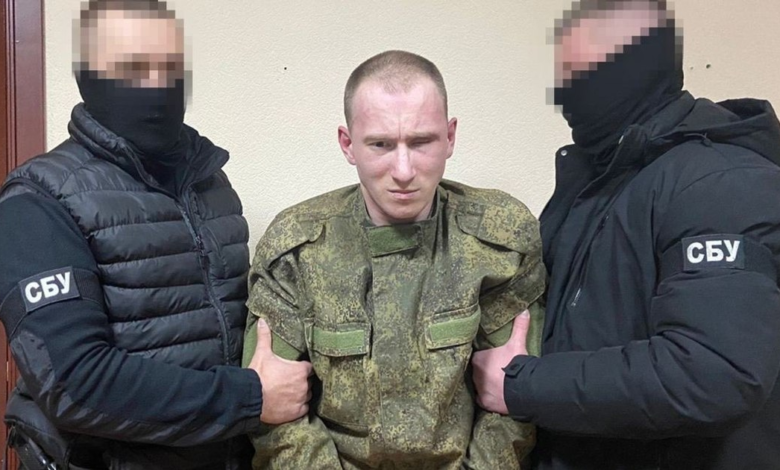
Dmitri Kurashov, with the indicative “Stalker”, is tried for the execution on the battlefield of Vitalii Hodniuk, a 41 -year -old Ukrainian soldier, known under the indicative “Pinguin”.
Dmitri Kurashov, judged for war crimes: x
The process was to be the first of this kind. According to the Ukrainian authorities, Russian troops have performed at least 124 war prisoners on the battlefield since the beginning of the large -scale invasion, but Kurashov is the first judged person in Ukraine for this crime. His case is one of the few of the tens of thousands of open war crimes in which a suspect was captured and can be brought before the court. To the unprecedented character of the event is added that three members of Kurashov's unit agreed to testify against him, writes BBC.
In the bright and square courtroom, Kurashov is locked in a glass box. Small of stature, with the head often left, has a submissive appearance. When he looked around, he had to turn his head, because he lost an eye on the explosion of a grenade on the front.
Kurashov is accused of executing Hodniuk, while the Ukrainian soldier was trying to surrender – a violation of the laws of war. Kurashov initially pleaded innocent in the process preceding the trial, but now, in court, he has changed his plea in the culprit. In informally, he maintained his innocence and made this change only to speed up the process, he said.
According to the UN, the executions on the battlefield by the Russians have grown at an alarming pace in the last year. In a February report, the UN mission for human rights in Ukraine said that he has found evidence of 79 executions committed by the Russian forces of August 2024, as well as evidence of three illegal killings committed by Ukraine using drones on board. The UN also stated that he had found at least three calls of Russian civil servants who ordered or approved executions, and according to Ukraine, there is evidence that Russian commanders on the battlefield ordered executions throughout the front line.
Kurashov's account differs from that of the accusation and Russian soldiers who testify against him. They say that Kurashov cried to those in the trenches to surrender, and Hodniuk came out unarmed and knelt on Earth, just for Kurashov to shoot him with a burst from AK-47. Kurashov says he did not shoot, but another Russian, a doctor with the “Sedoy” sign, who was later killed.
The seriousness with which Ukraine deals with this criminal prosecution is obvious. The SBU investigation produced over 2,000 pages of sample.
Each of the witnesses was subjected to filmed reconstructions of the event on a firing polygon of the Ukrainian army. In court, the prosecutor and judges have made every effort to ensure that Kurashov understands his rights, that he can understand his translator and that he is offered the opportunity to interrogate witnesses against him-an opportunity he has refused so far.
The three Russian witnesses testified on the first day of Kurashov's process-three former detainees who, like Kurashov, relied on the survival of the war to regain their freedom. One of them was a 25 -year -old sentence until life imprisonment for killing two drug dealers, nine years for serious bodily injury for killing a man with a brick during a beat, and the third eight years, also for serious bodily injury.