Vladimir Putin plans a decisive blow on the battlefield this summer and strengthens his war machine, although he claims to end peace, reports The Telegraph, in an analysis on the latest developments on the battlefield and the tactics used by the Russian army.
“Russia, if we are to believe the Kremlin, is eager for peace with Ukraine. His diplomats participated in the negotiations in Istanbul. Vladimir Putin presented a roadmap for the end of the war. The largest exchange of war prisoners from the beginning of the conflict, more than three years ago, is underway.
For Ukrainian officials, however, everything is a stratagem: Putin did not offer peace conditions, but issued requests for unconditional capitulation ”writes The Telegraph.
Russia has ignored Kiev's availability to sign a 30 -day armistice proposed by the US and has intensified the war in recent weeks.
“There is enough evidence that they are preparing new offensive operations”said Volodimir Zelenski last week.
A summer offensive
The summers of the three -year War in Ukraine have usually been intensifying battles, notes Ben Barry, a terrestrial war researcher at the International Institute for Strategic Studies (IISS) based in London.
The failed counter -offensive of Ukraine in 2023 and its incursion into the Kursk region of Russia in 2024 began in the hot months, while about the same period last year Moscow launched a surprise attack in the Harkov province of Ukraine.
Analysts believe that Russia is trying again a decisive piercing of the front.
For more than a year, Russian forces have made incremental progress, conquering about 1,500 square miles from the Ukrainian territory in 2024 – the equivalent of 0.7% of the total area of the country. But the cost of human blood was huge. According to Ukrainian estimates, Russia suffered 434,000 victims last year: about 270 dead or injured for every square pity.
Last month, Russian forces advanced at the fastest rhythm from November last year, conquering on average 5.5 squares per day – double compared to the April rate, according to Deeptate, an Ukrainian Open -Source information project.
But now I plan a potentially decisive piercing, especially in Donbas – the Russian -speaking historical region, located in the center of the Kremlin territorial claims.
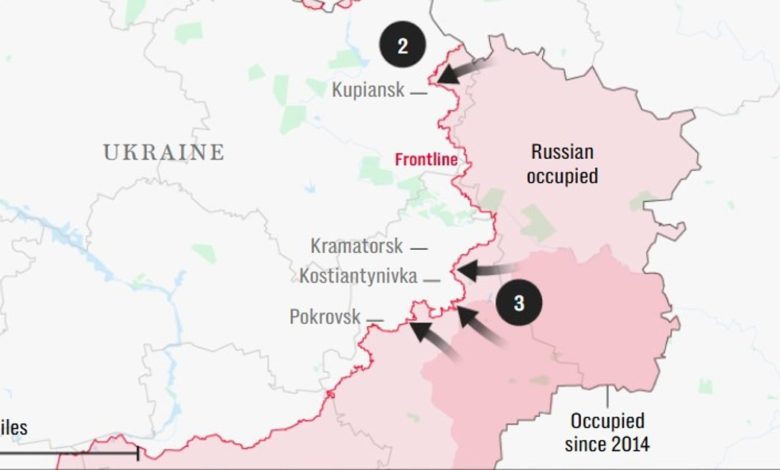
Currently, Russian forces control 99% of Luhansk and about 77% of Donetsk.
The conquest of the unoccupied cities and the industrial centers of Donetk will probably be the main objective of the offensive. Analysts expect Russia to make progress, but they doubt it can conquer the entire region.
Seasonal strategies
The moment of the offensive is not a coincidence. The summer foliage offers better coverage to troops advancing, despite disadvantages such as increased dust visibility and difficulties in hiding movement from thermal rooms.
More importantly, Russia spent winter strengthening forces, remedying the technical deficiencies, refining the tactics, improving communications on the battlefield and increasing the lethality and maneuverability of its attack drones.
Now he is preparing to test these improvements.
“A traditional tanks offensive is unlikely. Given the domination of the war with drones, such tactics are outdatedE, notes Polish military analyst Konrad Muetka.
“The battlefield is transparent,” he said. “Any large -scale armored unfolding will be destroyed relatively quickly. I saw the Russians moving on to concentrated attacks, with small units, often only three to five people. The assaults of the size of a company, of 50 to 100 people, almost never happen again. ”
Target: Donetk
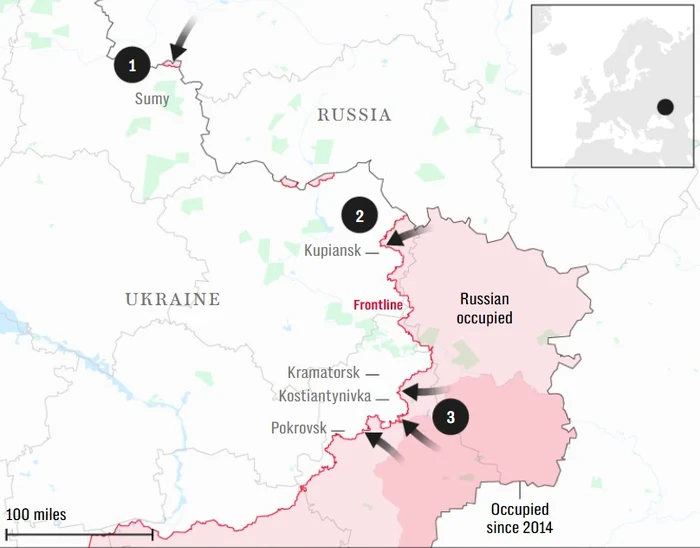
The struggles intensified along the front of Sumî, in the northeast of Ukraine, where Ukrainian forces are now facing pressure and where Putin wants to set a buffer area to prevent future incursions on Russian territory.
According to Ukrainian military intelligence services, about 125,000 Russian soldiers are massaged near the border with Sumi and Kharkov. In the last ten days, four border villages would have fallen into the hands of invading forces.
Russia does not have enough forces on these fronts to launch serious offensives against big cities. These operations could, on the other hand, have the purpose of distracting the attention of the Ukrainian forces from the main objective: Donetk.
After withdrawing their troops from Kursk, Ukraine's forces had intended to strengthen the overload units in Donetsk. But the need to defend the sum has affected this redistribution.
As a result, the Russian forces pierced the defense between the cities of Pokrovsk and Toretsk, increasing the pressure on Kostantynivka, a vital logistics center.
Located at a key intersection of roads and railways, Kostiantynivka is part of the “Fortress Belt” in Donetk. Its loss would complicate the replenishment efforts and could place Kramatorsk – the largest unoccupied city in Donețk – in the range of heavy artillery with Russian missiles, an evolution that Ukrainian officers warn it could be devastating.
Given Putin's goal of occupying the whole Donetk, Kostiantynivka is the main initial target of the Summer offensive of Russia.
Some Ukrainian military sources recognize the possibility of losing the city, but claim that such a loss would not be catastrophic. Russia would suffer great losses in urban struggles, without significantly altering the strategic balance.
Russia increases its production of drones
Russia's most remarkable progress consists of drone production.
With the help of factories workers, he had attracted from Africa, predominantly made up of women, Russia increased its production of geran-2 drones from 300 a month to 100 a day, a figure that Zelenski says Moscow aims to triple.
In addition to increasing production, Russia has modernized the engine of the Geran-2 missiles, allowing flights to higher altitudes, making them harder to intercepted and allowing higher useful tasks.
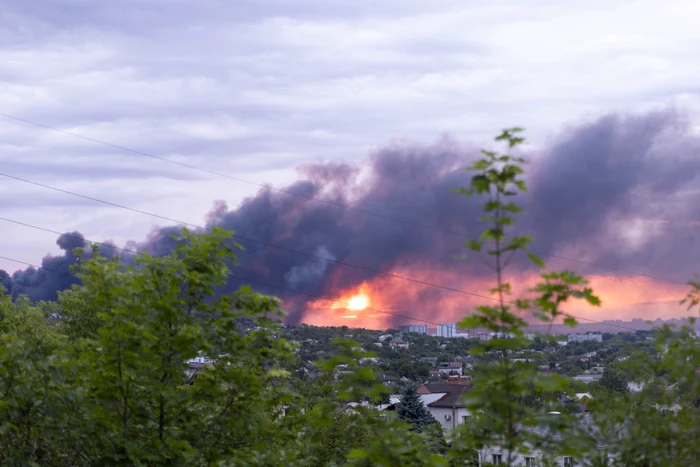
Since the end of May, Russia has launched repeated attacks with drones and rockets on Ukrainian cities, including Kiev, in order to overwhelm the air defense.
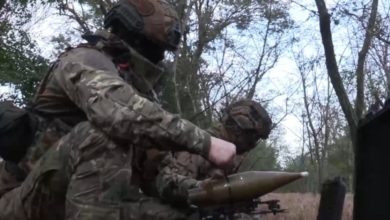
To maximize the lethal effect, Russia stratifies its attacks – using drones, cruise and ballistic missiles, which move with variable speeds and trajectories – to saturate, confuse and, finally, overwhelm the aerial defense of Ukraine.
Russia has also improved short-range drones, implementing FPV fiber optical drones, which are immune to the jam.
“The widespread use of FPV drones with fiber optic allows Russians to attack and destroy the fortified positions on the more efficient front line.” explains musicka. “D.It is also, they have improved the coordination between FPV attacks and terrestrial attacks. I think it is one of the main reasons why the Russians have better performances. ”
Ukrainian units report that these drones, related to cables that extend up to 40 kilometers long, do not issue any detectable signal. Rarely the Ukrainians managed to neutralize them by physical cutting.
Russia recruits more soldiers than Ukraine
A second considerable advantage of Russia is the ability to recruit soldiers at a much higher rate than Ukraine.
This success is largely reduced to financial incentives – signing bonuses of up to 16,000 pounds and salaries of 48,000 pounds – substantially higher than average civil salaries.
“Russia has practically spent a lot of money on recruitment”, says Barry from Jiss.
“They increased salaries, benefits and death allowances and recruited widely from disadvantaged areas and among ethnic minorities.”
The strategy gave fruit. Russia's forces increased from 500,000 to 620,000 in a year, despite the fact that they suffered over 400,000 losses in 2024, says Mykola Bielieskov from the National Institute for Strategic Studies in Kiev.
Challenges that Ukraine may face
After resisting Western pressures to recruit men under the age of 25-a decision that would be deeply unpopular-Zelenski's government launched a “Campaign 18-24”, offering financial incentives and zero-interest mortgage loans to attract young volunteers.
A source close to the General Staff says that the strategy proves to be effective. But several analysts suggest that recruitment remains well under the target.
There is also concern about future western weapons deliveries. It is unlikely that Donald Trump will resume significant support, even if he will not be patient with little.
Two vital forms of American assistance are now questioned: the most efficient interceptors of antibalistic missiles and information exchange. No European power can be compared to Americans in any of the fields.
Even so, some Kiev voices believe that damage could be limited if Trump allows Europe to buy American weapons and re -export them to Ukraine.
Europe begins to fill the void, at least as a volume. Germany, which has already provided Patriot air defense systems, now helps Kiev to restore its stocks of interceptors.
The increase of European investments in the Ukraine's defense sector may prove even more important. The country now produces up to 40% of its need for attack capacity – a figure that could increase significantly with additional support.