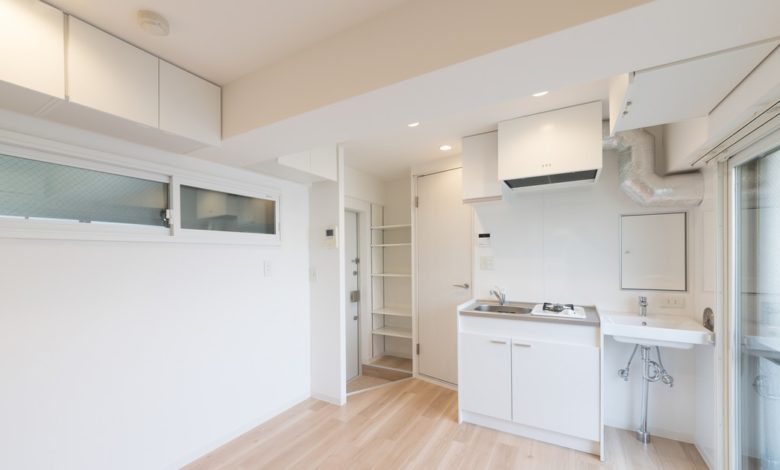
Micro -livens in Japan are not an accidental phenomenon, but result from deep cultural and economic conditions. The dominant culture of rent in this country makes the purchase of an apartment remain a luxury available to the few. The traditional tatami system, i.e. floor mats, has been shaping the Japanese approach to the organization of life space for centuries, forcing minimalist and functional solutions.
Flexible building regulations are also of key importance. Unlike most Western countries, Japan It does not specify the minimum area of the apartment, which allows developers to create innovative solutions adapted to the real needs of the market. This regulatory freedom has become a catalyst for the development of the micro -marsh sector.
Life on several square meters
In Japan, many young people arrange their lives in such a space. On the YouTube platform, videos are popular, which show that although the apartment has the size of an average bathroom, it manages to separate a place to work, sleep, storage things and even cooking.
In such a space, each element has a double function. The bed serves as a storage space at the same time, the kitchen has been integrated with the worktop, and most furniture has a folding function. However, the inhabitants of Mikromeszka admit that life in such a limited space forces them to adopt the philosophy of minimalism and absolute order, without which functioning would be impossible.
Hong Konne Extreme Records
Tokyo eight square meters is not a limit of possibilities. In Hong Kong, so-called cage apartments with an area often less than 4 sq m are popular. Extreme cases are premises with only 3.72 sq m-less than the area of the King-Size bed.
Paradoxically, despite the microscopic size, the rental prices of such apartments remain very high. The reason is huge social inequalities, building land deficit and record population density. In such conditions, whole families often live, which leads to serious health problems, especially in the sphere of mental health.
The Polish market for microapartments
In Poland, the topic of micro -artments raises mixed feelings and is often confused with a pathodeweloper. The latter refers to premises designed without respecting the basic housing standards – too tight, dark, often formally qualified as commercial premises instead of a flat.
Read also: TRAINERS COMPETITION 2025 SEED. Here are the winners
Polish building regulations are a barrier to the development of micro -parties similar to the Asian model, determining the minimum utility area of a dwelling at 25 sq m. Despite this limit, developers are launching flats with a minimum areatrying to combine functionality with an affordable price.
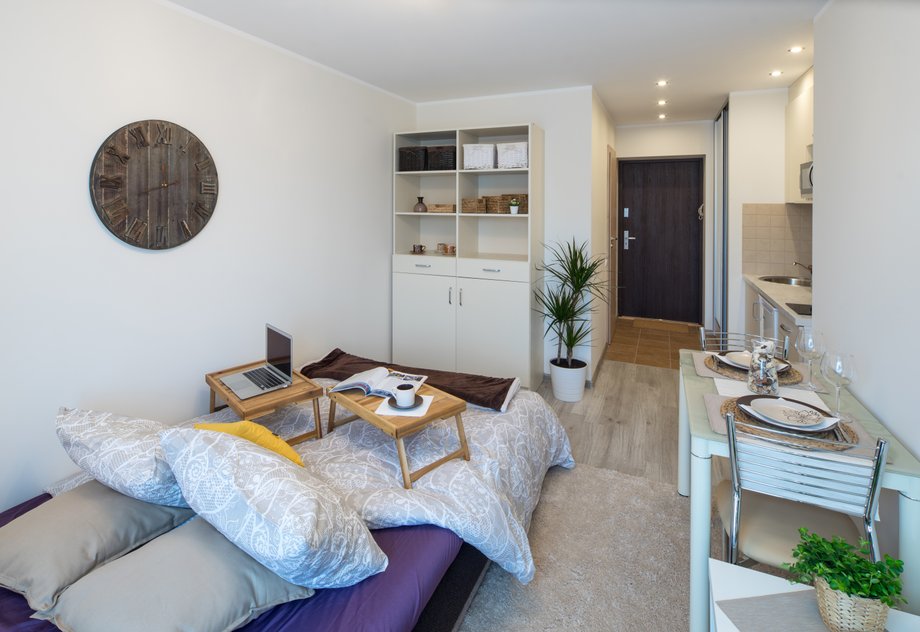
Micro -parties are a good solution for singles
|
Aleks Kend / Shutterstock
In Poland, small, compact houses are becoming more and more popular, which are not only cheaper to buy, but also generate much lower maintenance costs. The smallest of them are mobile Tiny-House houses, which are very popular with our western neighbors.
The future of microapartments in Poland
Micro -parties are not a universal housing solution. They work primarily among singles, students and people spending most of the time outside the home. For families, such space remains definitely insufficient.
However, you should see the potential of micromeshans as a transitional stage in life, offering a temporary but functional housing solution.
In the context of rising real estate prices and a changing lifestyle of young generations, micro -parties can become an important segment of the Polish housing marketprovided that the appropriate quality and functionality standards are maintained.
The material was created in cooperation with The Morizon Gratka group.