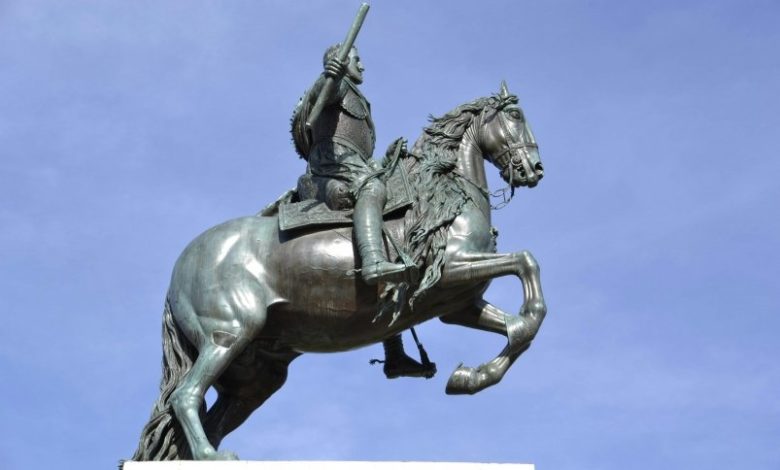
Walking around the park or the historical center of the city, everyone at least once noticed magnificent statues of riders on horses. But few people know that the story of the fate of her rider can be encrypted in the horse's position! They say that the position of hooves tells how a person died – in a battle, from wounds or his death. IA EOMEDIA plunges into this riddle to find out if it is true and how to read such monuments in 2025.
Horse statues are literally dumb witnesses of history that adorn cities and parks. They fascinate with their power, but a secret code can be hidden behind a beautiful bronze or stone. There is a belief: the position of the front legs of the horse in the statue hints about how the rider died. If the horse has risen, lifting both hooves, the man fell in battle. One raised leg – died of combat wounds. And if all four hooves are on earth, then death was natural.

So where did this idea come from? Historians believe that the myth was born in the 19th century, possibly in America, where tourists and guides began to notice the coincidences in the poses of horses in military memorials. In Gettisberg, this became a convenient way to remember the fate of the generals, but outside this field the myth collapses. For example, the statue of Charles I in London with one hoof raised: he was executed, not wounded in battle. Or Napoleon on a raised horse – and he died of cancer. It seems that sculptors simply chose a pose for beauty or in order to show skill.
Despite the fact that the myth is not confirmed, it adds intrigue statues. Walking around the city, it is pleasant to look at the hooves and guess what they could mean. It's like a game that makes walks more interesting!