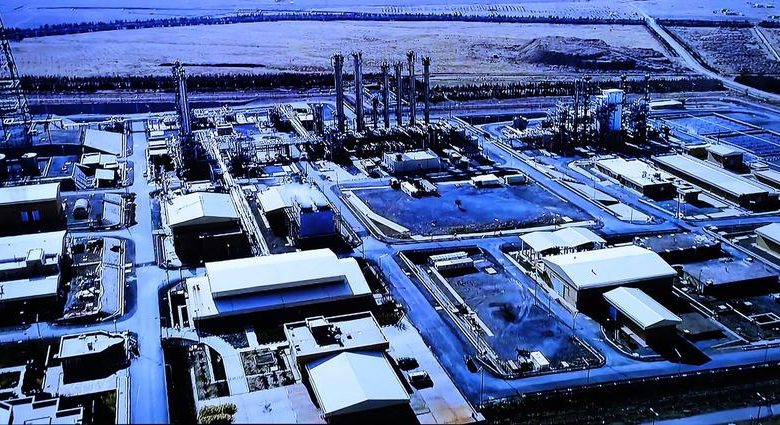
Benjamin Netanyahu claims that Tehran has the ability and intention to manufacture nuclear bombs in just a few months. If so, then Israel has more and better information than the US and UN atomic energy agency, I write BBC, The Guardian and Fox News.
Israel hit dozens of targets in Iran, damaging the Uranium enrichment plant in Natanz and assassinating high -ranking military commanders and nuclear scientists in Tehran.
After the first series of attacks from Thursday night to Friday, the Iranian Foreign Minister condemned what he called Israel's “insane” attacks on the “peaceful nuclear installations” of his country.
Abbas Araghchi said the Natanz installation was operated under the supervision of the International Nuclear Control Agency, the International Agency for Atomic Energy (AIEA), and that the attacks on the installation risk provoking a “radiological catastrophe”.
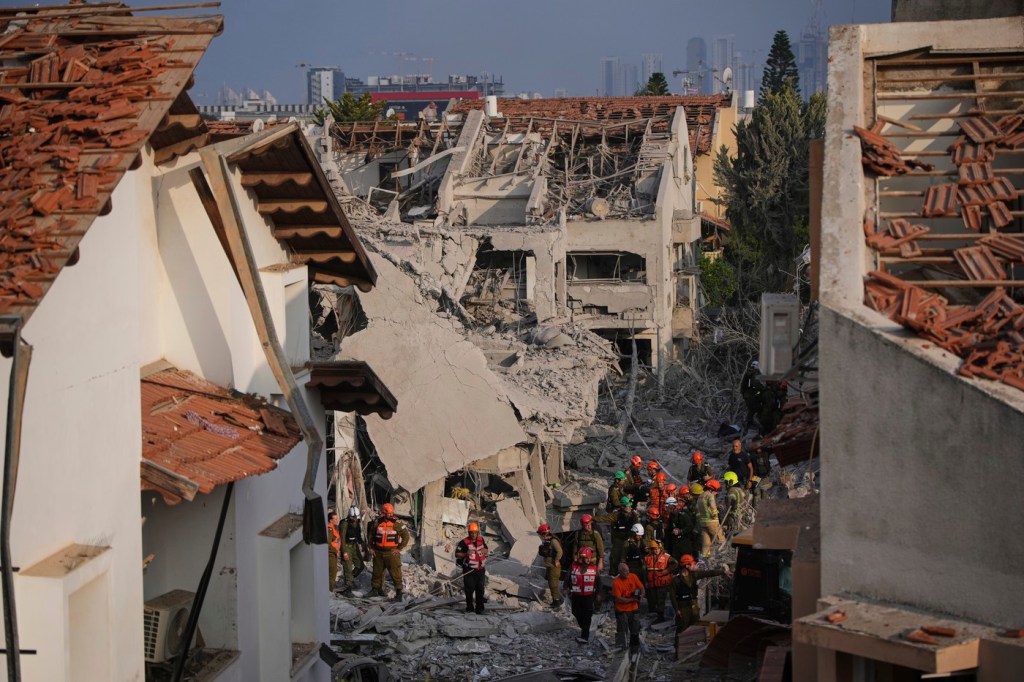 Live Israel and Iran continues mutual attacks and threats / UK move fighter jets in the region / US and Iran's discussions, canceled
Prime Minister Benjamin Netanyahu said the operation was necessary to “reduce the Iranian threat to the survival of Israel.”
He said that Israel acted because “if not stopped, Iran could produce a nuclear weapon in a very short time.”
“It could be in a year. It could be in a few months,” he warned.
Netanyahu's critics see something else
Netanyahu's critics say he acted to prevent something else: a diplomatic agreement between the US and Iran on his civil nuclear program or even the fall of his own government.
They emphasize that Israel has been saying for 20 years that Iran is about to build a bomb.
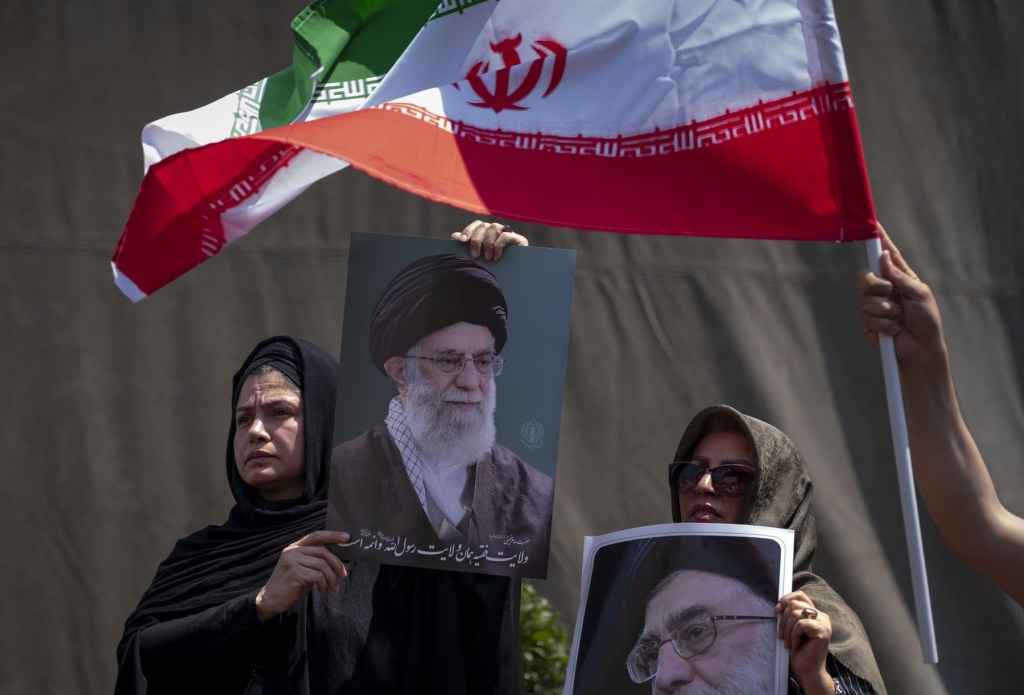 Israel's attacks reveal a bold purpose of war. How much is it possible? “May be worse”
In any case, his statement depends largely on the fact that the formidable information community of Israel has more knowledge about Iran's nuclear program than its American counterparts or the International Atomic Energy Agency (AIEA), the UN nuclear supervisory body, writes The Guardian.
Is there evidence that Iran was working on a nuclear bomb?
The Israeli army said that it has accumulated information showing that there have been “concrete progress” “in the efforts of the Iranian regime to produce components of weapons adapted for a nuclear bomb”, including a metal uranium core and a neutron source initiator to trigger the nuclear explosion.
Kelsey Davenport, director for the unproliferation policy at the US Association Association, told the BBC that the Israeli prime minister “did not present any clear or convincing evidence that Iran was about to produce weapons.”
“Iran has been around for months near Breakout,” she told the BBC, referring to the time Iran will have enough fissionable material for a bomb if they decide to do so.
 Images of destruction. What Israel looks like after the rocket waves launched by Iran
“Similarly, the evaluation that Iran could develop a rudimentary nuclear weapon in a few months is not new,” added the expert.
She said that some of the nuclear activities of Iran could be applicable to the development of a bomb, but American information agencies evaluated that Iran was not engaged in key militarization activities.
What Washington says
In March this year, the director of the National Intelligence Service, Tulsi Gabbard, said in front of the Congress that the enriched uranium stock of Iran is “at the highest level” and is “unprecedented for a state without nuclear weapons.”
But she also said that the US Intelligence Community “continues to evaluate that Iran does not build a nuclear weapon and that the supreme leader (Ayatollahul Ali) did not authorize the nuclear weapon program in 2003”.
Gabbard has added that, in recent years, it seems that there has been “an erosion of a taboo for decades in Iran on discussing nuclear weapons in public, which has probably encouraged nuclear weapons within the Iran's decision -making apparatus.”
“If Netanyahu had been exclusively motivated by the risk of proliferation of Iran, Israel would probably have shared this information with the United States, and the initial attack would probably have targeted all the key nuclear installations,” Davenport said.
The observations of the UN Agency
Last week, Aiea said in his latest quarterly report that Iran accumulated enough uranium enriched up to 60% purity – a small technical step to the degree of a weapon, ie 90% – to be able to manufacture nine nuclear bombs.
This is “a serious problem”, given the risks of proliferation, the agency added.
The agency also stated that it cannot provide guarantees that the Iranian nuclear program is exclusively peaceful, because Iran does not cooperate with the investigation into artificial uranium particles discovered by inspectors at three undeclared nuclear sites.
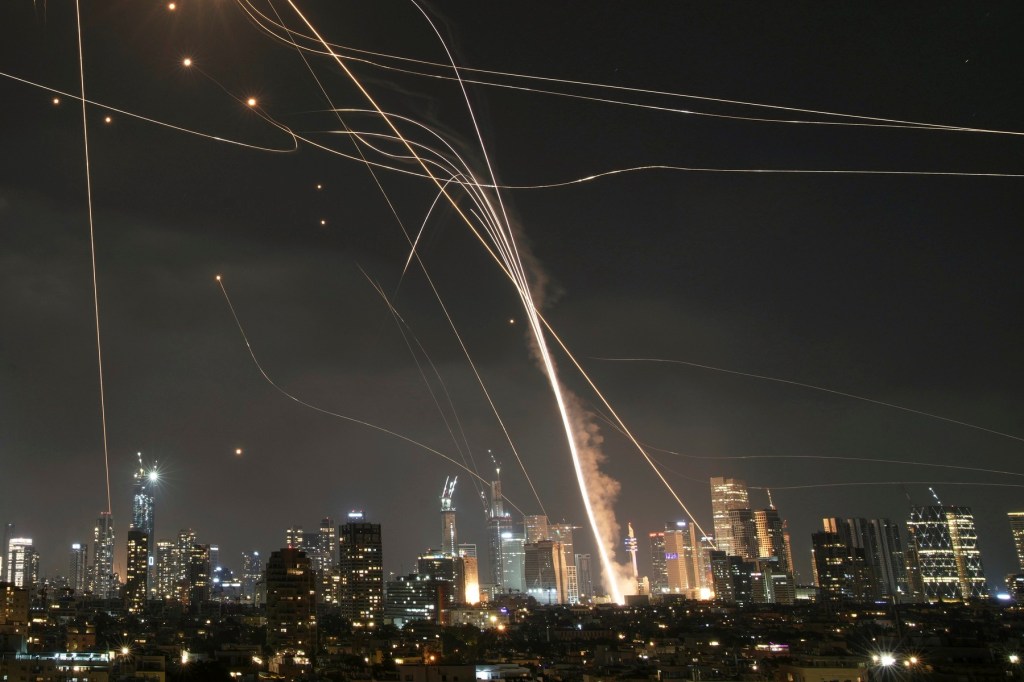 Following the waves of rockets launched over Israel on Friday night. A weak Iran faces an existential dilemma
The AIEA report concluded that “there are no credible indications of an undeclared structured nuclear program” and mentioned that high Iranian officials said the use of nuclear weapons is incompatible with Islamic Law.
But the report also emphasized the statements of former Iranian officials who have suggested that Tehran now has all the capabilities to manufacture nuclear weapons.
“Although protected enrichment activities are not forbidden in itself, the fact that Iran is the only state without nuclear weapons that produces and accumulates uranium enriched at 60% remains a serious concern,” the report said.
What do we know about Iran's nuclear program
Iran has always stated that its nuclear program is entirely peaceful and that it has never tried to develop a nuclear weapon.
However, a ten-year investigation of AIEA has found evidence that Iran carried out “a series of relevant activities for the development of an explosive nuclear device” from the late 1980s to 2003, when the efforts within the so-called “Amad project” were stopped.
Iran continued some activities until 2009 – when the Western powers revealed the construction of the underground enrichment installation – but then there were no “credible indications” on the development of weapons, the Agency concluded.
A broken agreement
In 2015, Iran concluded an agreement with six world powers, under which he accepted restrictions on his nuclear activities and allowed rigorous monitoring by the inspectors in exchange for lifting severe sanctions.
The key limits aimed at the production of enriched uranium, which is used for the manufacture of fuel for reactors, but also for nuclear weapons.
But US President Donald Trump abandoned the agreement during his first term in 2018, stating that he was not enough to stop the path to a bomb, and reinstated American sanctions.
Iran responded more and more restrictions, especially those regarding enrichment.
Iran violated its obligations
On Thursday, the Council of Governors Aiea, consisting of 35 countries, officially declared that Iran has violated its obligations of non-proliferation for the first time in 20 years.
Iran said that it will respond to the resolution by establishing a new uranium enrichment facility in a “safe location” and by replacing the first generation centrifuges used to enrich the uranium with more advanced cars, of the sixth generation, at the Forto enrichment plant.
Iran has installed thousands of such units, especially at the Fordo, an underground enrichment plant built under 80-90 meters from the rock, writes Scientific American magazine.
According to a report published Monday by the Institute for International Science and Security, the new Centrifuge could produce enough uranium for a nuclear fossa “in just two to three days” and sufficient for nine nuclear weapons-or 19 until the end of the third month.
However, analysts notice that the uranium alone is not enough for a viable nuclear weapon and that it would take additional time to make it.
Israeli information is talking about a critical moment. But not everyone agrees
What some Israeli information say is that in the last days a change has occurred. According to Israeli sources, Iran was about to assemble a rudimenic nuclear device, writes Fox News.
Beni Sabti, an expert in Iran at the Institute of National Security Studies, told Fox News that the threat was urgent and explained why: Iran gathered his materials “in a secret place near Tehran to manufacture a primitive foc.”.
Gregg Roman, executive director of Middle East Forum, also said that since the Trump administration has started nuclear negotiations, Israel has collected new information that have drawn alarm signals.
“There were a few things that have been highlighted,” Roman said, referring to the activity at the Times Enrichment installation.
“Iran has reactivated an explosive manufacturing line, which could only be used to help efforts to obtain a nuclear weapon, efforts to put fissionable material in a form that could be used for a nuclear weapon,” he said.
Roman added that these developments reflected the activity of Iran, stopped in 2003, when it froze its military nuclear program.
Not everyone is convinced that Iran actively builds a bomb. Rosemary Kelanic, nuclear discouragement expert, urged caution about the story from Israeli officials.
“Those who are in favor of this attack, including Israel, will do everything in their power to try to look like Iran was about to build a bomb,” Kelanic said.
“But we have to be very critical in our thinking,” she told Fox News.
What damage did Iran's nuclear infrastructure Israel
The Israeli army said on Friday that the first series of air attacks damaged the underground centrifuge room in Natanz, as well as the critical infrastructure that allowed the site to be operated.
The general director of AIEA, Rafael Grossi, told the UN Security Council that the pilot enrichment of the Fuel (PFEP) from the surface and the Natanz electrical infrastructure were destroyed.
There were no indications for a physical attack on the underground hall, but the loss of electricity could have damaged the centrifuges there, he added.
The Institute for International Science and Security in the US said that the destruction of PFE was significant, as the installation had been used to produce 60% enriched uranium and also to develop advanced centrifuge.
Davenport also said that Natanz attacks will slow down the nuclear program, but that it is too early to evaluate the total impact.
“We will not have a clear image of the speed with which Iran could resume the operations there,” she explained.
Later, on Friday, Iran informed AIEA that Israel attacked the Forto enrichment plant and the Center for Nuclear Technology.
The Israeli army said an attack in Isfahan has “damaged a metal uranium production facility, infrastructure for the conversion of enriched uranium, laboratories and additional infrastructure.”
“As long as the fort remains operational, Iran is still a short -term risk of proliferation. Tehran has the option to intensify the enrichment to levels of military quality at this site or to hijack the uranium to an undeclared location,” said Davenport.
The Israeli prime minister also said that the operation will continue “how many days will be necessary to eliminate this threat.”
But this is an unrealistic goal, Davenport said.
“Attacks can destroy installations and target scientists, but they cannot delete Iran's nuclear knowledge. Iran can rebuild, and faster than in the past, due to its progress in the field of uranium enrichment,” she said.