What an AI lesson looks like for 3rd and 4th grades: how to ask the right question, how to check and how to recognize errors

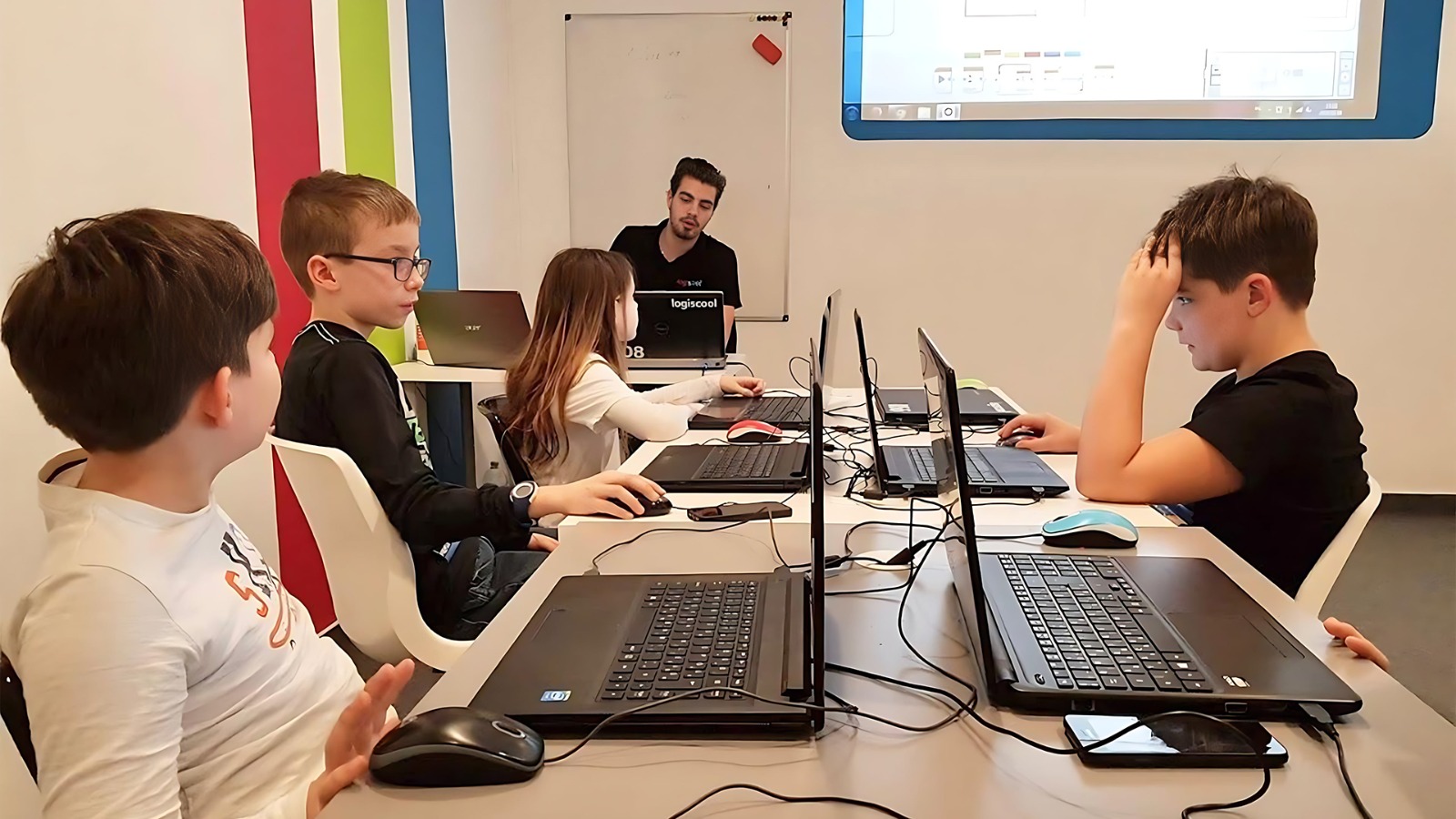
For many parents, artificial intelligence comes with anxieties: copied homework, shallowness, addiction to quick answers. But in the same technology, there is also an opportunity, if AI is used in a guided way: to teach children to ask good questions, to compare sources and to recognize errors or manipulations. In a lesson for 3rd and 4th graders, we saw what applied AI education looks like at Logiscool: prompts, verification, bias, deepfakes, plus simple rules that help kids use technology responsibly, at school and in everyday life, all in an approach that aligns with recently established European directions.
The European Commission emphasizes, by the new DigComp 3.0 frameworkthat digital literacy no longer means just using technology, but developing critical thinking, informational discernment and the ability to interact responsibly with tools based on artificial intelligence, from an early age.
There are 3rd and 4th graders in the classroom, with the same energy you see in the school yard when the break starts: curiosity, friendly competition, and straight-forward questions. Laptops open quickly, but the lesson does not start with “let's talk to a chatbot”but with a sentence written large on the board: “persuasive ≠ correct.” The instructor reads it aloud and asks: “Why do you think I started with this?”. A 4th grader raises his hand: “Because he can fool you.” “Exact!”says the instructor. “AI can write very nicely even when it's wrong. So today we don't just practice how to 'ask'. We practice how to judge the answer“.
At a time when the discussion of AI in children is often divided between excitement and fear, the lesson here tries to avoid both extremes. Kids will use AI whether their parents or teachers like it or not. The difference guided approach can make is if they use it as a shortcut or a tool to help them think more clearly.
The “prompt” as understood by children: how to ask the question to get something useful
The first activity is surprisingly “analogous”: before writing anything to the AI, the children are given a card with three questions:
- Who is the answer for? (class, parents)
- In what form do I want it? (list, steps, paragraph, table)
- What conditions does it have? (length, examples, what to avoid, what to mark as “to check”)
Then I get a neutral theme: “Briefly explain what recycling is“.
Some write directly: “Write about recycling“. Within seconds, a fluid, generic answer appears. The instructor doesn't criticize it, just puts it alongside a rewritten prompt with criteria:
“Write a 120-word text about recycling for a 3rd grader. Include 3 key ideas and an example from everyday life. At the end, ask 2 questions for me to check from a source.” The difference is obvious: the answer becomes more structured, more age-appropriate, with “anchors” that force children to check.
“So a good prompt is like a clear command,” says a 4th grade girl.
The instructor confirms: “Yes. The prompt is how you tell the tool what you want. If it's vague, you get something vague.”
Bias: When the question dictates your answer
The third section is about something that many adults have a hard time understanding: bias is not just “an AI problem”, but it can also be a problem of the question.
The instructor designs two prompts:
A) “Why are video games bad for children?”
B) “What are the pros and cons of video games for kids?”
Children read the answers. In A, the tone is categorical. In B, shades appear. The instructor asks: “Why is this difference?”
A 4th grade boy says: “Because in the first place you force him to say bad.”
“Exactly. Sometimes the biggest subjectivity comes from the way you ask,” summarizes the instructor.
It's a critical thinking lesson in simple form: if you ask the question as a sentence, you get a sentence. If you ask for an analysis, you get an analysis. And this ability to recognize when the question influences the answer is one of the most important digital skills, as it applies not only to AI, but also to online searches, news and information shared on social media.
Deepfakes: You don't “guess,” you look for clues
When the word “deepfake” appears, the room becomes animated. Children have already seen “too good to be true” videos on the Internet. The instructor shows two pictures and a short clip. The task is not “true or false” but: “Say three things that make you doubt“.
Children begin to look for: strange shadows, distorted text in the background, unnatural proportions, the lack of the original source. Then they are taught a basic rule: “If it shocks or annoys you, stop. The excitement pushes you to pass before you can check.”
For students, this is a form of applied media education: not just “don't believe everything“, but “learn what to look for“.
AI is just the beginning: the digital skills kids need
The AI lesson is just one piece of a larger digital skills program. Depending on age and grade level — from preparative up to high school — the emphasis changes: in the beginning, children need confidence and an intuitive understanding of the “logic behind” (steps, rules, consequences), and as they grow, they increasingly enter into more complex projects, collaboration, organization of information and responsible use of technology.
This approach is also supported at European level. Recent, European Commission launched DigComp 3.0the most up-to-date version of the European Digital Competence Framework, a strategic document that redefines what digital literacy means for children and young people in a world dominated by technology and artificial intelligence. The new framework draws attention to a major gap between children's exposure to digital media and their actual ability to understand and use it critically. Official data show that 43% of European students do not reach the minimum level of digital skills, and in Romania the situation is even more worrying. DigComp 3.0 emphasizes that digital education is not limited to the use of tools or applications, but involves the development of essential skills: critical thinking, understanding the mechanisms behind algorithms, online safety, discernment in the face of misinformation and the ability to make informed decisions in an increasingly complex digital environment. In this context, AI lessons become relevant only when they are integrated into a broad educational path, built progressively and adapted to the children's age.
Digital Discovery for 3rd and 4th grades
For 3rd and 4th graders, for example, a program like Digital Discovery emphasizes short exercises and visible projects that keep them engaged and help them understand “why” they're doing something, not just “how.” In practice, the modules translate into:
- algorithmic thinking: steps, sequences and simple conditions (“if…then…”)
- creative digital projects: interactive stories, mini-presentations, visual content with clear rules and measurable goals
- problem solving & debugging: identifying errors, testing, step-by-step improvement (like a “seek and fix” game)
- visual / low-code programming: building mini-projects with blocks (no heavy syntax) to catch logic before code
- online safety: what to share, what not to share, how to recognize weak sources and why 'viral' doesn't mean 'true'
- collaboration & presentation: explaining the project, arguing the choices and learning the feedback
The key is the way of working: children are not allowed to “click”. They have clear objectives and “why did you choose that?” questions, precisely to build understanding, not dependence on quick answers.
What instructors say: “The AI is a tool. The child remains in charge.”
During the short break between exercises, the instructor says something that should come up more often in AI discussions: “When the child uses AI, the important thing is not 'what he got', but what did he do with the answer.”
In the lesson, this principle becomes the rule: copy-paste without understanding is not accepted. Children are encouraged to rephrase, ask probing questions and explain their decisions.
Alin Cîndea: “It helps them to be more independent in secondary school and in real life”
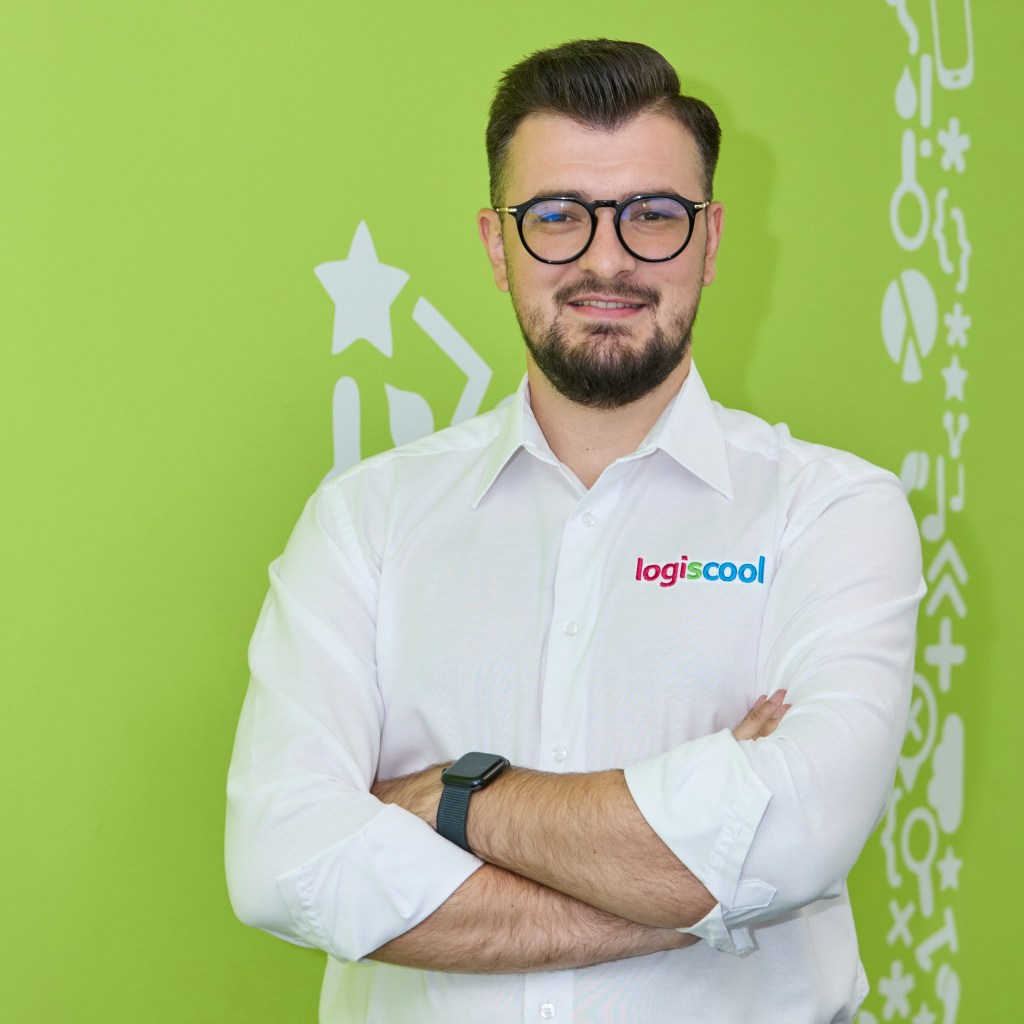
Ali Cindea Head Education Logiscool
“In middle school, children encounter more complex requirements: projects, presentations, greater volume of information and greater pressure on organization and autonomy. Digital Discovery helps them form essential reflexes early: to ask good questions, to check sources, to structure their ideas and to use digital tools creatively and responsibly. In real life, these skills translate into discernment, autonomy and confidence, the very things that make a difference when technology is part of everyday life“, he explains Alin CîndeaHead of Education Logiscool Romania.
For parents who want to understand what digital education looks like applied to their child's age, Logiscool regularly organizes demonstration lessons in the centers of Bucharest and the cities in the country.
Details about programs and registration are available here:
https://www.logiscool.com/ro/programs/courses
Learning can become an exciting adventure for children eager to understand the technology of the future, step by step
Article powered by Logiscool