The Israeli attack, taking into account Tehran's rhetoric, which has often declared the desire to clash from Israel from the earth's surface, you can also understand. Iran himself does not arouse sympathy as a state. The regime in Tehran has tens of thousands of victims on his conscience, and although today the scale of terror used in relation to political opponents is incomparably smaller than it was, e.g. in the eighties, Iran remains a hard dictatorship, in which you can be murdered for opposition to the rulers.
Iran also actively supports Russia in her bandit war with Ukraine, which means that he is also our enemy.
Paradoxically, however, Israel is on the road to this kind of victory, which should not be wished even to the enemy. Two key conclusions for Poland are from all this situation.
A few days ago, in the text about how Tel-Awiw is fighting in the Gaza Strip in such a way that not several times, but several dozen more Palestinians have been killed than the total number of victims of Hamas's attack, I wrote that Israel is losing the remains of authority in the world. In the article I quoted the former Israeli prime minister Ehuda Olmet, who in the Israeli Haaretz daily said that Israel was committing war crimes.
Continuation of the material under the video
Attacking Iran, regardless of the fact that Tel-Aviv has reasons for this, that it is difficult to regret Iran and that Israeli attacks can be extremely painful for Tehran, Israel is doing something much worse than committing war crimes. Israel makes a mistake.
The above statement is a deliberate reference to the famous words attributed to one of the greatest diplomats in history. The head of diplomacy Napoleon Charles-Maurice de Talleyrand became famous for the statement: “It's worse than a crime, it's a mistake.”
These words are very often quoted, but you rarely remember what they concerned. Meanwhile, Talleyrand used them to comment on the execution of Prince D'Onghien kidnapped on the order of Napoleon. While the kidnapping itself was not unforgivable, the murder of the prince prevented Bonapart from arranging a relationship with the aristocratic courts of Europe at that time – in the perspective it led to his defeat.
In other words, although it was a political success (the murdered prince was a pretender to the throne and a threat to Napoleon) in a short -term perspective, he was also a gigantic mistake in the medium and long -term perspective. It is very possible that this is exactly the case with Israeli attacks on Iran.
First of all, because Iran, even if he came into possession of nuclear weapons, is likely that he would use at least one of several charges against Israel, is extremely low.
Tehran has enough fissile materials to build, according to Israel, nine atomic bombs. In the meantime, Israel has from about 100 to even 400. What's more, unlike Iran, it is able to produce another, while Iran, even if he built these nine bombs, obtaining materials for each subsequent one would be extremely difficult for him.
In other words, Iran can declare that he wants to sweep Israel from the surface of the earth. Meanwhile, Israel can realistically fit Iran from the surface of the earth. The Iranian, Shiic leaders, unlike Sunnic fanatics from the Islamic State, are not a suicide sect, and their religious fundamentalism is secondary in relation to Persian nationalism, which means that the likelihood of madness is low.
Secondly, Israeli attacks, regardless of how great damage they cause to Iran, will most likely fail to stop the Iranian nuclear program. They will certainly be able to stop diplomatic talks that could stop the Iranian nuclear program. Exactly as the murder of Prince d'Onghien prevented Bonaparte from talking to the aristocratic courts of Europe.
Shawn Thew / PAP
Donald Trump and Binjamin Netanyahu
Two applications for Poland
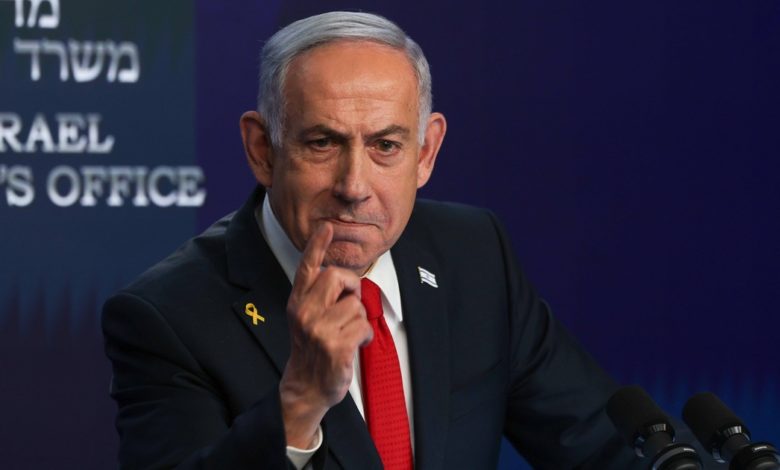
The decision of the Prime Minister Netanyahu on an attack on Iran, regardless of the fact that they will accompany her suspicions that the purpose of the Israeli prime minister is more to ensure power, and to less security to Israel, they are an opportunity to draw two lessons for Poland.
Netanyahu presents in foreign policy a kind of significant part of the Polish right of the philosophy of thinking about foreign policy. This philosophy should be described with pseudoturborealism. This is the kind of thinking that makes it theoretically act in its interest, but at the same time in a way that does not take into account the interests of the whole world. And that's exactly why it is pseudorealism, because foreign policy, which does not take into account the interests of others, is as short -sighted as the one in which these interests of others deposits its own.
The second conclusion for Poland concerns the potential Polish atomic program, which is something that is increasingly being talked about in the context of our country. In a recently published text, we argued that Poland, even if it came into possession of nuclear weapons, could use it against the Russian forces, but only on our territory. Any other case would mean the risk of Poland's nuclear annihilation.
Above all, however, we emphasized that Poland – even apart from the fact that the United States, if we started the nuclear arms program, would inevitably impose sanctions on us – it could construct in the best scenario to construct barely a few nuclear charges. The fact that Iran after more than thirty years of developing such a program will have nine atomic bombs in the best scenario confirms our assessments.
Read more: The president of Iran threatens Israel: the enemy will regret his stupid act [RELACJA NA ŻYWO]
I’m Ashley Davis as an editor, I’m committed to upholding the highest standards of integrity and accuracy in every piece we publish. My work is driven by curiosity, a passion for truth, and a belief that journalism plays a crucial role in shaping public discourse. I strive to tell stories that not only inform but also inspire action and conversation.