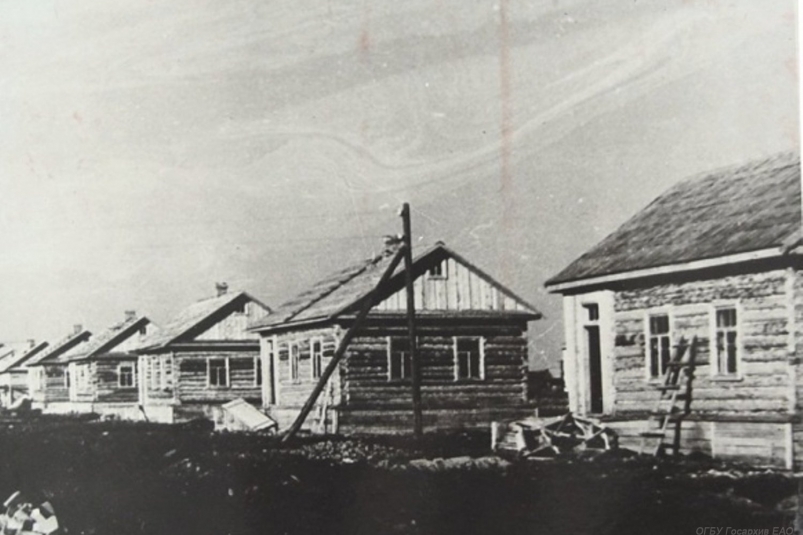
The new village of Tikhonkaya station, where the regional center of Birobidzhan is now built
Photo: State Archive of the Jewish Autonomous Region
November 20, 1917
More than 120 years ago, first Lieutenant Vladimir Klavdievich Arsenyev, known as a Russian and Soviet traveler, geographer, ethnographer, writer, researcher of the Far East, arrived in Blagoveshchensk, then in Vladivostok.
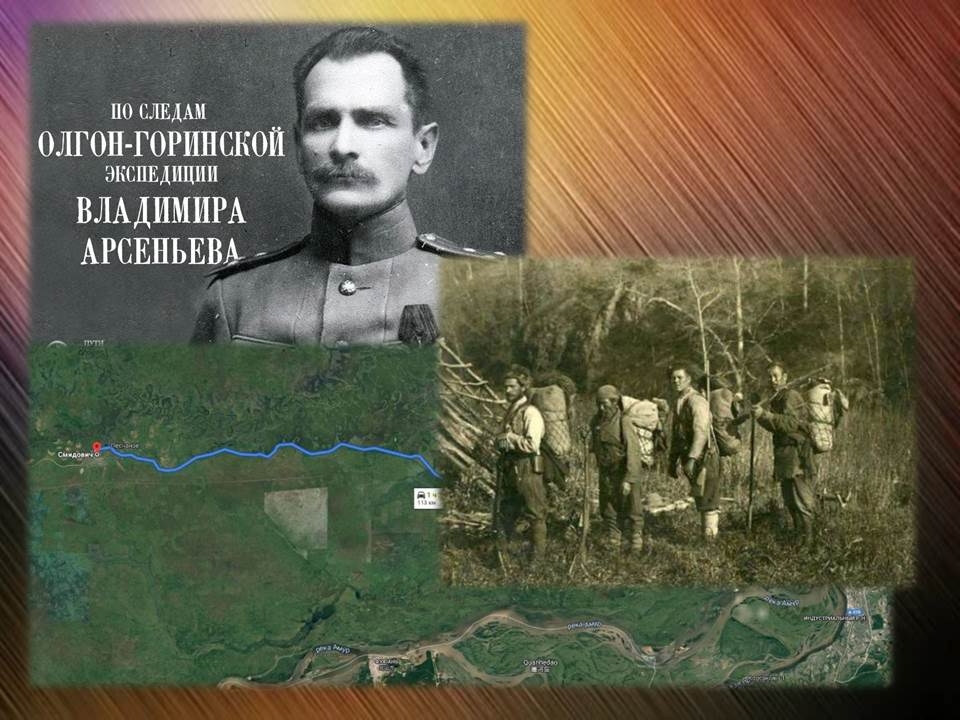
Day in the history of the Jewish Autonomous Region. Photo: Photo: Regional Library
On November 20, 1917, Arsenyev and his companions arrived at the In station, from where the Olgon-Gorinsk expedition began.
On November 22, on two carts they hired, they set off from the In station, first along the river with the same name, and then along the Urmi River.
In addition to the entries, the diary of this expedition contains: schematic maps of the routes drawn by Arsenyev and his Aboriginal companions, drawings depicting general views of the eight-person tent used by the expedition; drawings reproducing the Yakut ornament and the Yakut ancient image; a list of 13 rock and mineral samples; description of individual representatives of the animal world of this area; a large number of ethnographic records. The ethnographic material touches on almost all aspects of the life of the aborigines; records of rituals, descriptions of the attributes and clothing of the shaman are of particular interest. On the pages of the diary are pasted drawings of animals intended for children and animal figures carved from birch bark. In two and a half months, Arsenyev managed to collect material that, in its diversity and volume (149 sheets), is not inferior to the materials of some researchers who worked in the field for several years in a row.
For residents of the Jewish Autonomous Region, it is at least important that Vladimir Klavdievich Arsenyev, a researcher whose work formed the basis for fundamental works on geography and ethnography, visited some settlements in one of the districts.
In the story “Bygin-Byginen” (6+), which is the only work of fiction written by Vladimir Klavdievich following the results of the Olgon-Gorinsky or Kur-Olgonsky expedition, there are also lines dedicated to the amazing nature of the Urmi and Ina rivers, that is, the nature of the future Jewish Autonomous Region.

Day in the history of the Jewish Autonomous Region. Photo: Regional Library
The railway village of Tikhonkaya, the predecessor of the regional center, appeared in 1912 in connection with the construction of the Trans-Siberian Railway.
Since 1924, population growth began – this is four years before the arrival of the first echelon of settlers. Mostly Cossacks from villages and farmsteads came to Tikhonkaya.
In three years from 1923 to 1926, the population of Tikhonkaya grew almost one and a half times due to the villagers and farmers. And three years later, 1,288 people lived in Tikhonkaya. This increase occurred due to Jewish settlers.
In May 1928, the first batch of immigrants from cities and villages, towns of Ukraine, Belarus, and central regions of Russia arrived at Tikhonkaya station. Among the first Jewish settlers there were a significant number of different professions. By the end of 1928, the first Jewish artels were created.
By the will of fate, it was Tikhonkaya that became the center of the national region of the Jewish Autonomous Region. This center could be Bira, Trek and even In. But it became Quiet, precisely thanks to the expedition of Professor Boris Brook.
November 20, 1931
The village of Tikhonkaya was renamed the working village of Birobidzhan. The name “Birobidzhan” is taken from the Evenki language. This was the name given to the space between the rivers Bira (Evenki “Bira” – “river”) and Bidzhan (Evenki “Bidzhen” – “permanent camp”).
But Tikhonkaya station remained in archival records, museum exhibits, poems and songs. And also – in the birth certificates and passports of those Birobidzhan residents who were born before November 20, 1930. One of them is Pyotr Arkhipovich Shestopalov, a well-known builder and order bearer in Birobidzhan.
November 20, 1935

Day in the history of the Jewish Autonomous Region. Photo: Regional Library
The newspaper “Birobidzhan Star” (12+) on November 20, 1935 informed its readers about the opening of an evening university of culture. The main objectives of this university were to expand the horizons of students in order to give them general information on natural science, technology, political issues, fiction, art and issues of raising children. The university will have two departments – Jewish and Russian. The first lectures will be given by Kazakevich and Goldfain.
November 20, 1936
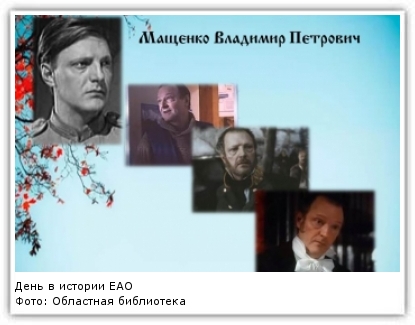
Vladimir Petrovich Mashchenko, Honored Artist of Russia, actor of Soviet cinema, was born in the village of Babstovo, Jewish Autonomous Region.
In 1960, Vladimir graduated from the Moscow Theater School named after M.S. Shchepkina. After graduating from college, he worked at the Lenin Komsomol Theater and the Pushkin Theater. Since 1964 – actor at the Ermolova Theater. Honored Artist of Russia.
He played various roles in more than three dozen films. Vladimir Petrovich Mashchenko passed away on June 4, 1998 in Moscow.