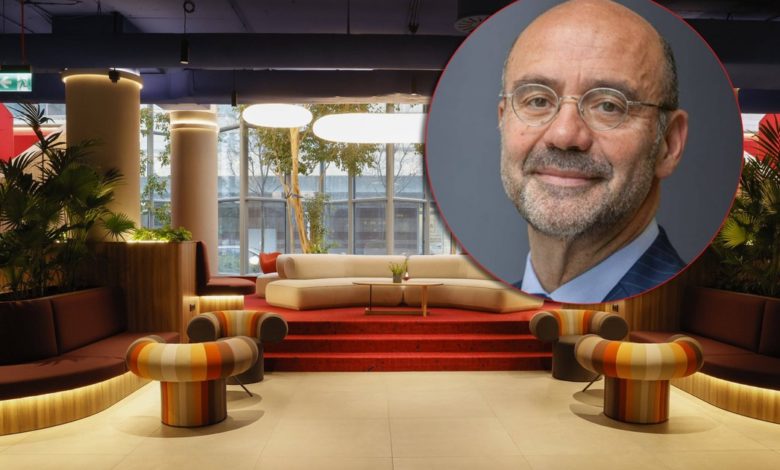
Mateusz Madejski, journalist Business Insider Polska: Apparently you are in Poland for the first time in several years. How do you get the impressions?
Jean-Jacques Morin, Group Deputy CEO Accor: In fact, I used to be in Poland really regularly, but this is my first visit in about five years. And what impressions? It seems to me that you are doing really well as a country, especially in terms of economics. It can be seen that the difference between West Europe and its central and eastern part is becoming more and more blurred – which can be felt not only in Poland, but in the entire region. It was true that it was predictable, but the pace of change clearly exceeds expectations.
The development of modern technologies, which is driven by high -level universities, educating excellent engineers. I appreciate Polish precision and focus on high quality, which can be seen in hotels operating under Accor brands throughout the country.
India and China in the spotlight
Recent financial reports show that you are constantly developing. Meanwhile, the political and economic situation in the world is extremely difficult. How can the industry adapt to this situation?
It is true as a group that we have recorded very good results in the first quarter of this year, especially in terms of Revpar – revenue for a available room – which increased by almost 5 percent. in Accor hotels. Although the situation around the world is undoubtedly complex, the results differ depending on the country, and some regions record strong growth.
In general, the “east” is doing well-for example, the Middle East and Southeast Asia. Countries such as India and Indonesia are developing rapidly. In South America, our Revpar is currently growing at a two -digit rate. Of course, the situation is much more complicated in markets such as Europe or the USA.
Is this just a short -term trend? However, are these more deep changes?
Forecasts suggest that by 2030 the global middle class will increase by 1.3 billion people compared to today. The middle class wants to enjoy life and gain experience, which also includes travels. This is particularly visible among younger generations for which experiences are the priority. That is why I think that the global tourism industry has positive perspectives ahead of it.
Another key issue: the demand for accommodation in the tourist sector exceeds supply in most parts of the world, especially in Europe. This is partly due to the fact that the construction of new hotels in cities such as Paris, Barcelona or Amsterdam is becoming more and more difficult. On the other hand, the global economy functions as a mutually related system; Sometimes it happens that when GDP drops in one area, people tend to travel less frequently, which in turn affects GDP in other places. However, in the long term, we see promising indicators in current trends.
If there is no room for hotels, how to develop?
As I mentioned earlier, some regions are developing slightly faster than Europe, such as India. It is a country with fantastic potential that does not yet have such a very developed infrastructure. That is why we invest intensively there. In the coming years, the center of gravity of the world will undoubtedly move east. India is a vast country with a growing desire to travel, but you need three basic elements: hotels, roads and aerial connections. Until now, they were missing, but it changes quickly thanks to significant domestic investments.
It is hard to disagree that the center of the world is moving. However, this is quite unpleasant from a European perspective. Why did it happen? And what do we have to do to reverse it?
I think Europe has focused on outsourcing. People in the offices dealt with the development of products or services, but ceased to have contact with factories and plants that were massively transferred to Asia. And if you lose contact with production, you inevitably lag behind. Unfortunately, this happened in the case of many European countries. However, Poland is an exception. Polish companies often remain closely involved in production and engineering, which partly explains their success.
Nevertheless, India is developing, like China – a market in which we also invest strongly. Regions such as the Middle East and Singapore are becoming new centers of global wealth. Significant financial resources move there from the traditionally dominant northern hemisphere. These are areas where global business currently focuses its investment efforts.
Hotel market in Europe – what next?
Okay, but what about Europe?
More than half of our profits come from Europe. It is here that our group was created and here we have been operating for six decades. It remains our main base. However, when it comes to growth dynamics, other regions accelerate faster and offer greater opportunities. As for travel directions, Europe still has many relatively undiscovered pearls, including those in Poland. Do I know Poland well? I can't say that yes – I visited Krakow and Gdańsk, but I'm sure there are many more fascinating places.
The same applies to Europe. For example, southern regions are still relatively little known to international tourists, such as Montenegro, which is stunning. Our ambition as a group is action as ambassadors of local tourism and emphasizing these hidden treasures through the development of our brands.
Where does the middle class want to travel in such countries as China or India at all?
We noticed very interesting trends here. In India, when someone is promoted to the middle class, he usually prefers to travel to places two to three hours away from their place of residence, which covers many beautiful places in the country and thus powers national tourism. Over time, Indian travelers will probably go abroad.
We observed a similar evolution in China: initially Chinese tourists visited mainly Southeast Asia countries, and only the richest chose Europe. Now they travel globally. Currently, the largest number of tourists around the world comes from the United States and China. It is also worth noting that air travels, especially long -distance, are currently much cheaper than a decade ago. Covid-19 Pandemia had a significant impact on this trend.
The rest of the article is under video material
World tourism and climate change
What impact does climate change have on the tourism industry?
Unfortunately, very large. Each year records higher temperatures than the previous one, and observations and data are deeply disturbing. That is why, as one of the leaders in the hotel industry, we do not avoid our responsibility, and environmental protection and ESG have the highest priority for us. Until now, we have been able to reduce plastic consumption in our hotels by 70 percent. By 2026, we want to completely eliminate disposable plastic items from guests' service.
Our goal is to achieve carbon neutrality by 2050. We are also constantly working on reducing water consumption, electricity and other resources in our hotels.
According to our research, 83 percent Travelers take into account sustainable practices while traveling, and 67 percent He feels inspired by more responsible behavior when they see them in action. This is particularly visible among younger generations. These issues are therefore crucial also from a business perspective. Our approach also includes a commitment to protect nature, natural resources and biological diversity.
Overtourism phenomenon. This is how tourists react to changes
Overtourism is another widely discussed issue today. Can you say that tourists are already tired of top destinations?
It certainly can be seen. Tourists more and more often want to spend time in the bosom of nature and look for less known places. Importantly, when choosing beds, they look for experience and experiences, not just sleeping places. For example, they want to cost local cuisine, take part in local traditions. That is why we have long been trying to obtain products for our hotel restaurants from local suppliers, not through central supply. Guests love it. We are also increasingly organizing trips to local attractions. They can cover a less known castle nearby or a local vineyard.
We want the hotel to offer more than just a bed and shower – it should create experiences and memories. Such initiatives are not necessarily expensive for the hotel, but they can provide guests with great value and create something that will be remembered. We also believe that over time, hotels will be even more integrated with local communities.
In our ideal vision, the hotel is not only a place for tourists in the evenings is also visited by residents, because they know that something exciting is happening here – cultural events in a pleasant atmosphere and with great food.
See also: I ate in over 20 European countries. Here are five cities that I can't stop thinking about
Accor has a lot of hotel brands. It is not easy to get it.
We currently have over 45 marks, it is three times more than a decade ago. Our guests expect offers adapted to their specific needs and preferences, and we try to meet these expectations, both through lifestyle and premium brands.
As part of our Premium Division, we currently run 21 brands. The most important of them are Ibis, Novotel, Mercure and Pullman – brands that our guests really appreciate and love all over the world.
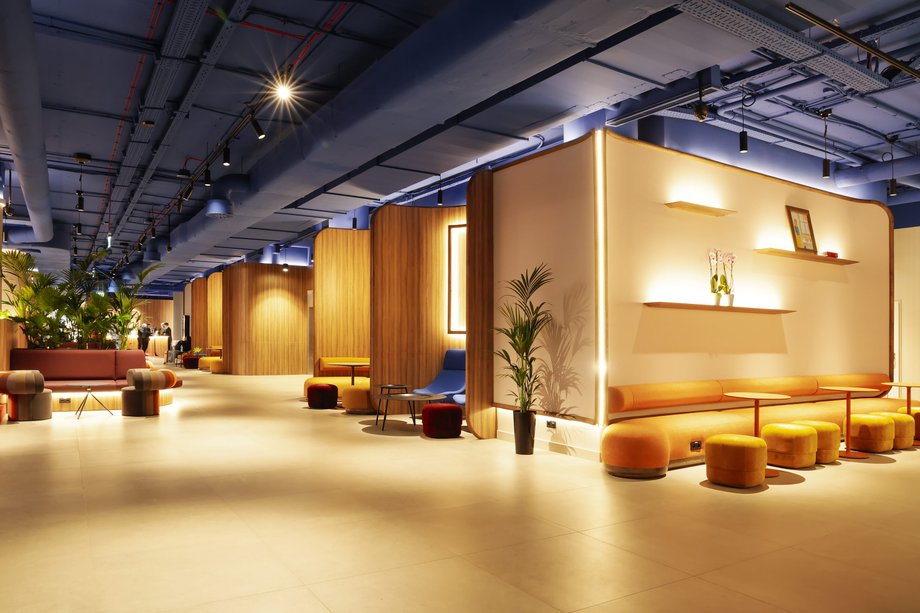
Interior of the Mercure Warszawa Centrum Hotel
|
Accor group
We live in times of incredible technological development. Many people wonder if in 10 years people will work in hotels or just work.
Hotelism has always been and will be an industry that puts a man in the center and this will not change. New technologies properly implemented can be a powerful ally of every company. However, it is important to use solutions that are well suited to a specific sector. We should not be afraid of technology, but rather perceive it as a chance for development.
In the hotel industry, technology should be seen as an additional tool that improves the experience of both guests and staff. One example is a non -contact service, which we offer as an option for guests. Technology will not replace people, but it can relieve their work and help meet the needs of various groups of guests, thus creating a competitive advantage for the hotel.
See also: “Care” over clothes and laboratory materials. The director from H&M tells us about the future of fashion
Jean-Jacques Morin is responsible in the Accor group for Premium, Midscale and Economy brands, and therefore primarily for brandy Ibis, Novotel, Mercure and Pullman, but also Tribe or Mövenpick