The auto industry, again tested. Volkswagen continues to dismiss tens of thousands of employees

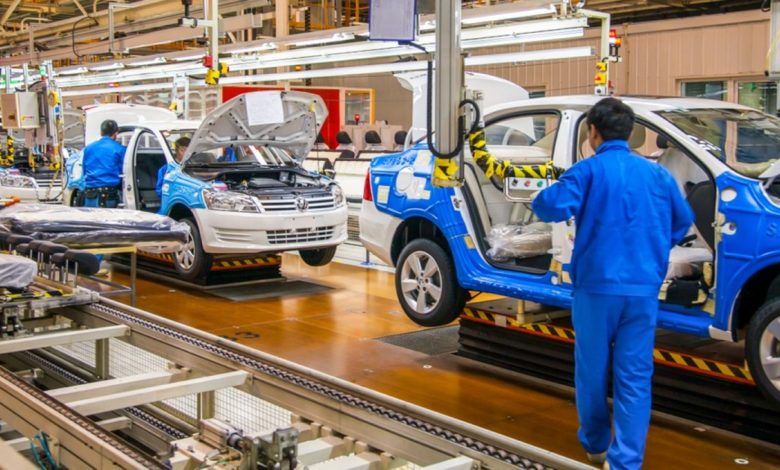
Car and EU car manufacturers are again put to the test, after last year they have hardly exceeded crises that have led to the temporary reduction or stopping of production.
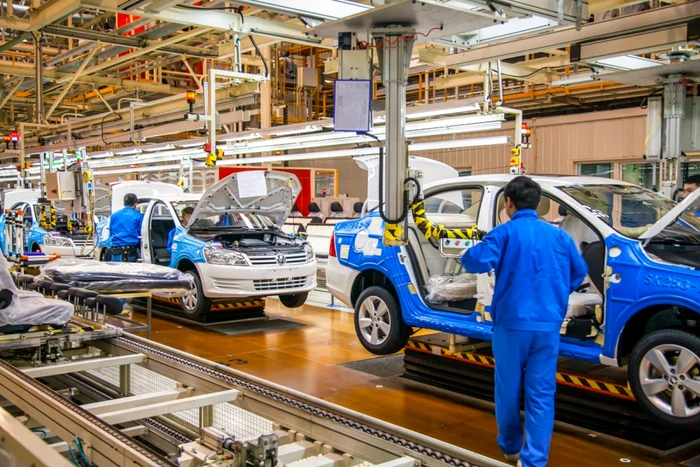
US and EU car manufacturers are again put to the test. Photo archive
In Europe, the Association of German producers has already spoken about possible reductions in production, without offering a time horizon.
It is an initial warning, which starts from some suppliers of components whose stocks are decreasing. Although production is not currently affected, Mercedes-Benz has discussions with suppliers to create spare stocks. China decided to suspend deliveries, but offered “portions” through some export licenses to traders delivering the car sector. According to Volkswagen, although a continuous supply flow, the quantities provided are not considered sufficient, which generates concern.
In the US and India, car associations have talked about a risk of production impairment in a few weeks, but the situation can change if deliveries are in a hurry by offering new licenses. Tesla and General Motors mentioned, in their turn, the risk of partial production stops. Ford also stopped the production of a model for a week at the Chicago factory due to lack of components.
Rare metals are used in electric motors of different types, braking systems, but also mobile phones, aerospace equipment or rockets.
Rare metals, aside to tense negotiations
Although the materials are not so rare, as the name suggests, the refining process is a difficult and polluting one. China is the dominant producer of rare metals, according to an importer of the elements, noble elements, while the rest of the world has a production in very small volumes, close to “laboratory”. At the level of the rare lands obtained from me, China has a share of 69% of the global offer.
Within tense commercial relations, rare metals can be used as an asset in negotiations. Europe has imposed customs duties increased to car manufacturers in China, a measure criticized by Beijing. At the same time, despite a 90 -day break, the customs taxes imposed by the US are at higher levels than before President Trump's term, with a risk of increase.
The China Student Visa Revocation Plan and the restrictions for the export of AI processors and software for the design of chips have been severely criticized. The intensification of the tensions seems to be the current trend, despite some sudden inversions, which does not calm down on the markets of rare elements, stresses Claudiu Cazacu.
Equally, recycling is an option studied in the West, but quantities are currently limited. The operations are expensive, as time and money. However, the offer will increase with the proximity of the cycle for the first series of electric vehicles. The use in small electric motors in internal combustion cars means a demand of about 140 grams per vehicle, but in the case of electric variants, the quantity reaches 550 grams.
Volkswagen continues to make the availability of 35,000 employees by 2030
China has also imposed restrictions on 7 elements, but this seems to be a warning. If the voltages will climb, an additional closing of the “tap” export would be possible, by limiting the licenses or broadening the targeted elements.
Even under the current conditions, without unlocking additional quantities, European car manufacturers would have barriers in maintaining production quotas, especially for the electrical segment. BMW has developed an electric motor without magnets, but a number of other components of the car still depend on rare metals. Disruption to the offer could mean a new blow to the European car industry that is already experiencing difficulties.
VW continues the plans for the removal of 35 thousand employees by 2030. The reorientation of a workers to the defense industry is a process ongoing, points out the XTB Romania strategy consultant.
However, rare metals are also used in the military field. A F35 plane uses about 400 kg of rare metals, and some submarines can use 4 tons. Last year, China exported a total of over 55 thousand tons of rare metals, shows the XTB Romania strategy consultant.
BMW shares lost 15.2%in the last year, those of Mercedes-Benz 21%, while VW securities decreased by 17.9%. In addition to increasing costs, commercial war and very close competition from China, limiting some components presents new challenges for the European car sector and has echoes of the chip crisis. Measures to make the activity more efficient and a reorientation of some production capacities could be the response of Germany and other European states to the current situation.