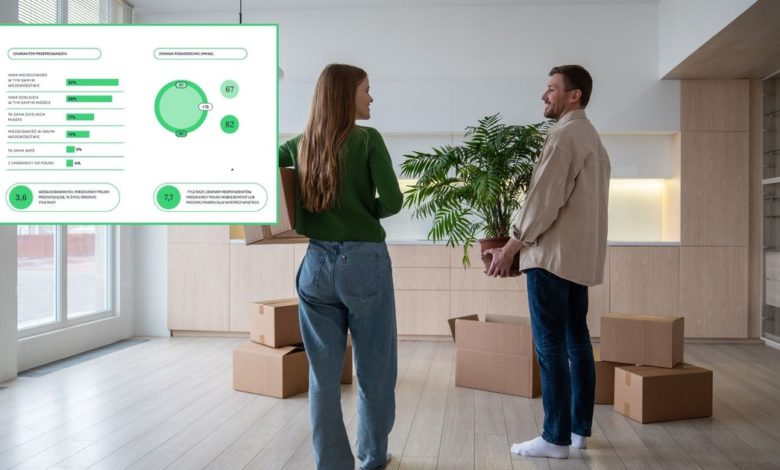
The analysis carried out among Poles who have changed their place of residence in the last five years reveals a surprising truth. For about two -thirds of people, key motivations are emotional and life, resulting from accounts, challenges and breakthrough moments, and not only for practical reasons, such as area, location or standard of the apartment.
The study distinguished three main categories of meanings of housing changes: searching for comfort (31 %), new stages of life (32 percent) and life challenges (37 %). As part of them, 12 segments of residents were identified, each of which is guided by different motivations.
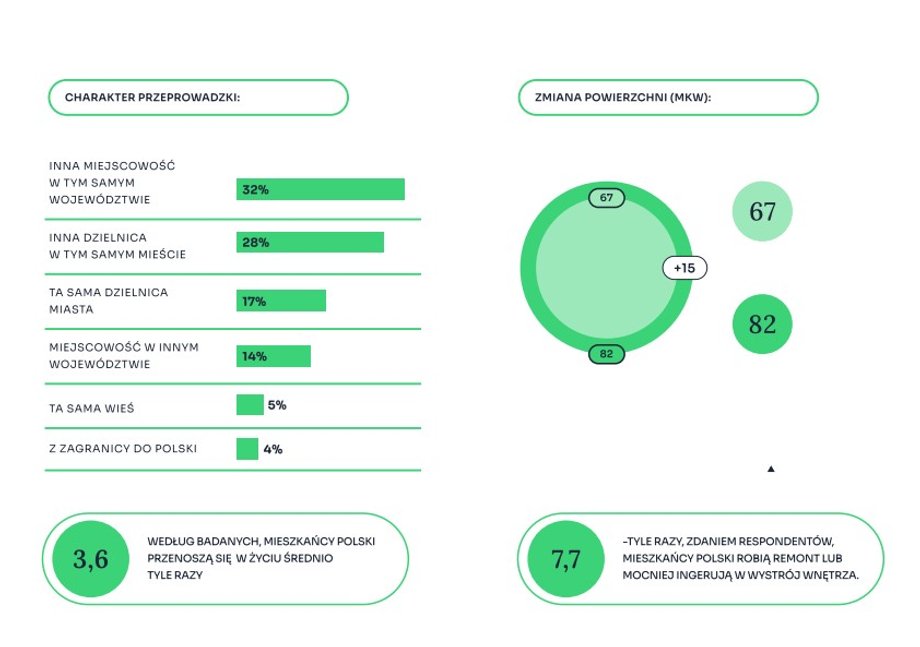
We move on average 3.6 times
|
Otodom.pl / otodom.pl
– As a society, we find ourselves in a transitional period in which the current order gives way to new. This is a state of uncertainty that can be anxious, but at the same time promotes reflection, redefinition of priorities and consolidation of values-explains Anna Adrian, Head of Marketing in Otodom, initiator of the “Happy House” research and social project.
Love for nature versus financial stress
The variety of motivation is striking. Up to 90 percent The so -called nature lovers are carried out to live in harmony with the environment. For 71 percent Of them it is a change for life – they are no longer planning further removals. In turn, 65 percent Multi -generational carers changed their place of residence because of the need for care for loved onesoften referred to as “sandwiches generations”.
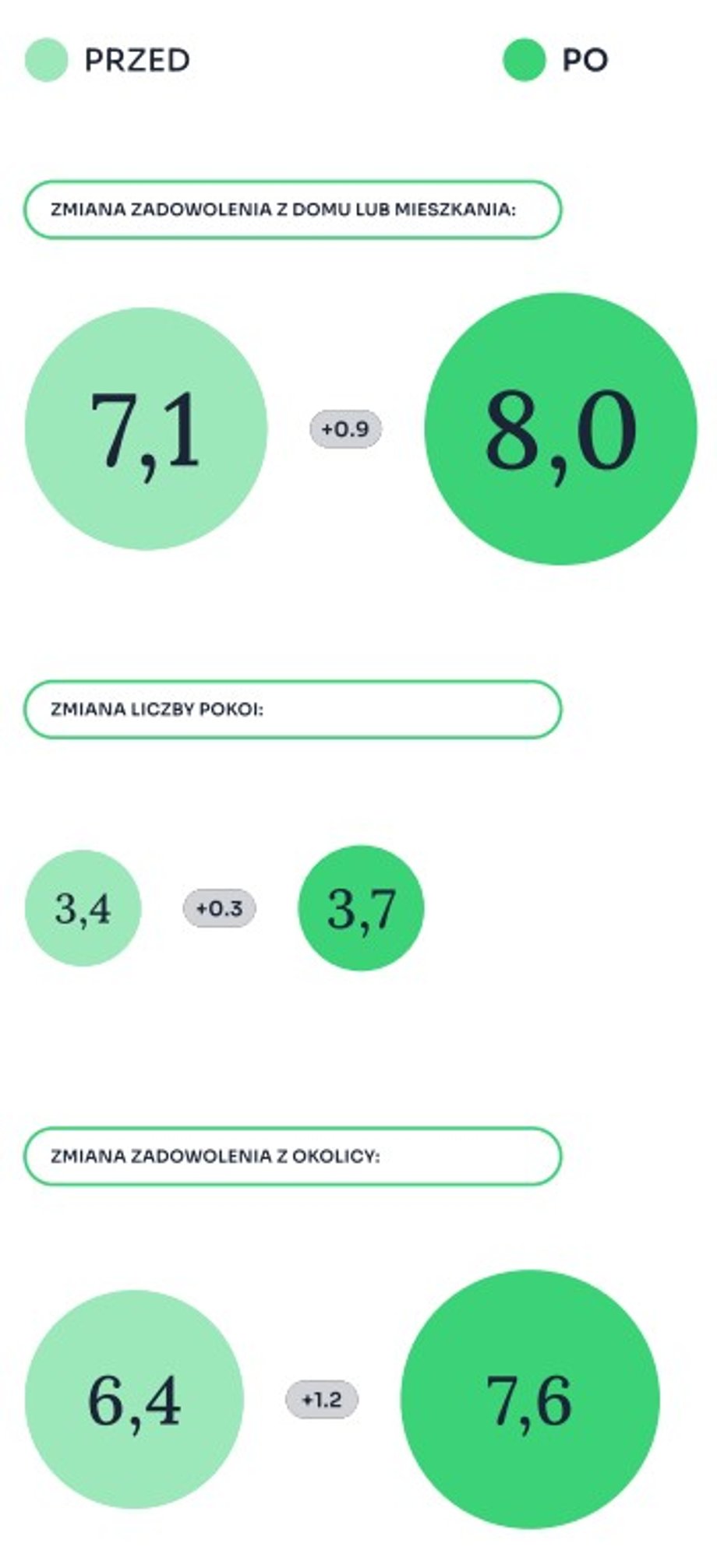
Change of satisfaction and the number of rooms after moving
|
Otodom.pl / otodom.pl
At the other pole there are people struggling with financial difficulties. 62 percent Economic pragmatists declare stress related to their financial situation, and for 59 percent. Educational nomads. Moving was a serious burden on the budget. There is also a group of leaving nests, of which 49 percent directly indicates willingness to separate from the family.
Return to multi -generation
One of the most interesting trends is a return to a multi -generational model. Otodom data indicate that 72 percent He treats them as his future residence. However, more and more people (14 percent) invest in the second property with the support of their loved ones, especially children or aging parents.
Although the share of four -room apartments and larger apartments in the offer fell from 18 percent. in 2019 to 14 percent In 2025, the data show the growing interest in real estate adapted to life in a multi -generational model. These types of search appeared in 2025 on average 150 times a month – more than in the case of real estate dedicated to seniors.
Escape to the outskirts of cities
The trend of moving from city centers to their edges is particularly visible. Among nature lovers, as much as 58 percent He decides to change the town, and moving from the city to the countryside constitute 44 percent in this group. – twice as much as in other segments.
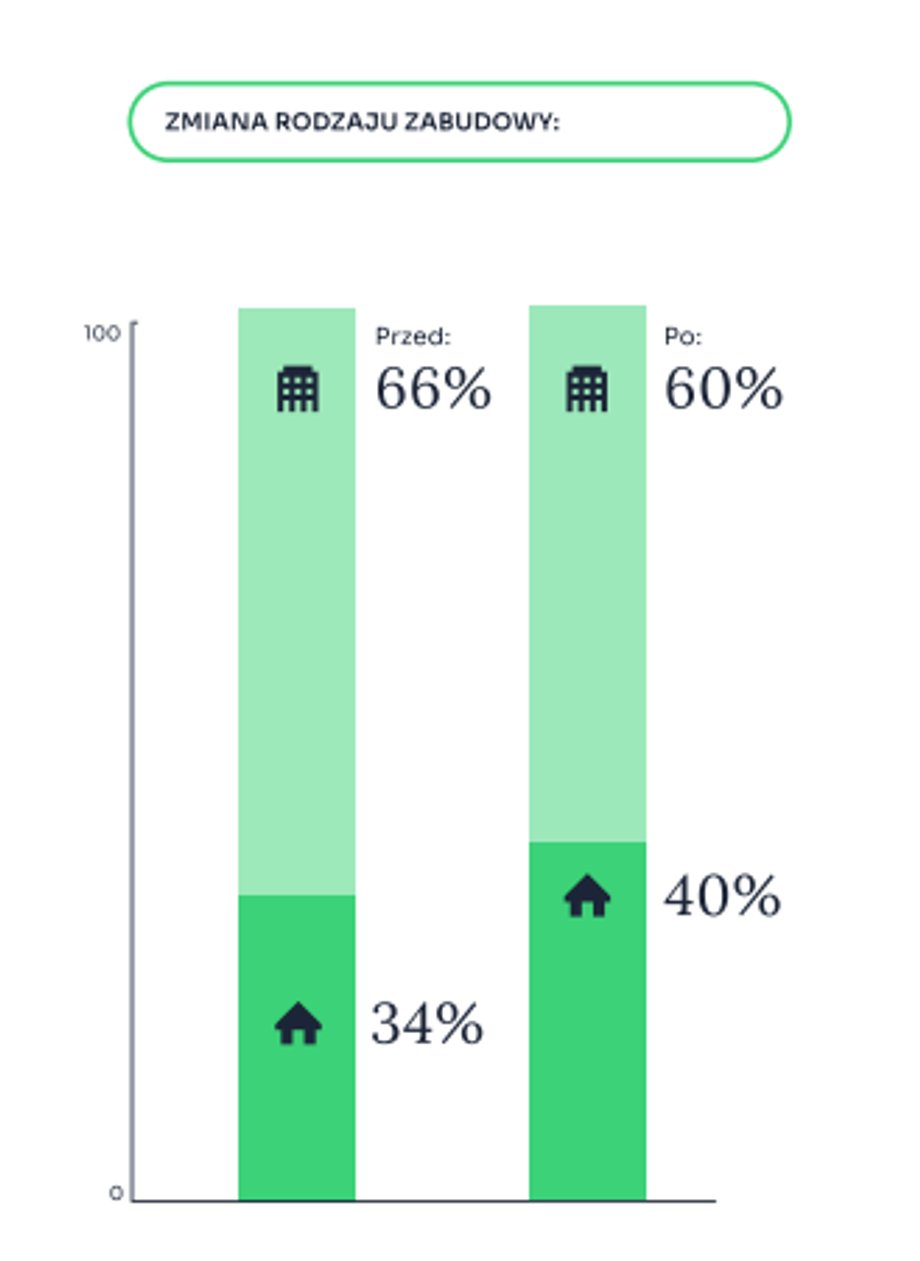
Changing the type of building after moving
|
Otodom.pl / otodom.pl
– The search for peace, quiet and contact with nature were the most common motivations in the studyand for 11 percent respondents were the main reason for the change – admits Filip Springer, photographer and writer.
The choice of building form is also important. Before moving 75 percent He lived in apartments, after 63 percent at home. This trend is confirmed by market data.
– for a long time The number of advertisements for the sale of real estate on the outskirts of cities is at least twice as high as in their central partsand this difference is constantly growing, especially since the pandemic time – says Milena Chełchowska, an expert in the housing market of Otodom.
Quality of life more important than the size
It is interesting that people who decide to buy a house on the outskirts are increasingly choosing smaller films. In April 2025, as much as 36 percent announcements about houses located on the outskirts of provincial cities concerned so -called small houses. In Warsaw itself, the share of this type of offers (70-125 sq m) increased by as much as 13 percentage points in six years.
Read also: Poles loved small houses. It's a cheap way to escape from the city
– It is a signal that it is no longer about space, but about the possibility of having – adds Chełchowska.
A challenge for urban planners
The growing need for contact with nature, peace and greater life autonomy poses a serious challenge for cities. Filip Springer from the Institute of Reportage warns: – We must stop the matter if we do not want to deepen social and economic unevenness. It is also necessary to reduce the energy consumption of our cities and suburbs, reduce emissions and simply make life easier. The vision of cities that are so quiet, calm and green that people do not want to get out of them, seems to be a challenge to fight.
The Otodom report shows that contemporary housing decisions are not only a matter of rational premises, but above all an attempt to organize emotions and a response to personal breakthroughs. In a world full of change, the search for sense becomes a common denominator, regardless of age, education or place of residence.