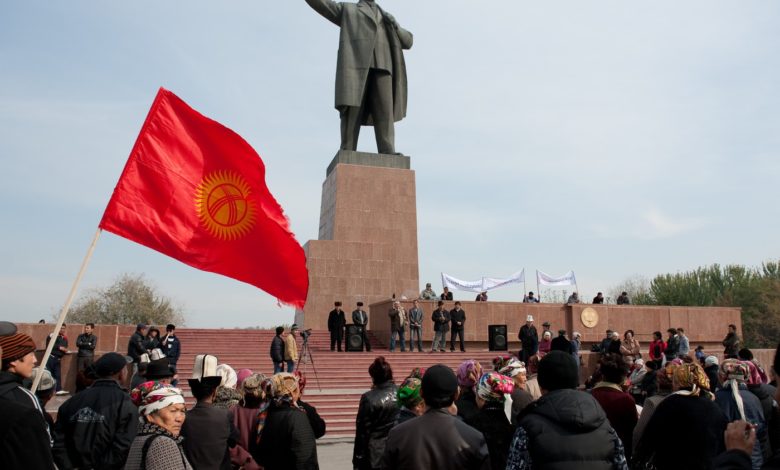
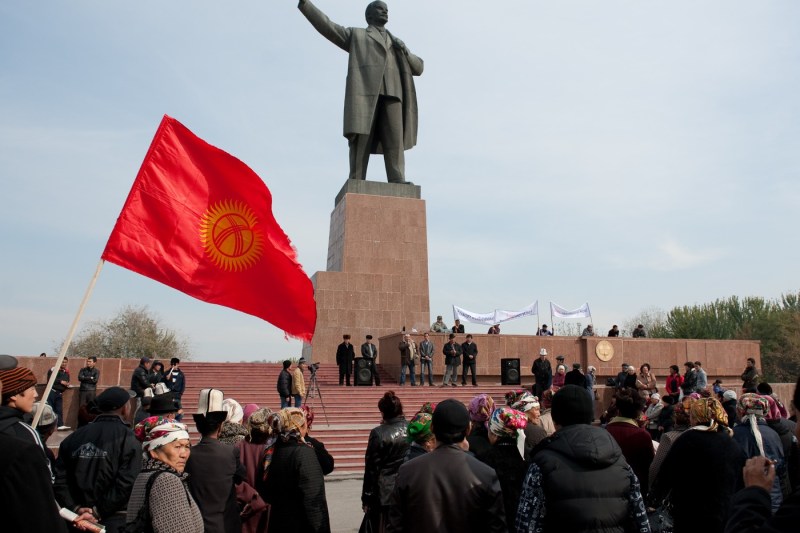
Lenin's statue in Kîrgîz Oş (2011). Photo credit: Nicolas Tanner / AP / Profimedia
Kîrgîzstan dismantled on Saturday the highest monument of the founder of the USSR Vladimir Lenin in Central Asia, located in Oş, the second largest city in the former Soviet Republic, allied by Russia, reports France Presse and Agerpres.
According to the City Hall, the monument will also be moved “a 95 -meter high map on a high 95 -meter mast” will be installed in the central market in Oş.
The bronze monument measured in total 23 meters, also with pedestal, making it the highest Lenin monument in Central Asia that was not disassembled after the fall of the USSR in 1991 and one of the highest in the world.
The statue was removed during the night, and rare photos of some amateurs show it “lying” in the central market of the city, opposite the town hall.
“We want to improve the architectural and aesthetic aspect of the cities”
This operation “should not be politicized”, according to the City Hall of Oş, which cited examples of “Russian cities in which Lenin's monuments were also disassembled or moved.”
“This is a common practice that aims to improve the architectural and aesthetic aspect of the cities,” the City Hall considers.
Russia, an ally of Kîrgîzstan where it maintains military bases, tries to maintain its influence on the growing presence of China and West, emphasizing the Soviet common past that unites both countries.
Unlike other former Soviet republics such as Ukraine or Baltic states, in Central Asia, the references to the USSR are common. And in Kîrgîzstan, the monuments that honor Vladimir Lenin still exist in the vast majority of cities.
But the five countries in Central Asia are trying to strengthen their national identities, for example by renaming the names of Russian resonance or raising monuments dedicated to national heroes instead of those who honor Soviet dignitaries.
But these decisions aroused the anger of a part of the Russian political class, which accuse the countries of Central Asia of departing from Russia, especially after the invasion of Ukraine by the Moscow army.