“In vain do we teach people to recognize the signs, if the doctors cannot help them in hospitals.” The procedure that can save Romanians with stroke

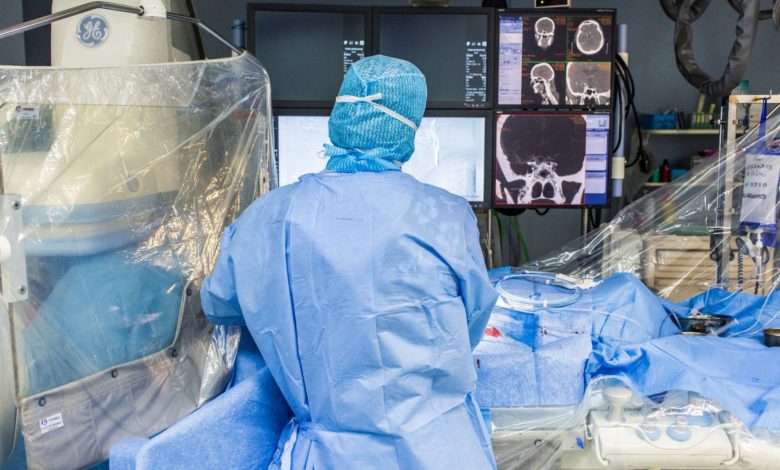
Trombectomy, the minimally invasive medical procedure through which the stroke is treated, is practiced only in ten hospitals in Romania. And some of them risk being left without funding for such treatments “We had to refuse patients,” says Dan Mihoc, a doctor who returned from France to develop this practice. What are the main problems that Romania faces?
- In the first part of the article, Hotnews has reported how useful this procedure is for patients suffering from stroke, the main cause of disability in Romania.
- The article is part of the PULSE project, an international journalistic consortium in which Hotnews is a part and providing the public documented and diverse perspectives, with information from several countries, about issues of great public interest. The article was written by Alina Neagu (Hotnews, Romania), along with Fran Sanchez Becerril (El Confidential – Spain) and Justė Ancevičiūtė (Delphi, Lithuania).
“This year it did not start well,” says Liliana Curea, president of the Association for the Fight of Stroke. She says that some of the ten hospitals where thrombectomy is performed “no longer have materials to treat patients with stroke”.
The financing for thrombectomes was prioritized by the Ministry of Health, which offered a corridor separate from the money from the Health Insurance House. There is a financing program managed by the Ministry of Health, called AP-AVC (priority actions for the treatment of patients with stroke).
“We had to refuse patients”
However, Oradea, the second center after Bucharest from the point of view of the activity, received this year, from the Priority Actions program of the ministry, funding only for 7-8 thrombectomies.
Thus, the hospital in Oradea supplemented the money for these procedures from its own budget, thus reaching 75-80 thrombectomes this year.
“We had to refuse patients. When we had to refuse, we refused for lack of materials,” says doctor Dan Mihoc.
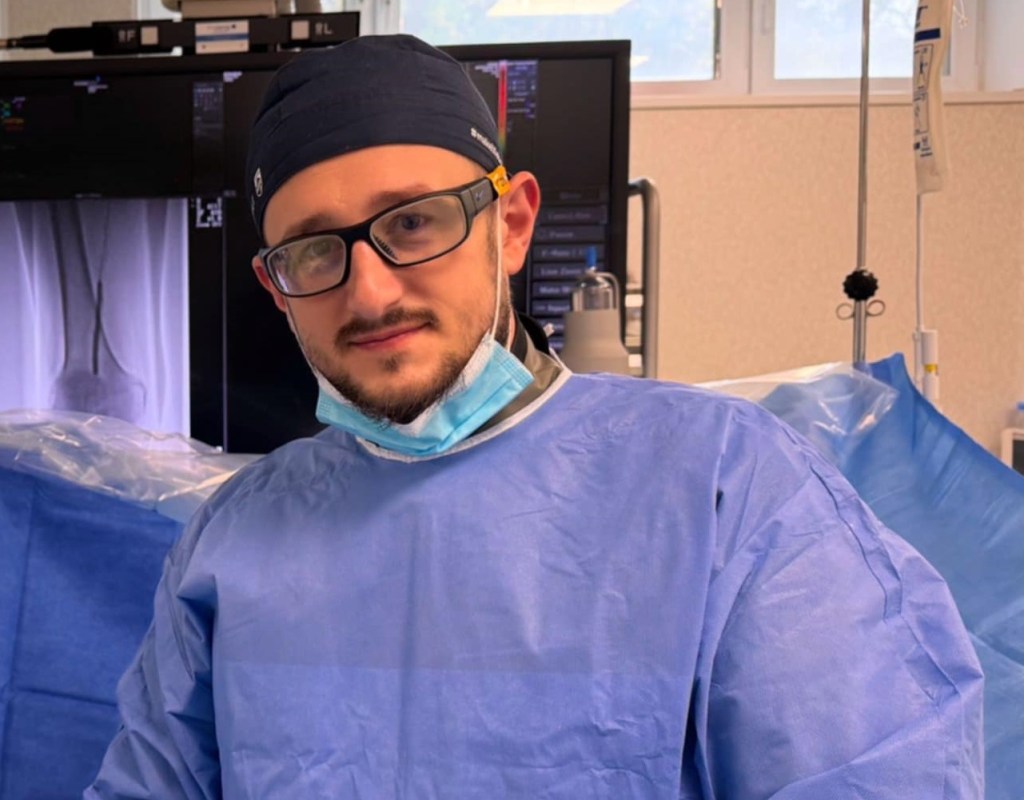
And he draws an alarm signal: “If we had a correct financing and we would not have to refuse patients from other counties, we would have doubled,” adds the doctor.
“We have made many refinancing requests at the Ministry of Health, because we serve 5 counties. Besides Bihor, we also have Maramureș, Satu Mare, Sălaj, Cluj and Sometimes and Alba. Given that our activity deserts 5 counties, we need quite high financing.”
“It's not normal. We have a national program for this”
“Currently, the hospital supplemented our money for procedures. But it is not normal, given that we have a national program for it,” says the doctor.
The same alarm signal is drawing Liliana Curea. “There are already hospitals who no longer have materials to treat patients with stroke, to do thrombectomies. There have been and there are situations where the hospital supports doctors who do thrombectomes, buying materials, but not enough. These materials are very expensive. There are hospitals that have no money from the program of stroke. they have the necessary materials. ”
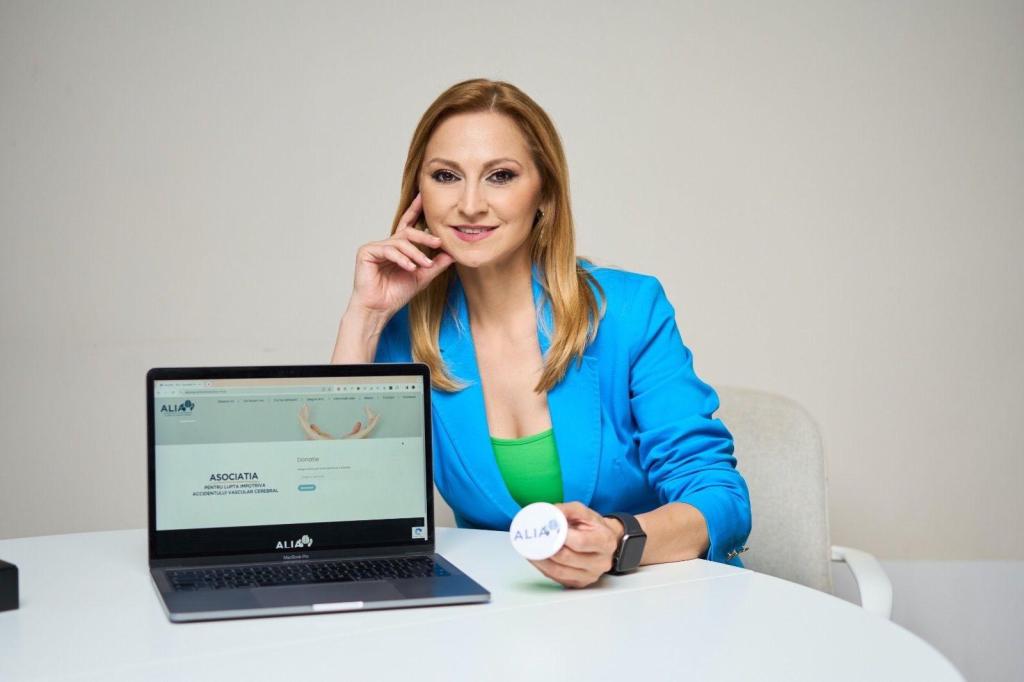
Since the beginning of the year and until now, says Liliana Curea, “there are dozens of patients who have not been able to benefit from thrombectomy, for this reason. This is also leading to losses of human lives. If the doctor has nothing to do with thrombectomy, the patient or stays with very serious sequelae, or loses his life.”
The association led by Liliana Curea has carried out a large awareness campaign through which she set out to teach the Romanians to recognize the signs of a stroke and to address the doctor in time. “Time means life” was the name of the campaign. But “for nothing we teach people to recognize the signs of the stroke, to arrive in time in hospitals, if the doctors have no way to help them,” she says.
Dan Mihoc compares the situation in Romania with the one in France, the country in which he specialized and from where he returned to help develop the practice in Romania.
“It was not so in France.” This is, in fact, the main difference between the medical system in Romania and the one in France, which Dan Mihoc talks about: “There was no problem. There the cabinets were always full of materials and at any time you could put your hand on a material and work. At the moment, and here it is almost similar, but overall.
Hotnews asked the Ministry of Health what is the situation of the budget of the Priority Actions program, when the problems will be remedied and when the necessary funds will be allocated to the centers. I did not receive an answer, until the time of publication of this article.
Why is it important for stroke patients to have access to thrombectomy
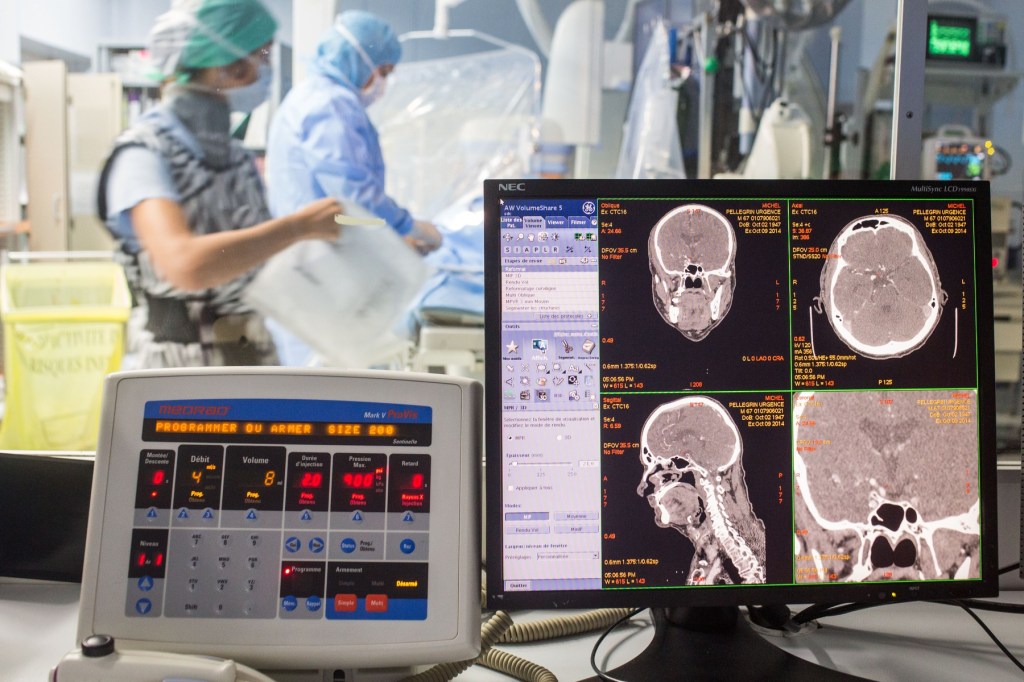
I asked the doctor Dan Mihoc who is, for a patient with stroke, the difference between a classic and a minimally invasive intervention and why it is important for a patient to have access to such an intervention.
“At the ischemic stroke, when a clot leaves an area of the body-from the heart or artery-and blocks a brain artery, at that moment, the only option, until there was interventional radiology, it was the injecting thrombolysis. something else.
Regarding the hemorrhagic stroke, “in which there is an aneurysm, for example, cerebral, which breaks, indeed, there is also the neurosurgical solution: in which the patient must be operated, it is surgically reached to the place of aneurysm and then an staple is mounted, a clip that blocks the circulation in that broken aneurysm.”
“And the method has its limits”
What do interventional radiologists do in such cases? “We avoid the surgical operation and enter through the artery. We reach the same aneurysm in which the surgeon would have reached, but we fill from the inside with platinum coils or with some specially created devices to do so. For the patient, this means that it does not go through surgery, with all the risks associated with it.”
Dan Mihoc admits that “our method also has its limits, because there are aneurysms that cannot be treated interventions and which requires surgery. Our specialty does not exclude any other specialty, but only comes with an alternative of treatment or, sometimes, a complementary method of classical treatment.”
Dan Mihoc also says that before he concludes that the minimally invasive solution is the best for a patient, he must be evaluated by a multidisciplinary medical team, as is happening abroad: “I consult with a colleague who treats the same kind of pathology, we see the patient's file together and we establish the best method. I own the absolute truth. ”
The youngest patient with stroke was “30 and something years old”
The age of patients suffering from stroke is decreasing in recent years, says Dr. Dan Mihoc.
“The youngest patient was 30 and some years old. But there are 6 -month -olds who do stroke – we are already talking about genetic problems. There are 18 -year -olds or 20 and something. Some are drugged and so they can do stroke.
His urge for all patients and their belongings is like “when they have the slightest suspicion of stroke, when they feel they have no strength in one hand or see that they have fallen a little corner, the face is deformed to one side or they can no longer move a leg, at that time it must arrive at the hospital as soon as possible.”
We are talking about a pathology “very common. It is increasingly common and, unfortunately, the average age is declining. More and more young patients come.”
The causes of this phenomenon? “Lifestyle, stress, unhealthy eating.”
The doctor also emphasizes that many people tend to postpone the moment of presentation at the hospital, hoping that if they are waiting for a bit, the symptoms will pass by themselves, Dr. Dan Mihoc points out.
“If the patient does this, it may be that when he comes to the hospital, we can no longer help him, if it is too late. I urge any patient or any patient as when he has the slightest suspicion of stroke to quickly address the emergency service 112. I and my colleagues are here and we can help.”
The country where all large and medium hospitals have interventional radiology sections
While the procedure is not yet developed and encountered financing problems in Romania, in Spain, thrombectomy is a very popular procedure, and all large and medium hospitals have interventional radiology sections, where they perform minimally invasive surgical procedures.
“Almost all hospitals have radiology departments. These units are well represented in public hospitals, offering scheduled procedures in the fields of vascular and tumor pathology, as well as in other fields of medicine. In addition, large hospitals offer emergency services 24 hours a day,” says José María Abadal Villayandre, Radiology Society.
“It is the future of medicine. The minimally invasive surgery is guided by the latest imaging technology. The recovery is fast after procedures, sometimes with short hospitalization or even without admission after the procedure. The interventions are high precision, without” opening “the patient,” adds the Spanish doctor.

The PULSE project is a European initiative to promote cross-border journalistic partnerships, co-financed by the European Commission (DG Connect) within Multimedia actions by Grant Agreement LC-0272862. HotNews.ro collaborates in the project with other prestigious publications in Europe: Delfi (Lithuania), Deník Referndum (Czech Republic), the largest Austrian newspaper Der Standard (Austria), some of the largest publications in Greece – Efsyn, El Confidential, Spain, the largest Polish newspaper Gazeta Wyborcza, the oldest analytical and information site. MediaPool, one of the largest HUVG HUVG and Italian newspaper with economic profile for 24 hours, one of the oldest and most powerful publications in the peninsula.
Three renowned transnational media organizations-OBCT (Italy), N-OST (Germany) and Voxerop (France) will coordinate the project activities.