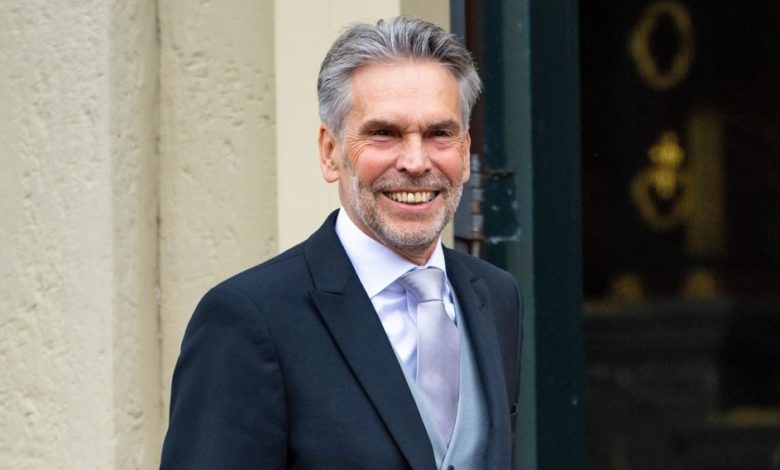
“It is neither necessary nor responsible.” The Prime Minister of the Netherlands Dick Schoof resigned

2025-06-03 17:59
publication
2025-06-03 17:59
The Prime Minister of the Netherlands Dick Schoof resigned on Tuesday afternoon, a few hours after leaving the ruling coalition by its largest grouping, the far -right Freedom Party (PVV) of Geert Wilders.
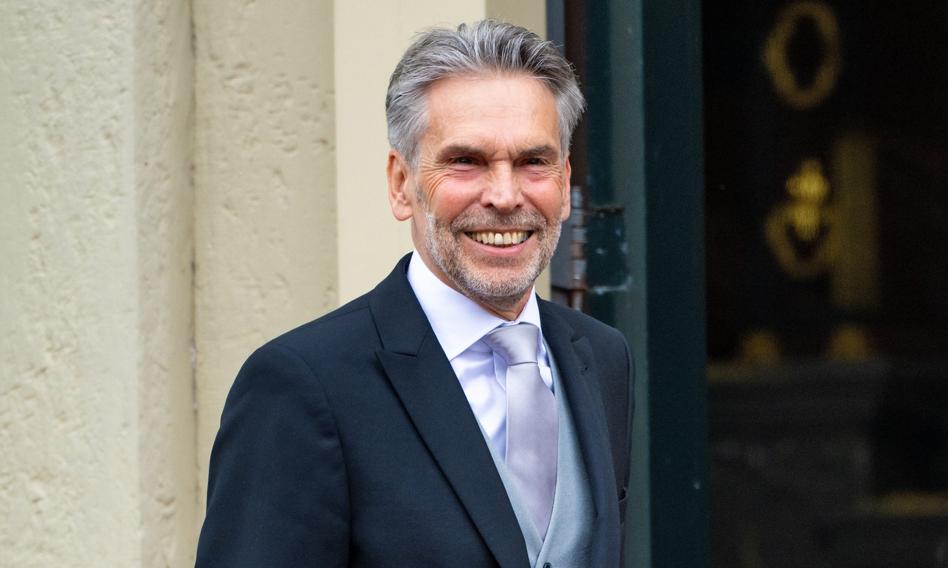
Schoof announced that after Wilders withdraws the ministers from his party from the government, the office will continue working as a temporary administration.
He also said that he regrets Wilders made a “irresponsible” decision to leave the PVV from the coalition. He added that in recent days he repeatedly assured the heads of four coalition parties that “the fall of the government is neither necessary nor responsible.”
“We are facing great challenges in the national and international sphere, and more than ever ever the ability to make decisions is necessary because of our security and (…) the economy in a rapidly changing world” – said the prime minister.
For now, there is no information when early parliamentary elections will be planned.
The Associated Press points out that the Netherlands will be ruled by a temporary office at a time when the NATO summit (June 24-25) will take place in Hague.
Earlier on Tuesday, the NOS portal said that the head of government would give up the resignation of the King of the Netherlands Wilhelm-Alyksander that day.
Wilders for some time threatened that his party would leave the coalition if the government did not sharpen the migration policy. “No signature under our plan regarding (granting – PAP) asylum … PVV leaves the coalition,” Wilders wrote on Platform X.
Some coalition partners predicted that there would be a crisis in the government. Politicians of the pro -European Volt party reacted enthusiastically to the PVV output. The leader of the People's Party for Freedom and Democracy (VDD) Dilan Yesilgoz admitted to the media that she was angry and amazed at Wilders's decision.
Wilders, who wants the next campaign before the parliamentary elections dominate the issue of the right to asylum, told reporters: “I signed the most severe asylum policy, and not under the fall of the Netherlands.”
Due to the multi -party parliament in the Netherlands, early elections are quite common. The current Secretary General of NATO Mark Rutte, who was previously the prime minister of this country, repeatedly led to premature elections – recently in 2021, when after resignation he managed to head the government again a few months later.
Wilders, whose party won the election in 2023 and has the most deputies in parliament, threatened on May 26 that he would lead to the collapse of the government “at the latest in a few weeks”, if his expectations regarding the radical limitation of the influx of immigrants are not met.
In the 150 seats of the PVV of the Netherlands, they have 37 deputies. According to the latest polls, the support for Wilders groups has decreased, but it is still one of the three most popular parliamentary forces, along with the Green Alliance and the Labor Party (Groenlinks/PVDA) and liberals from VVD. AP points out, however, that the difference between PVV and Centrolevica's quotations is “imperceptible”.
Not for the first time Wilders leads to a government crisis. In 2010, he supported the minority office, headed by Rutte, but broke off cooperation less than two years later, after a quarrel regarding savings policy.
Frans Timmermans, a former EU commissioner and former head of Dutch diplomacy, who is currently heading the largest opposition block in parliament (Groenlinks/PVDA), accepted the departure of the Wilders group from the coalition with approval. “I think it is an opportunity for all democratic parties to get rid of extremists, because it is clear that you can't rule with extremists. When it gets difficult, they run away” – he said. (PAP)
fit/ akl/
arch.