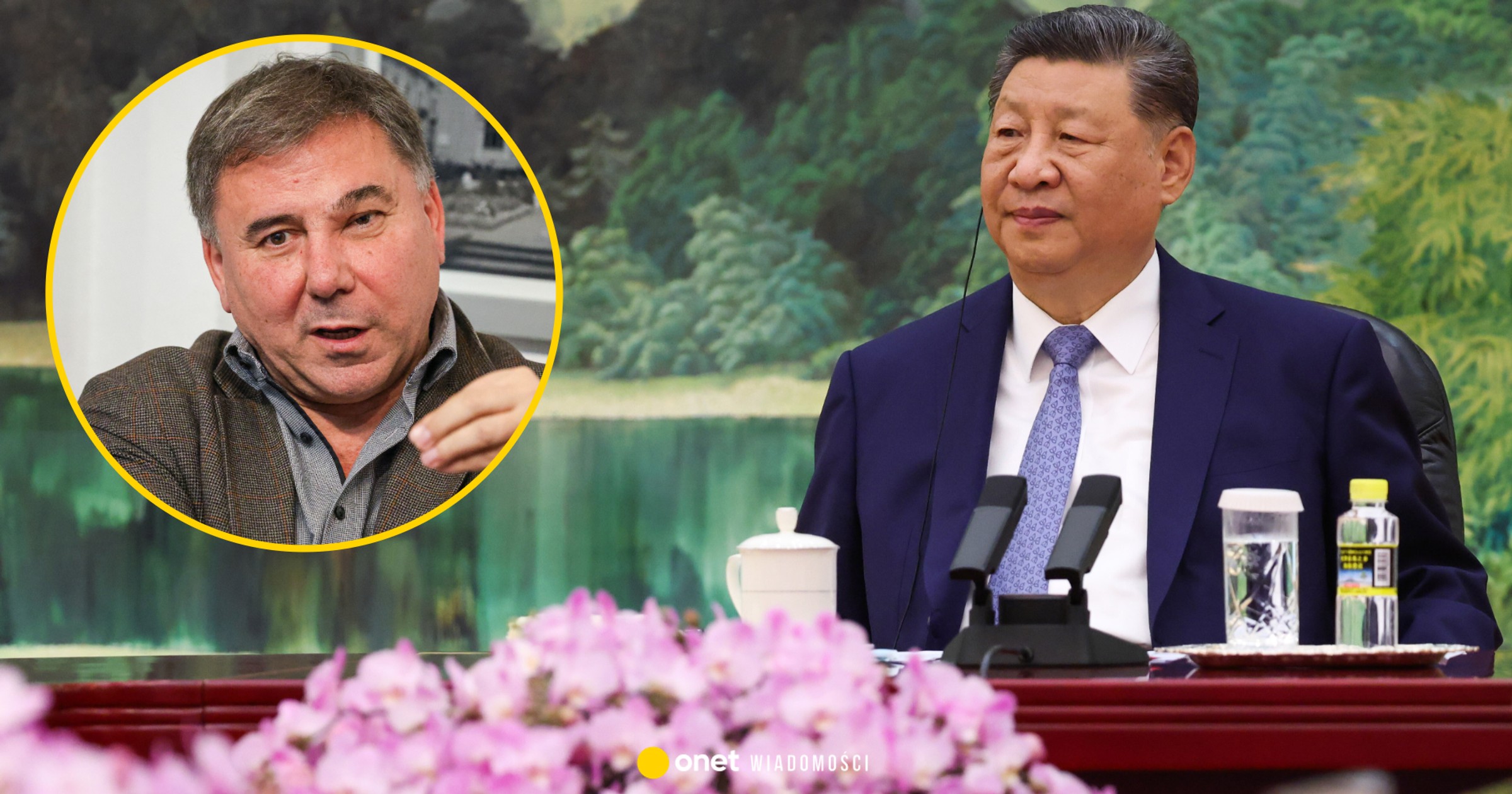
US President Donald Trump is going to visit a country whose perception he has significantly changed with his policies over the past few years. — The relationship with China used to be an expression of a certain moral and ideological position, but this no longer applies. More and more people began to notice that the superpowers were basically equal and cared only about their own power and interests, says Krastew. In an interview with the Czech Respekt website, the respected analyst explains what Beijing wants and what Europe should be afraid of from it.
Tomas Lindner: You are co-author of the analysis of the European Council on Foreign Relations, which annually examines political views in 21 countries around the world – 11 European and 10 large non-European ones. What changed after Donald Trump returned to the White House?
What intrigued me most was how dramatically the perception of China has changed. This is where the biggest change of opinion has occurred. Suddenly, there was consensus in all the countries surveyed not only that China's influence would grow in the coming decade, but, more importantly, people no longer feared it. Two or three years ago, people saw the rise of China, but it worried them. This time, even in India, which is Beijing's traditional rival, most residents believe that their relations with China will improve.
Is this a consequence of Donald Trump's behavior, especially towards allies, or has China itself contributed to its better image?
China benefits from being a quiet player over the past year while America has been very noisy. Beijing is by no means behaving like a saint: we have seen sharp political pressure on Japan, growing investments in the army, aggressive promotion of exports to the world. But because Trump has pursued such harsh policies and Russia is doing what it is doing, China has come to be seen as predictable, serious, and stable by comparison. As the adult at home. And this will have a huge impact.
He divorced American power from any moral purpose. He basically says that America is very powerful and strong and therefore others should follow her. It proposes a hierarchy of power without any basis in order or law. The United States is no longer perceived as an ideological player behind a vision – everything revolves only around American interests. In such a situation, it is very difficult for others to perceive the United States and China as different ideological propositions.
A tilt toward China used to be a manifestation of a certain moral and ideological stance — but that no longer applies. More and more people began to notice that the superpowers are basically equal and only care about their own power and interests.
What is your personal opinion: should we be afraid of China's rise or should we take it calmly?
Of course, we will only know the answer in 10 or 20 years, but one thing is completely clear: the threat to European industry from China is no less than the threat resulting from the US abandoning ensuring European security. It could destroy European economies. So I believe that all powers should be watched carefully and critically. However, I do not believe that the Chinese leadership, although communist, dreams of transforming the rest of the world in its image.
Soviet communists had such dreams. Why do the Chinese think differently?
I feel like they believe their system is too complex, too complicated, and too perfect for others to follow.
Russians suffer greatly from an inferiority complex, especially in relation to Europe. The Chinese, however, suffer from a superiority complex: they do not believe that others would be able to imitate them. They are guided by the principle “we don't want to change you, all you have to do is buy our products.”
The article continues below the video
Will Europe be able to compete with China in the future, or has this train already passed us by?
In the past, Europe benefited from small scale: we were small, but countries competed with each other and it worked. Some large countries, such as India and China, did not fare so well. Now the situation has completely reversed. China relies on its size, on its ability to operate on a large scale. This scale is truly staggering: If I remember correctly, China has built more concrete buildings in the last three years than the United States has in the last 100 years.
To understand China, you need to understand its size. And – in my opinion – they either force Europe to become much more economic protectionist, or it will lose many jobs in this competition. For Europe, the small scale from which it had previously benefited suddenly became a problem. No European country, including Germany or France, is large enough to compete with China on its own. If the European Union did not exist, it would have to be invented now. Just so we can even have a chance to survive in this game.
How do you think a rising China will change the way we live? The rise of America brought new political ideas and influenced our everyday culture. What will China's rise bring?
The rise of China's power is not associated with any universalistic vision of the world. Whether for better or for worse, the European empires and American power during the Cold War were closely tied to the idea that the world was one whole and we all had some kind of common destiny. America, for example, is based on the idea that freedom is natural to man. China doesn't think this way, it sees the world as pluralistic. We are not one human civilization, we are composed of many civilizations.
From this point of view, the rise of China sounds less threatening, as it does not want to transform us in line with its values and worldview. From another perspective, however, it is dangerous for Europe, because this type of universalism is the basis of the European Enlightenment.
At the same time, I believe that China's influence will be much more felt through technology. Until now, it was: “I want to change your mind. I want to convince you. I want to infect you with the virus of my ideology.” The Chinese idea is different: “I want your data. I will look at it and use it.”
You claim that all world powers are changing their identity. In America, this is epitomized by the departure of Donald Trump and his government from the post-war international order that Americans themselves created. Europe is rediscovering the importance of defense and accepting that the rest of the world will not adopt its values and that it will remain unique in many respects. How is China changing its identity?
Previously, the rule was that America introduces innovations and China imitates them. This is no longer true. China is also innovating and has made great technological progress.
Second, China's rise was largely related to some kind of reduction in power. For example, after 1989, the Chinese did not introduce free elections, but they did introduce a two-term limit for the party leader. This is all in the past. Xi Jinping basically rules the country like an emperor. The recent changes he introduced in the Chinese army show that there is a concentration of power that may become dangerous.
China is also struggling with many of the same problems that we are struggling with. For example, as a result of the former one-child policy, society is aging very rapidly. It will be difficult for an authoritarian system to cope [zarówno] with this and other challenges. A democracy can function in much greater chaos, an authoritarian regime is much more rigid.
I’m Ashley Davis as an editor, I’m committed to upholding the highest standards of integrity and accuracy in every piece we publish. My work is driven by curiosity, a passion for truth, and a belief that journalism plays a crucial role in shaping public discourse. I strive to tell stories that not only inform but also inspire action and conversation.