In Romania, discussions about sexuality are still marked by shame, silence and a lot of confusion. In the absence of accurate and accessible information, teenagers end up forming their ideas from “shards” found online or from friends, which opens the way to major risks: unwanted pregnancies, sexually transmitted infections, anxiety and health problems that could be easily prevented.
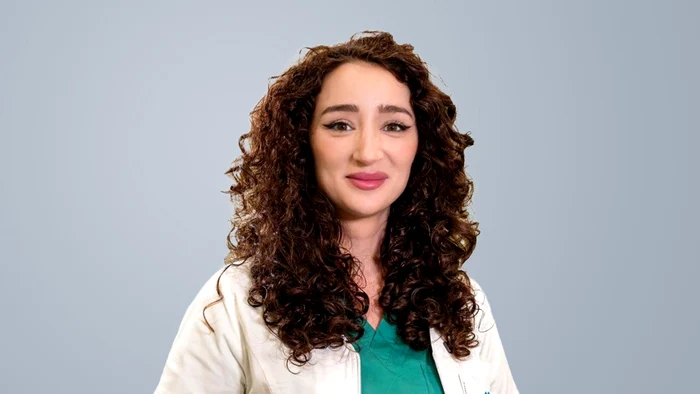
Dr. Roxana Brătescu, specialist in obstetrics and gynecology at MedLife Arad, sees the consequences of the lack of sex education every day in her office. And her observations make it clear that the problem is not young people's curiosity, but a lack of correct information and a safe space to ask questions. “It is essential that we, the doctors, explain things in a language that the patient understands, not using technical terms, because we risk not being understood. Communication must be empathetic and clear and, very importantly, without judgment“, is the opinion of Dr. Brătescu.
In recent years, women's health has become more and more present in the public space, and doctors who communicate openly, empathetically and correctly are increasingly sought after. One of these professionals, known for her warm, direct and accessible style is Dr. Roxana Brătescu. She chose gynecology because she went through difficult medical experiences that made her understand how important an empathetic and involved doctor is. During her residency, Dr. Roxana Brătescu had a special sensitivity towards teenage girls who were coming to give birth. “I was disturbed by the thought that in front of me is, in fact, a child who is going to go through pain. I always tried to reassure these pregnant women, to explain to them step by step what is to come, to obtain a good collaboration and, above all, so that they feel that they are not alone. This still gives me the greatest satisfaction today, when I manage to transform fear into confidence.” the doctor explained.
Sex education – a necessity, not a fad
Sex education is an essential aspect of modern education, which contributes to the formation of an informed and responsible society. It not only helps young people and adults understand the physiology and functioning of the human body, but also promotes fundamental values such as respect, consent and responsibility in sexual relationships. Sex education includes information about human anatomy, puberty, intimate relationships and sexual health. Ideally, this also includes education about reproductive health, prevention of sexually transmitted diseases (STDs), contraception, but also about respect for oneself and others in the context of sexual relations. A key aspect of sexuality education is learning about consent and protection from sexual abuse.
It is estimated that globally, teenage girls between the ages of 15 and 19 have 21 million pregnancies annually. Half of these pregnancies were unwanted, and 55% of them ended in abortions. Pregnancy complications and unsafe abortions were the leading cause of death among teenage girls. Moreover, 14 million teenage girls were not using contraceptives, even though they did not want to get pregnant. Only about a third of adolescent girls in low- and middle-income countries used modern contraceptives, which consisted of oral hormonal pills, injectables, male or female condoms, vaginal barrier methods, intrauterine devices, implants, female and male sterilization, and emergency contraception. These are just some of the data from a large review published in BMC Women's Health (2024), which shows that comprehensive sexuality education programs significantly reduce adolescent pregnancy rates and increase contraceptive use. “Sexual education is essential from adolescence, because it protects physical and emotional health and reduces the risk of infections, unwanted pregnancies and trauma. Romania is, unfortunately, in the top 3 European countries with the most underage mothers, which clearly shows the lack of education in this area”stated Dr. Brătescu.
Almost half (45%) of births to girls under the age of 15 in the EU come from Romania. According to the data of the Save the Children 2024 Report, it is shown that:
· One in three girls who are currently mothers/underage pregnant became pregnant for the first time around the age of 15 or younger.
· One out of three girls pregnant during the minor age has a mother who in turn gave birth to her first child before turning 18;
· Romania registers 34 births per 1,000 teenage girls; in Europe, only two states present a relatively worse situation: Bulgaria and Georgia, with values of 36.8 and 38.3 births, respectively.
According to the gynecologist, sex education is not only about contraception, but also about knowing the body, recognizing abnormal signs and building healthy relationships based on communication, respect and consent, which, unfortunately, is often lacking. “Teenagers need to know that they have the right to say 'no', that touching without consent is not normal. And perhaps the most important reason: if you don't do it, someone else does sex education. Most of the time, pornography, which does not provide a real model, but a distorted one“said the doctor.
Common myths among teenage girls – and their consequences
Lack of sex education not only leaves information gaps, but also generates myths that can have serious consequences. Dr. Roxana Brătescu observes them in her office almost daily. “The most common myths I see in young women actually come from a lack of information and a fear of asking. Many believe they can't get pregnant if it's their 'first time' or if they have contact during their period“, the doctor confessed.
Another worrying behavior mentioned by the gynecologist is the use of the morning-after pill as a repeated contraceptive method: “Others use the morning-after pill after every sexual intercourse, not knowing that it is not a regular contraceptive method and that it can lead to hormonal disturbances.“
Among the most persistent myths is the one related to vaginal washing after sexual intercourse.
“Some girls think that if they wash immediately after contact, they “clean up” the risk of pregnancy or infection. Totally wrong. Internal washes can destroy the normal flora and promote the appearance of infections. And the idea that you can prevent a pregnancy in this way has no medical basis – spermatozoa end up in the uterus and fallopian tubes, where no wash can work.“
In the opinion of Dr. Roxana Brătescu “all these concepts show how much we need clear sex education based on simple medical explanations, not shame.”
What can parents do?
A lot of sex education starts at home, but many parents avoid the subject either because they are embarrassed to discuss it, or out of fear that it might “give ideas” to their children. A completely wrong idea, says the doctor.
“The first step is not to run away from the topic. Many parents avoid discussions about sexuality for fear of “giving ideas” to children, but the reality is exactly the opposite: silence does not protect, but makes vulnerable. Children need correct information from their parents, not fragments from online or from friends”emphasized Dr. Roxana Brătescu.
She recommends that the dialogue start early and be adapted to the child's age. “Talks should start gradually, with simple explanations about the body, boundaries and respect. It doesn't have to be a one-off discussion, but an ongoing dialogue where the child feels they can ask anything without being judged. In short: the child needs an available parent, not an expert,” concluded the doctor.
Virginity tests: unethical and traumatic
Another taboo subject is that of virginity tests, a practice still required by some families, for cultural or control reasons. “Virginity tests have no medical basis. The WHO considers them unethical practices. The hymen does not show whether or not a girl has had sex — it can be elastic, it can have different shapes and it doesn't always break,” the gynecologist explained. In fact, the World Health Organization (WHO), the UN and the International Federation of Gynecologists called for the total abolition of these tests in 2018, describing them as “abusive, traumatic and without scientific basis”.
In Romania, the legislation is clear: “Virginity tests can no longer be carried out at the request of individuals. They can only be carried out in official procedures, at the request of the authorities, in a medico-legal context: criminal case, investigation, suspicion of abuse or rape. We cannot do such an examination just because someone comes and asks: “I want to know if my daughter is a virgin”. If there is suspicion of abuse of a minor, the first place the patient must go is to the coroner. The gynecologist must not intervene, because it can contaminate the samples,” explained Dr. Roxana Brătescu.
The doctor admitted that he refused such requests, when the minors were pressured by the family, because the emotional impact is devastating: “It creates shame, anxiety, pressure, and can leave long-term trauma. They convey to young women the wrong idea that their worth depends on a physical aspect that, medically, does not even define virginity. Our role as doctors is to protect young women, not to validate practices that are neither medical nor ethical. In situations that are required for cultural or family reasons, the procedure is clear: we refuse them. We cannot participate in practices that put pressure on a young woman or create trauma for her.”
The gynecologist has a message for young women under pressure to prove 'purity': “Your worth does not lie in your virginity. Your body is not a certificate to be presented to others. Virginity does not define a person's character, intelligence, dignity or future. If someone asks you to prove 'purity', the problem is not with you — the problem is with the person making the request.”
Sex education does not encourage promiscuity, it prevents abuse, unwanted pregnancy, disease and trauma. And doctors like Dr. Roxana Brătescu make a difference, day by day, listening without judging and patiently explaining everything the patient needs to know. “One essential thing, perhaps the most important thing, is that the doctor listens. I encountered many patients who were not listened to at all. I try to treat the patient as a person in her own right, not as a number. That changes everything.”
**
Sources:
https://bmcwomenshealth.biomedcentral.com/articles/10.1186/s12905-024-02963-x
https://www.salvaticopiii.ro/sites/ro/files/2025-10/violenta-domestica-mame-minore-acces-precar-la-educatie-starea-fetelor-in-romania.pdf
https://iris.who.int/server/api/core/bitstreams/5cfe0e11-b9de-4de3-985c-eed9d3607f40/content