How will the election result affect the Polish stock exchange and the zloty? “The market was afraid of this decision”

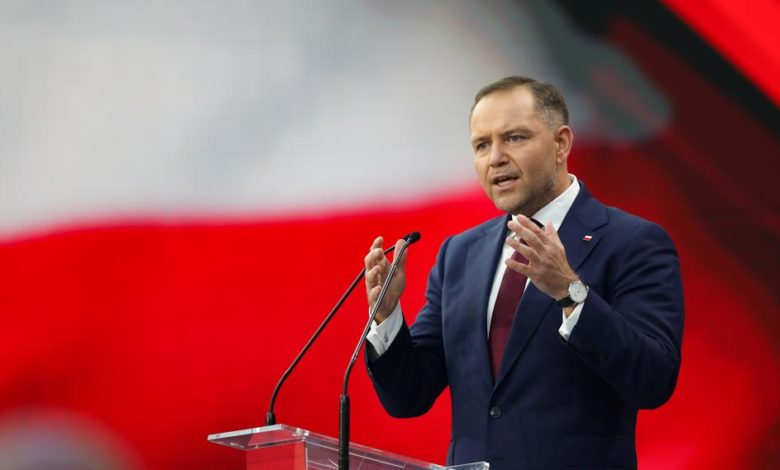
In the market, experts see in election results for investors to implement profits on the Polish stock exchange. This means possible drops and outflow of capital in the near future and almost some high variability on the gold.
Official full results of the presidential election in Poland »
An article updated on a regular basis.
The result of the second round of presidential elections, which was won by Karol Nawrocki with support of 50.89 percent, may mean a continuation of the impasse of government in Poland, which will probably be received by foreign institutional investors negatively. In this case, a partial outflow of capital and increased variability on Polish currency are expected, especially on Monday.
“From the perspective of the currency market, the political situation translates directly into the variability of PLN. (…) In the case of Nawrocki's victory, there would be a return to the so -called cohabitation – i.e. the distribution of power between the government and the president – which in practice would mean the possibility of blocking legislative initiatives and further impasse of reforms. Such development of events could also lead to escalation of voltage with EU institutions, especially in the context of law And payments from KPO, “explained on Friday the view of investors Łukasz Zembik from Oanda TMS Brokers.
“On Monday The high variability on the zloty is almost certain” – predicted the expert, taking into account the even opportunities of both candidates. In turn, the Goldman Sachs analysts in the Friday report indicated that Nawrocki's win in the second round would lead to greater weakening of the zloty and the reaction of the interest rate markets, i.e. increasing the profitability of the Treasury's bonds.
“Nawrocki's victory in the second round would not only stop the legislative work of the Civic Platform, but also would give the president of NBP Adam Glapiński an additional space to maintain a more hawk position” – added, and it is worth recalling that the MPC will decide on the interest rates on Wednesday.
“The WSE was ahead of this scenario with a relative weakness of WIG20 at the end of the previous week. Contrary to the belief about the small weight of the president, the consequences will be serious. The government will weaken – if it survives. The new president has a decision in the case of the President of the NBP,” DM BOŚ experts noted in the entry on Platform X.
Poles wake up with the new president, and investors with questions about market reactions. PLN indicates concern, but the WSE overtook this scenario with the relative weakness of WIG20 at the end of the previous week. Contrary to the belief about the small weight of the president, the consequences will be serious. pic.twitter.com/zf3ig8s1zzi
– blogs.bossa.pl (@blogibossapl) June 2, 2025
Indexes on the WSE, especially WIG20, have reduced in the last two sessions of the previous week, which was partly received as positioned capital for the possible win of Karol Nawrocki. WIG20 on Thursday reduced by nearly 1.8 percent, and and Friday gave another 0.5 percent. “The market was afraid of this decision by selling the shares of the largest companies on the WSE in the last two sessions before the election results. Ultimately, WIG 20 lost only 1.5% in two weeks between the two elections, “wrote Michał Stajniak from DM XTB.
Erste analysts point out that in the Polish press there are suggestions that after the victory of Karol Nawrocki in the presidential election, Prime Minister Donald Tusk may ask the parliament to vote a vote of trust. “The government faces the growing budget hole in the coming months (risk for banks), which will require unpopular decisions. Repairing the condition of the mining industry (JSW, PGG) requires. Unpopular decisions can also extend to a group of Azoty struggling with liquidity problems” – wrote Jakub Szkopek, Erste analyst in the morning report.
“The winning of Mr. Karol Nawrocki is a maintenance of a certain impasse in the government-President's relationship, which will probably be picked up by foreign institutional investors slightly negatively or negative, because it could herald changes in the electoral preferences of Poles in the near future,” commented Marek Kaźmierczak, managing VIG/C-quadrat TFI funds in the note.
“For stock markets, this means that with valuations (for the price/accounting value indicator) approaching two standard deviations above its 10 -year -old – the likelihood of high profits from the domestic stock market and partial capital outflow has increased a lot. In a short term, this may mean declines on the domestic stock market. In particular, this applies to companies from the WIG20 index” Warsaw Stock Exchange. This year, the index of the largest WSE companies has already gained 26.5 percent, but it has already had 6 months of growth, counted since December.
“Nawrocki's win may mean a continuation of the government's deadlock in Poland, which will result in the adoption of such key laws as the Act on the judiciary, which is very important from the perspective of obtaining further cash from the National Reconstruction Plan or the Act on lowering health premiums for entrepreneurs,” comments Michał Stajniak from DM XTB.
“It is worth noting that the Polish stock exchange was a safe marinade for many foreign investors towards the worldly trading war,” he added. In this respect, it should be emphasized that, apart from local factors such as elections or Wednesday's decision of the MPC on interest rates in Poland, foreign investors can also react to US President Donald Trump announced at the weekend of the US President Donald Trump to raise customs tariffs to steel and aluminum from 25% to 50%.
In addition, Donald Trump pointed out that China “totally violated” an agreement on customs duties with the United States, referring to an agreement, under which both parties significantly reduced mutual customs rates introduced as part of the trade war.
“In addition, a shockingly effective attack of Ukrainian troops on Russian airports also means that the risk of further escalation of the conflict increases and will extend any conversations about a truce or peace. This may mean an increase in the risk bonus for the national stock market (see additional reason for the sale of shares)”-noted Marek Kaźmierczak from VIG/C-quadrat TFI.
Before the start of the session in Europe, contracts at DAX and CAC40 fell by about 0.5 percent. Futures lost slightly more on American benchmarks. Contracts for S&PC contracts fell by 0.6 percent, on Nasdaq100 by nearly 0.8 percent. The Asian session ended in declines in the main markets. Nikkei 225 gave 1.3 percent Nifty 50 fell by 0.5 percent, China A50 lost 0.44 percent, and Hang Seng was about 90 minutes before closing, he lost 1.5 percent.
Michał Kubicki