Scientists from Poland and Spain have developed a method to accelerate radiotherapy planning

2025-06-01 09:28
publication
2025-06-01 09:28
Scientists from Poland and Spain have developed a method of simultaneously creating many plans to illuminate the patient, from which the oncologist will choose the best for a specific patient. The solution is to speed up the treatment process and will help specialists.
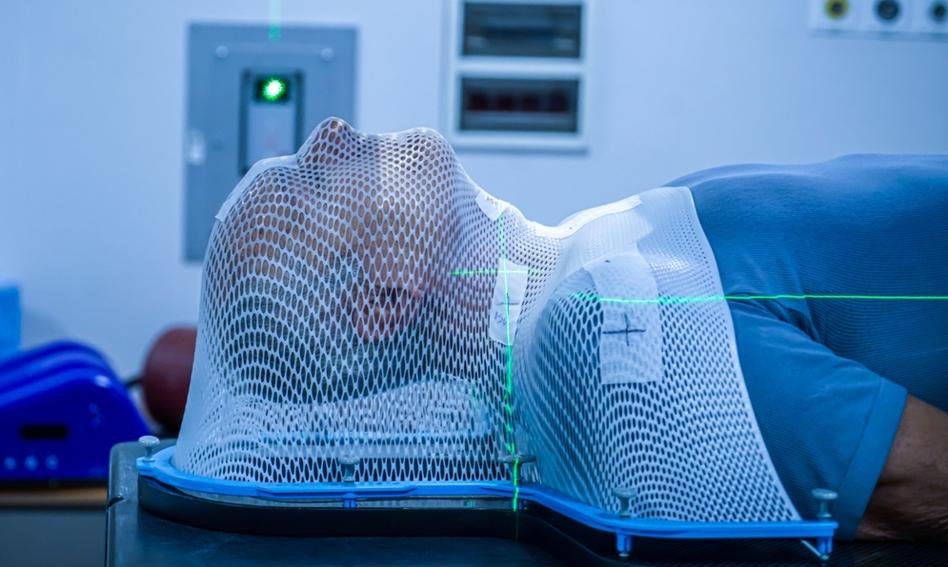
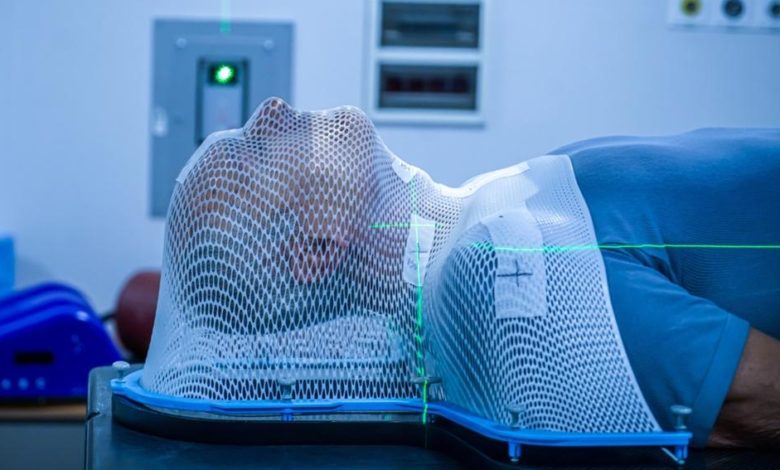
Radiotherapy with a modulated beam intensity (IMRT) is an effective technique of cancer treatment, used in the daily practice of oncological hospitals in Poland and in the world. It allows you to provide a higher dose of radiation to the tumor while minimizing damage to healthy tissues.
For the use of this method, however, a plan of exposure is necessary prepared by a specialist – a medical physics, and accepted by an oncologist, who sets the guidelines for the treatment plan and approves its final version. Due to the constantly increasing scale of cancer, the time of preparing such a plan is increasingly becoming a critical parameter.
Currently used in oncological hospitals, commercial exposure planning systems generate one exposure plan for one treatment cycle.
“Oncologist, when he gets a planning plan from a planner, sometimes improves it for medical reasons and a medical physicist prepares him again. It extends the whole process. It should also be noted that medical physicists are high -class specialists, which is getting harder and harder” – emphasized prof. Ignacy Kaliszewski from the Institute of System Research of the Polish Academy of Sciences.
A potential solution to this problem was found by a team of researchers from the National Oncology Institute in Warsaw, the Institute of System Research of the Polish Academy of Sciences and the Spanish University of Almeria. Scientists have developed a method of simultaneously creating many plans to irradiate the patient in one planning cycle. The proposed method allows you to shorten the time of preparing the final patient's irradiation plan.
The method is based on “multi -criteria optimization”, which allows you to generate solutions of modeled problems, taking into account the criteria with different expiration levels given by people deciding on the course of the process. In this application it is a physicist team.
“In one cycle, the oncologist will receive several irradiation plans. This will allow you to choose the most advantageous version and at the same time shorten the process of preparing the plan, key due to the good of the patient. This is also a facilitation for people involved in the treatment process” – described prof. Kaliszewski.
Individual irradiation plans that will go to the doctor will take into account both the expected results of therapy, but also inevitable side effects.
“Thanks to many plans, the doctor will get a comprehensive picture of the disease. He will know what side effects of radiation therapy can cause, as far as healthy organs may suffer, which version of irradiation will bring the best result in the form of precise destruction of cancer cells,” explained the interlocutor of PAP.
The method was presented in the Informatica letter. It is currently being tested at the Department of Medical Physics of the National Oncology Center in Warsaw led by prof. Paweł Kukołowicz. It is not yet clinically used.
The originator of the solution is prof. Ignacy Kaliszewski from the Institute of System Research of the Polish Academy of Sciences. It is a facility that deals with the use of mathematical and computing methods for all kinds of modeling of social, economic and agricultural issues, as well as related to health care.
“With this idea, I called the National Oncology Center and there was a positive reaction immediately: yes, it is interested in us. However, this is hard work to learn the language used by medical physicists. These are also tasks requiring high computing power, which is provided by a group of scientists from Almeria,” explained the researcher.
Ewelina Krajczyńska-Wujec (PAP)
EKR/ AGT/ AMAC/