The day on which a symbol of Orthodox Christianity collapsed. The 21 -year -old who ended a 1,000 -year invincibility

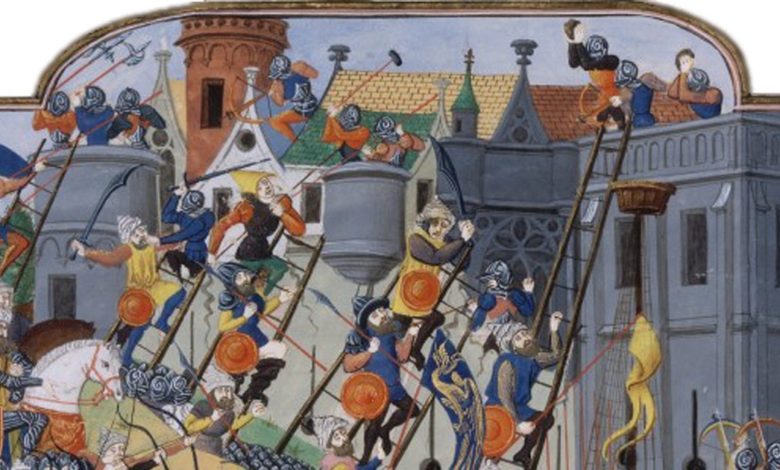
On May 29, 1453, Constantinople, the symbol of eastern Christianity, but also of the old European civilization collapsed. His conqueror, a 21 -year -old, will become one of the most famous Ottoman sultans and an unmoved enemy of Christian Europe.
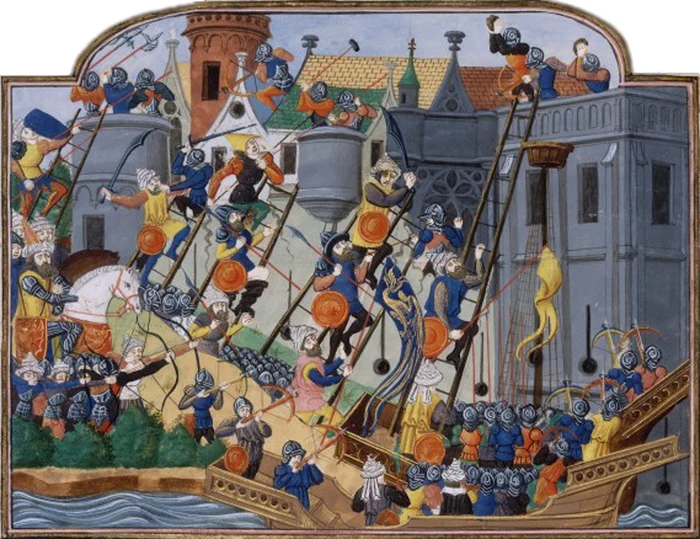
Ottoman siege on Constantinople Photo Wikipedia
At the beginning of the fifteenth century, the city of Constantinople was a religious, cultural and political symbol. In the context of the expansion of the Roman Empire, only its fabulous capital and some adjacent territories remained in the great Byzantine Empire. But even under these conditions, Constantinople was a true jewel of Eastern Christianity, a symbol of the resistance of the Greek-Latin culture and the last relic of the Roman Empire, the civilizing factor of the whole of Europe. However, the days of the last remnant of the Roman imperial heritage were counted. The Ottomans had conquered the whole of Asia, mastered the “holy city”, kneeling Syria, Lebanon, Palestine, Egypt, and marched in the Balkans. It was an impressive power that threatened the whole of Christianity, but first of all Constantinople. One of the most powerful sultans of this Asian empire forced this symbolic city that had been in the coast for too long.
The last imperial redoubt, an inexpugible fortress
The city of Constantinople (no currently Istanbul) was founded by the Roman Emperor Constantin the Great in 324 AD. And it was the capital of the Eastern Roman Empire, later of the Byzantine Empire (in the Middle Ages) for over 1,000 years. Especially during the great invasions, but also of the birth of the oriental media empires, the city suffered many attacks, prolonged sieges, internal riots. Neither attacks nor internal disorders have managed to swallow the great capital of Eastern Christianity. It is said that it has resisted over 13 large sieges, Arabs, Slavs, Vikings, Bulgarians, Avarilor. Due to the impressive walls, the Greek fire and its defenders resisted each time. It was conquered only in the 13th century, during the Latin Crusade of 1204, but rather because of a negligence of the defenders. The city was inexpugable. The location was suitable, surrounded by three large parts and a hard -to -reach interior port.
Access to the port area could be blocked slightly with thick chains, which did not allow any ship to penetrate. In addition, all those who tried were shattered with the help of Greek fire, some tubular devices that threw a strong flammable liquid. It was similar to the napalm, it could not be removed or extinguished. He quickly consumed an enemy ship. There were also his legendary walls. The city was defended by three rows of fortifications built during the reign of Theodosius II (408-450 AD) which protects the terrestrial part of the peninsula occupied by the city. They expanded along the peninsula from the shores of Marmara to the Golden Horn, stretching about 6.5 kilometers. The attackers were forced to pass a 20 -meter width and 7 -meter deep ditch, which could be flooded with water supplied when necessary. The last wall of defense, the last reduction of the fortress, was 5 meters thick and 12 meters high. It was defended by 96 towers from which it could be drawn in light. The towers could support up to three artillery pieces. In order to conquer Constantinople, a conjugated attack, both on land and sea, was needed. By blocking access to the sea, but also due to the structure of the defense system no army had succeeded.
The ambitions of a sultan just out of adolescence
The Ottoman Empire had become a formidable power, which ruled parts of Asia, North Africa and Europe. At the end of the fourteenth century he managed to submit the Serbian peasants and despot, setting up on the Danube. One by one, he dispossessed the Byzantines to their Asian and European possessions, almost isolating them. The crusades against the Ottomans did not bear fruit. At Nicopole (1396) and Varna (1444), the Christian armies were shattered by the Ottoman force. The new Sultan, Muhammad II, reaches the throne in 1451, after the death of his father, Murad II. He was a 21 -year -old, but with an impressive administrative and military experience. Constantinople was the ambition of the young Sultan.
The city was far from the brilliance during the great emperors, but it was a symbol of Christianity, European culture and imperialism. Whoever master Constantinople could truly claim the title of Emperor of Rome, the greatest empire of the world. In order to conquer Constantinople, Mahomed was thoroughly prepared. He made his engineers to repair the roads and bridges from Adrianopol to Constantinople, precisely to deal with the transport of a formidable artillery, something that had not seen the medieval world until that moment. Later, in October 1452, Turakhan Beg ordered, with a strong garrison, the access of despot in southern Greece, Thomas and Dimerios, the brothers of the last emperor of Constantinople, Constantine XI.
In this way, the two vassals of the Byzantine emperor could not jump to the aid of Constantinople. Muhammad II also set to strengthen the fortresses on the other side of the Bosphorus Strait, called Anadolu Hisari, built by his grandfather, Baiazid Lightning. Complementary, he raised other cities on the same side of the Bosphorus precisely to control the traffic to the Black Sea and to block any possible help of the Genoese to Emperor Constantine XI. Constantinople was isolated. The great attack followed.
An Ottoman storm on an abandoned symbol
Informed by the sultan's plans, Emperor Constantine XI made a desperate call to Christian principles and kings. After the crushing defeat from Varna, no one moved a finger. The Hungarians were busy protecting their own borders. France and England were spent by the 100 -year war. Spain was in full war with the Arabs and the Roman-German Empire had internal problems. To all these were added the religious animosities between the Catholic and the Orthodox Church. In conclusion, the Byzantines could not rely on anyone. However, in the aid of Byzantium, the adventurers and Italian states interested in the zonal trade jumped. For example, Cardinal Isidor, funded by Pope, arrived in 1452 with 200 arches. A renowned warrior, from Genoa, Giovanni Giustiniani, arrived in January 1453 with 400 people from Genoa and 300 people from the Genovese Chios.
From the kingdoms of Naples and Sicily, the Gabriele Orsini del Balzo, Duke of Venosa and Count of Ugento arrived in Constantinople, along with 200 napolitan archers. To all these were added a few Venetian ships. In total, according to the Greek history and eyewitness Georges Sphrantzes, 5,000 people. An insufficient number to adequately cover the length of the city walls, approximately 19 km in total. Muhammad II arrived in front of the walls of Constantinople on April 2, 1453. It had between 50,000 and 80,000 people, including the dreaded Iniceri, the elite infantry of the Sultan. However, the most feared force of Sultan Ottoman was the artillery, the army being equipped with large cannons. The largest was 9 meters long and with an opening of the firing mouth of one meter and could launch the 500 kilograms at a distance of a half kilometer. It lasted a lot to charge and cool it and could only pull seven times a day. But his blows were devastating. In addition, he had a lot of small cannons capable of sending projectiles more than 100 times a day. On April 5, Mehmed sent an immediate surrender request to the Byzantine emperor, but received no answer. On April 6, the attack began. Theodosian walls were thrown unspeakable, being transformed into a piece by piece. The defenders could do nothing but respond with artillery fire, but with much smaller cannons, and during the night to cover, with what they started, the walls in the wall. The Ottomans attacked in waves.
Were rejected every time. In addition, they failed to enter the port, because of the chains that block the entrance. The Byzantine defenders received unexpected help from several Spanish and Genoese ships (sent by the pope) who managed to break the Ottoman block and provide supplies to the besieged. Muhammad, angry, commanded to be built a road with rails, where the Ottoman ships were pulled. This ingenious system bypassed the Byzantine chains and launched the ships in the port. They began to bomb the weaknesses of the walls.
A decision that cost the collapse of Constantinople
The Byzantines were lucky. In Asia Minor, taking advantage of the sultan's departure, riots appeared. For this reason, Muhammad offered Constantin an understanding: to pay a tribute and he will withdraw. A strange decision of the emperor followed. Instead of winning time, he refused the offer. Angry, Mahomed has launched an attack of the type everything or nothing. He promised the troops that they would be able to rob and how they would like. On May 29, after an artillery dam, whole waves of Ottoman troops crushed on the walls. The third wave, consisting of the elite troops of the Iniceri, managed to enter the city.
Someone had left a small gate open on a defense section. Arriving in the city, the Inicenii opened the road to the other Ottomans. People fled to their homes to defend their families. The emperor, along with Italian soldiers, fought until the last man. The chaos broke out in the city. Ottoman troops began the killings, rapes and robbery. Part of the inhabitants committed suicide so that they did not reach slavery. Over 4000 people were killed on the spot and another 50,000 sold as slaves. “All day the Turks have made a great slaughter among Christians, throughout the city”wrote the Italian Nicolo Barbaro. “As soon as the Turks entered the city, they began to capture all those who met them. Those who opposed themselves were killed on the spot. In many places the earth could not be seen because of the crowd of corpses.”wrote Makarios Melissenos. Countless art treasures were lost, books were burned and any good containing a Christian message was broken to pieces, including frescoes and mosaics.
O The world has crashed
Constantinople was conquered and included in the Ottoman Empire. His loss represented the conclusion of an era. It was the last connection between the world of ancient Greco-Roman culture and civilization and that of medieval culture. The symbol of Eastern Christianity, but also of European imperiality had collapsed. The Ottoman Empire became the largest force in the Asian and East-European area, a great world power at that time. For Muhammad II, he represented a special prestige, the one who brought the nickname of the “conqueror”. For Christianity, Mahomed's victory was a serious change in his relationships with the East.
Now devoid of both a long -lasting buffer against the Ottomans and access to the Black Sea, the Christian kingdoms were based on Hungary to stop any further expansion to the west. Many modern scientists also agree that the exodus of the Greeks in Italy as a result of this event has marked the end of the Middle Ages and the beginning of the Renaissance. “Therefore, five and a half centuries later, in the whole Greek world, it is still believed to be the most unlucky day of the week. Why the Turkish flag still appears not a crescent, but a month in decline, reminding us that the Moon was in its last quarter when Constantinople finally fell.”says JJ Norwich historian.