
Prof. univ. Dr. Constantin Ciuce, a doctor with a 9.94 note, about the Record Maria review system: “You win the confidence of a patient when you show him that you know what you do professionally and, above all, you know how to stay man!”


The kindness and professionalism of the doctor, the way in which the consultations are carried out, as well as the promptness and the good organization are evaluated by the patients from the Regina Maria health network through a scoring system that contributes to the continuous improvement of the medical services offered. So far, in over 10 years of operation, the network has received over one million reviews that have shown what patients expect from their doctors, on the one hand, but also how doctors can adapt their communication in the office. The feedback received from patients allowed the adoption of those procedures that have increased the quality of the medical act. Doctors from the Regina Maria network detail the specialist's perspective on this system and point out the main lessons they have learned from patients.
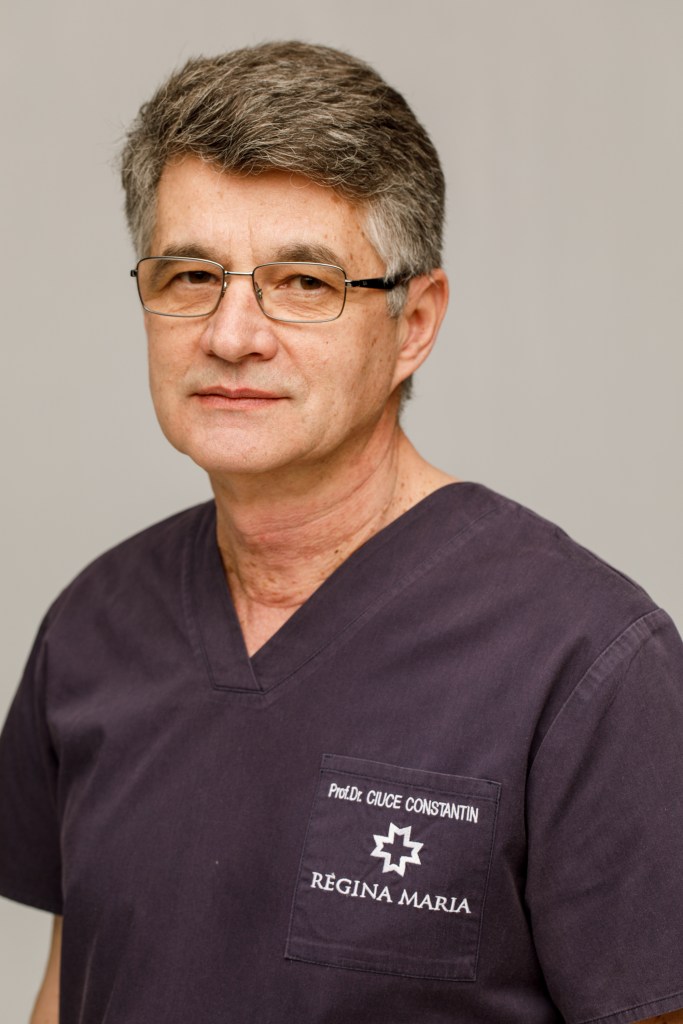
Prof. univ. Dr. Constantin Ciuce (Photo) is a primary doctor of general surgery at Regina Maria Cluj Hospital and has a note 9.94 out of 402 reviews received from patients. The specialty he has and the years of experience have put him in the situation of contact with patients from very different social environments, which made him understand how important communication with patients is, not only to explain a diagnosis, but also to gain their confidence and reduce their fears about disease or treatment.
“If we make this communication in extremely complicated medical language, the patient may become confused, not ask for good sense questions and get to leave a doctor-patient meeting with unmoved things. You have to go down to each understanding level, without forgetting that doctors are people.
Medical experience and human quality
Or, both the patient and his relatives need to understand exactly what it is, related to the respective condition.
According to the teacher, two are the essential criteria when a patient is looking for a surgeon: human experience and quality. “Experience means the things a man has learned from the activity he has performed until then. In the back there is a lot of work. As for human quality, you can be a very good professional, but unable to inspire confidence. Because the way you address a patient, the way you explain the problems, in which he is in the way of his family Trust in that transfer of information.
And human quality means, in the opinion of the specialist, necessarily honesty-that is, the story of things as they are, without creating an overpressure on the patient trying to tell him that the operation he is about to endure is complicated and it is a luck for him that he has reached him and not another doctor, explains the surgeon.
A patient's confidence is, in fact, when you show him that professional, surgical, you are covered for what you are going to do, and human, you know how to remain man, conclude the university.
Cardiologist doctor, listed with note 9.70: “I learned that I should not rush”
Confidence in the relationship with the patient is not simple to win, emphasizes, in turn, assist. Univ. Dr. Anca Simona Tu (photo), primary cardiologist at Regina Maria București, doctor in medical sciences.

Unfortunately, communication is not simple and is not learned at school: “or if learned, it is just theory. And you can empathize with the patient, so that he feels safe and trusting what you say, is not an easy thing. Communication in general is complicated. It is a question, and each one has a question There may be small misunderstandings that are not necessarily related to an inappropriate or diagnostic interaction that are not adequate, but simply to be inadequate expectations with what we receive from the other ”, points out the cardiologist.
Dr. Tu is noted with 9.70 out of 684 reviews expressed in the Regina Maria health network. Each feedback I received represents a step forward: “I learned that I have to speak in the language of each, to try to translate the medical language into a language that is appropriate and to be the meaning of everyone. To give them a lot of time, if necessary. There are patients who need more emotional comfort, more discussions. I have to be patient.
Every feedback received is like a mirror in which we look, adds the specialist: “A mirror that shows us something that goes well, something that can be improved. No doubt no one wants a negative feedback. Without just and maybe we all want to be the best, to be praised, to be great. Negative and not comfortable.
In general, people when they come to the doctor have expectations and they are not necessarily just about diagnosis or a recipe that you can write. But they are related to the way his emotion, his concern are received by the doctor, if the doctor can control things, personalize the treatment and bring him confidence in what is happening and in the treatment he is about to do, ”considers the university assistant.
If doctors do not know how to interact with people, then they are just professionals who can make perfect diagnoses, they can write perfect prescriptions from which, unfortunately, the patient does not understand anything and then do not follow the medical recommendations: “Medicine is not just a science. It also means the art of communication. That patient will come to you.
“To know how to listen to a patient is a valuable thing.”

In the opinion dr. Irina Bârcă (photo), primary ophthalmologist at Regina Maria, in Bucharest, the most important thing learned from reviews was that we are all people and we must have patience, care and understanding each other. “I believe that most feedback this reflects and not only the quality of the medical act, but also the relationship between the doctor-patient, the human side. To know how to listen to a patient is a valuable thing because it helps you to understand the problem better, to explain it better. A patient who better understands the diagnosis that has been made and better understands the treatment scheme, is more responsible, and is more responsible, to the doctor.
The doctor has a note 9.88 out of 3018 reviews. From his own experience, Dr. Bârcă says that most positive reviews referred to complying with the scheduled consultation hours, to the attitude, professionalism, clarity of medical explanations, empathy and open communication on the subject. But, he adds the specialist, he also had negative reviews. One of them was from a patient who believed that the ophthalmologist was in a hurry during the consultation, did not prove any pair of glasses during her and the substantive problem was solved.
The patient also said that, in this situation, she had to return to another ophthalmologist for another consultation. Analyzing this feedback, Dr. Bârcă confesses that she was surprised: “It was probably a fact of communication in fact, in which the patient did not tell me or I could not extract all the information or symptoms for which she had come. And then she was entitled to follow another medical advice, to reach another medical. I can cover or are things I cannot treat, to ask for another medical opinion.
Every critical opinion, an opportunity
The system put into practice at Regina Maria allows the patient to give the doctor a note from 1 to 10 regarding how a consultation went. But the review system is not only reduced to that. Each time he completes the feedback form, the patient notes both the interaction with the doctor and the impression he made from the moment he set foot in the Regina Maria clinic and until he came out of the consultation. The patient offers, among other things, feedback for the kindness of receptionists and nurses, but also for promptness.
“Any grade less than 7 is considered a warning, from our perspective. We even have a system of Red Alerts within the company that involves sending the negative feedback received from the patient to the Customer Experience team. The team is made up of specialists prepared to respond to patients' requests and to deal with their dissatisfaction ”, explains Carmen Cucu, Contact Director Center and Patient Experience at Regina Maria.
Each critical opinion was used by Regina Maria management to improve the quality of medical services and change those inefficient procedures.

The negative reviews from patients also reach Dr. Nirvana Georgescu, quality and safety of the medical act: “Since I implemented the doctors' scoring system, I learned what they like and do not like patients. I have learned that for a patient it is extremely valuable for the doctor to have visual contact with him, to have the attention to him and what he has to take. We had to improve.
It must be said, however, that the positive feedback received from patients are more numerous than the negative ones, says Carmen Cucu: “We are extremely proud that we manage to provide services at the level and even beyond the expectations of patients. Out of 1,000 feedback we receive from our patients, only five are negative.”
Article supported by Queen Mary


