Nicușor Dan awaits “a nightmare mandate” at the Presidency of Romania. The warning of a European publication

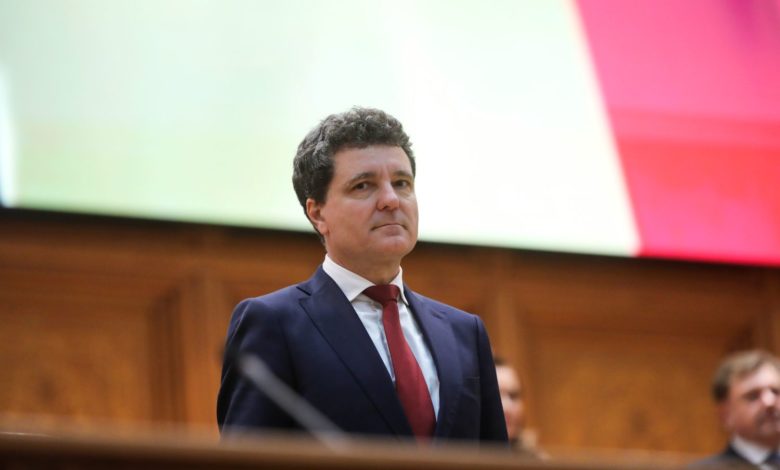
The new president takes the mandate in a critical moment for Romania, against the background of the threat with the relegation of the credit rating, the crisis of the budget deficit and the loss of confidence in democracy, a political analysis shows.
A difficult job awaits the new president of Romania, Nicușor Dan, at a time when the country is facing serious economic problems and disorder.
After overturned all the bets to defeat George Simion in the second round of the presidentials on May 18, Dan must now work on the formation of a new government, through discussions between the pro -European political parties in the Romanian Parliament.
This process, as well as the appointment of a new prime minister, could take several weeks. After being completed, Dan's new government will have a number of very heavy outstanding problems.
The formation of a stable government
Dan said he will work with the pro-European parties in the Parliament, although the largest of them-the Social Democratic Party (PSD)-still analyzes if they prefer to play an opposition role.
Dan wants to nominate as prime minister the popular interim president Ilie Bolojan and to define his priority to reduce the government's budget deficit to 7.5% of GDP.
If the PSD refuses to join a ruling coalition, this objective could be achieved with a minority government, but that would make the new administration less stable, a more risky perspective for nervous investors, writes Politico.
“Romania risks a relegation of the sovereign rating, is under (o) EU excessive deficit procedure and is facing serious confidence in the market,” said Elena Calistru, co-founders and president of Funky Citizens, a civic NGO in Bucharest.
“Dan has to use his newly acquired political capital to facilitate difficult fiscal reforms through a coherent economic team,” he said, quoted by Politico.
This means the nomination of a prime minister who can control a parliamentary majority focused on tax reforms.
“Romania desperately needs to send both the markets and the European Commission to be prepared to implement serious fiscal discipline measures,” added Calistru.
Romania in Europe
With a population of 19 million inhabitants, a massive NATO presence – including what will soon be the largest European basis – and a critical strategic position in the Black Sea, on the border with Ukraine, Romania should be a vital partner for Western interests, especially in Brussels.
Dan told Politico that he wants to play a more “active” role in EU affairs, including negotiating the block seven years.
Unlike his political opponents, he firmly supports the aid for Ukraine and strengthening the autonomous EU defense capabilities, at a time when the United States threatens to take a step back.
“Dan's analytical approach could prove valuable in these complex negotiations, at a time when Eastern Europe is becoming more and more central for European Security architecture,” said Calistru.
“This is also an opportunity to rebuild the credibility of Romania in Brussels after years of tax skids,” she added.
Otilia Nuțu, analyst of public policies at the Think Tank Expert Forum in Bucharest, also told Politico that Romania must have a “stronger voice” in Brussels.
“Romania is a big member state of the EU and we should play a much more active role than we have done so far,” Nuțu said.
“We do not know how long we can count on US support and it is crucial to become a voice to support the European unity. The president must clearly say that the victory of Ukraine in the war is an existential problem for us,” she added.
Romania should put pressure on the confiscation of frozen Russian assets and their transfer to Ukraine to finance defense and reconstruction, Nuțu said.
Restoring trust in democracy
Dan himself said he wanted to revive the confidence of Romanians in democracy, which was already weak and suffered even more after last year's presidential elections were canceled against foreign interference charges.
This task will include combating corruption at all levels, appointing new judges and strong prosecutors and weakening the domination of consecrated political parties, such as PSD and the National Liberal Party (PNL), on the political scene.
The political parties in the country are seen as corrupt and selfish, said for Politico Oana Popescu-Zamfir, former government counselor and expert at the European Council for External Relations.
“Politics in general is seen as something you do if you want to enrich or gain influence; it is not seen as a legitimate job or profession,” she said.
“It remains to be seen how Nicușor Dan could work with the parties, but he did it as mayor. What people notice these days is his huge ability to learn,” she added.
Dan told Politico that there is a “pressure from the society” on the “old political class” to reform his way of functioning after years of failures.
“I think they understood that they had to change something, some important things,” he said.