The war in the shadow continues. What is Iran preparing after the blow of Israel I interview

The attacks of Israel targeting Iran can degenerate into a regional conflict with global implications, but none of the two countries now want a total war, says Foreign Policy Analyst Raluca Moldovan, lecturer at Babeș-Bolyai University.
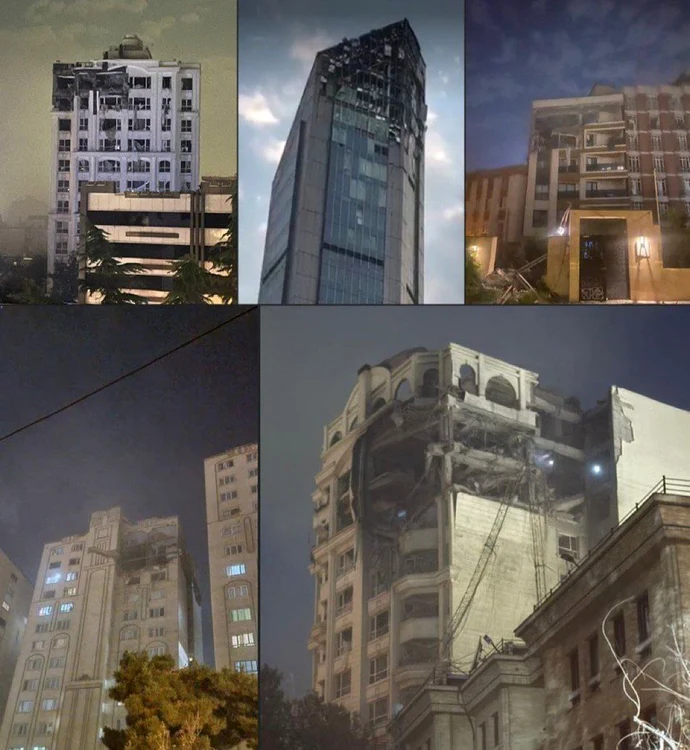
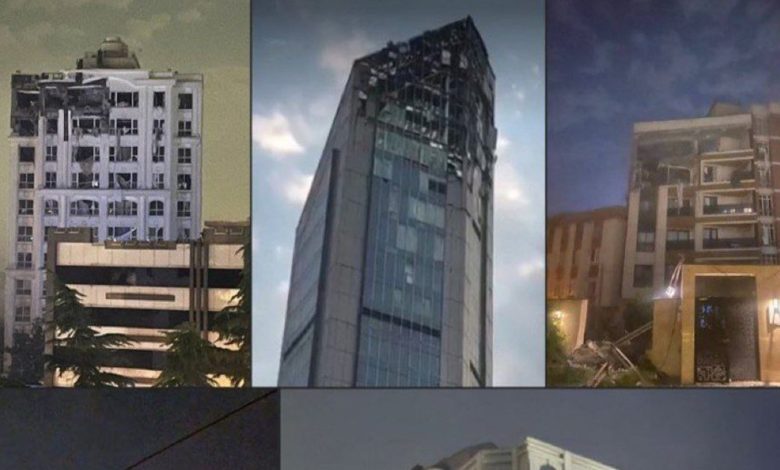
The Israeli army killed at least 20 high -ranking Iranian commanders, photo: X
Israel launched a massive air offensive on Iran on Friday, targeting nuclear infrastructure, missile program and army control structure.
Reuters reports that at least 20 high -ranking Iranian commanders, including the head of the revolutionary guards missile, Amir Ali Hajizadeh, were killed in the attacks.
Iranian Foreign Minister Abbas Araghchi qualified the Israeli attack as “a declaration of war” and “asked the Security Council to approach the issue immediately,” MAE Iranian said in a statement.
Israel has announced that it will close the embassies around the world and warned its citizens to be prudent and avoid displaying Jewish or Israeli symbols in public spaces.
US President Donald Trump urged Iran to conclude an agreement, warning in a post on the SA TRUTH Social platform that he risks an even more brutal wave.
“I gave Iran the chance after the chance to conclude an understanding. I told them, in the firm words,” simply do it “, but no matter how much they tried, no matter how close they were, they simply failed to achieve it.”
Raluca Moldovan, lecturer at Babeș-Bolyai University, specialized in the Middle East, analyzed the conflict for “Adevărul”.
“The immediate effect is additional destabilization”
The truth: What are the possible response scenarios from Iran and what effects could they have on regional security?
Raluca Moldovan: Iran has several options on the decision -making table. A direct response, of state-to-state type, is unlikely at this time, due to the major risks of escalation. More likely, it is an indirect response, through affiliated actors – such as Hezbollah in Lebanon, Shiite groups from Iraq or the Houthi militia in Yemen, although these forces (especially Hezbollah) were quite weak by the recent attacks of Israel, which led to the death of a significant number of leaders of the terrorist group. We will see if these groups will this time have the will and resources to make the game of Tehran.
Another scenario is a calibrated reaction, meant to save the regime prestige, but to avoid an open war. A first signal in this regard was transmitted by Tehran this morning through the 100 drones launched in the direction of the Israeli capital, which did not cause damage, being intercepted by Iron Dome.
Regardless of the option, the immediate effect is an additional destabilization of a region already tense. Countries such as Lebanon, Syria and Iraq become potential indirect confrontation theaters, and maritime security in the Persian Gulf can be significantly affected.
What were the main strategic reasons for Israel to launch this attack on Iran? Has Iran made important steps towards obtaining the nuclear weapon or is the operation meant to stimulate Iran to participate in negotiations?
Israel believes that Iran has exceeded several “red lines” regarding the development of nuclear capacities. In the absence of a functional agreement more or less similar to the former nuclear hill agreed between Tehran and the Obama administration in 2015, which is currently on the agenda of the White House, and of efficient international controls, Israeli services estimate that Tehran could approach dangerously to the nuclear threshold, as the prime minister said this morning to manufacture nuclear weapon.
Last night's attack should be seen as part of the discouragement doctrine and as a message: Israel is willing to act unilaterally if he perceives an existential threat. At the same time, it is also a strategic movement by which Iran is trying to return to the negotiating table from a perceived vulnerability position. In addition, the time chosen is not by chance: the attack has certainly been prepared for some time, and the plan was held in the stand by waiting for a suitable occasion, which came yesterday, when the board of the International Atomic Energy Agency (IAEA) drew attention, for the first time in 20 years, that Iran raped the Treaty.
What impact does this attack have on the balance of power in the Middle East region?
The Israeli action has a double effect: it strengthens the position of force of Israel in front of the regional rivals, but also creates a risk of closer defensive alliances between Iran and other hostile actors, such as Russia or non-state armed groups.
In addition, this attack can endanger the processes of normalization between Israel and the important Arab states in the region (especially Saudi Arabia), and so affected by the continuous war in Gaza, especially if the public opinion in the region perceives the attack as a unilateral aggression – and Oman and Saudi Arabia have already transmitted signals in this regard. Basically, the balance of power becomes more fluid and more volatile.
“Neither Iran nor Israel want a total war”
Is there a risk of escalation in a wider regional military conflict?
The answer is yes. Any attack with significant victims or sensitive objectives in Iran could generate a chain reaction. The region works after a logic of mutual discouragement and symbolic equivalence of losses. An isolated incident can be absorbed, but a cycle of blows and reprisals can degenerate into a regional conflict with global implications.
At the same time, it must be said that neither Iran nor Israel want a total war. Both regimes have sufficient internal and external constraints that cause them to carefully calculate the risks. Despite the statement of Prime Minister Netanyahu (for whom the created situation is a precious mouth of oxygen, given the strong domestic and external challenges) that Israel is prepared for a prolonged war with Iran, it would be extremely different from an urban guerrilla war against some Hamas type. Netanyahu's selfish political calculation is to remain in power at any price, and this attack must be understood in this key, but I do not think that Israeli society can accept a new prolonged and bloody war to serve the interests of political leaders whose judgment has led to controversial decisions after the October 7, 2023 attack.
The situation of the Tehran regime is also difficult, especially from an economic perspective, and the frequent reprisals against the opposition of any kind increase the tensions and internal contradictions. An prolonged war would further affect the economy of Iran, and human losses would undoubtedly be imputed to Ayatollah and to those in the lead.
“The United States will try to avoid regional escalation”
How would you qualify the reaction of the main international actors – USA, Russia, China – to this attack?
The United States, traditionally allied with Israel, will probably support its right to self -defense, but will try to avoid a regional escalation that could involve the American forces in the area. Washington has a clear interest in maintaining the stability in the bay and keeping pressure on Iran, without triggering a war. The statements so far come from the Trump administration (especially through the voice of Secretary of State Marco Rubio) are rather cautious, without expressing open support for Israel or Netanyahu (with whom President Trump has had some more tense discussions lately on the resumption of negotiations with Iran). Rubio stressed that the US was not involved in the Rising Lion operation, the code name of the attack last night.
Russia, in full strategic partnership with Iran, will probably condemn the attack and use it rhetorically to emphasize the double Western standard by drawing a parallel to the situation in Ukraine. China, who recently played the role of mediator between Iran and Saudi Arabia (a PR victory, more than a real agreement to normalize relations between Tehran and Riyadh), will reaffirm its position of active neutrality, demanding and dialogue, without directly involved, as Beijing has often done so far.
What significance did Israel targeted in Iran have? Were strategic or symbolic goals hit?
The preliminary information suggests that installations associated with the ballistic program have been hit and possibly the command and control infrastructure from locations such as Natanz and ISPAHAN. If confirmed, this indicates a strategic target, in order to degrade the offensive capabilities of Iran. It seems that civil, dual, military and civilian, Tehran purposes were hit. The fact that the important members of the leadership of the revolutionary guards, such as Hassan Salami, the chief commander of the organization, Gholamali Rashid, the commander of the Khatam-Al, Mohammad Bagheri, the chief of the Iranian army, together with a number of scientists involved in the Nuclear Program, represented so much, Strategic, as well as successful image of Israel, which shows the level of extreme planning of the operation.
On the other hand, any attack near sensitive centers or symbolic value facilities (such as nuclear research or locations in Isfahan or Natanz) also has a psychological dimension – the transmission of a direct message to the Iranian regime and the public opinion in the region.
The attack is part of the so-called “War in the shadow”
How does this attack fall into the context of historical tensions between the two countries?
Israel and Iran have been in a latent conflict for more than four decades, from the establishment of the theocratic regime in Tehran after the success of the Islamic Revolution of 1979. Rivalry is fueled by both ideological and geopolitical calculations: Iran wants an area of extended influence in the Lent. strategic threats from the Tehran and its network of allies. The attack is part of the so-called “shadow war”, mostly worn through clandestine operations, cyber attacks and punctual blows. The difference is that this episode has a higher degree of visibility and risk, approaching an open confrontation by which the Tehran, by pursuing the purpose of making a nuclear weapon, wants to annihilate what the supreme leader, Ayatollah Ali Khamena, frequently appoints the Zionist entity. Undoubtedly, Israel perceives this as an existential threat to it, so we can expect the Rising Lion operation not to be the last of this type.