2025-05-24 18:00
publication
2025-05-24 18:00
In countries where social inequalities are the largest – teenagers believe that they will achieve more than their parents. Completely in spite of the so -called The Great Gatsby curve – show research in “Science” with the participation of a Pole.
It is known in economics that the greater the social inequalities in a given society, the harder it is to climb to the top of the social ladder. This phenomenon even gained the name of the “Big Gatsby curve”. It is about the title hero of F. Scott Fitzgerald's novel. The hero of the book was quickly enriched, and was not accepted by the higher spheres, because the social structures were strongly recorded. “In Poland it would be more convenient to talk about the” Wokulski Krzyż “” – jokes the co -author of the study, prof. Artur Pokropek from IFIS Pan and IBE-PIB, referring to a journey around the social ladder of the hero of Prus's “Doll”.
15-year-olds were asked to estimate their family's current position in the social hierarchy in the country on a scale of 1 to 10. They were also asked to indicate a place where they expected to find in this hierarchy up to 30 years old. They were also asked about competitions performed by parents and their professional expectations at the age of 30. The results of the work conducted by Francesca Borgonovi from the University College of London and Artur Pokropka appeared in “Science”.
The authors of the work analyze social mobility, i.e. the process of movement of individuals or groups within or between social layers (assuming that talents are evenly distributed in social and demographic groups). “Social mobility indicates whether society offers equal opportunities for economic and social success regardless of where someone starts from” – we read in the publication in “Science”.
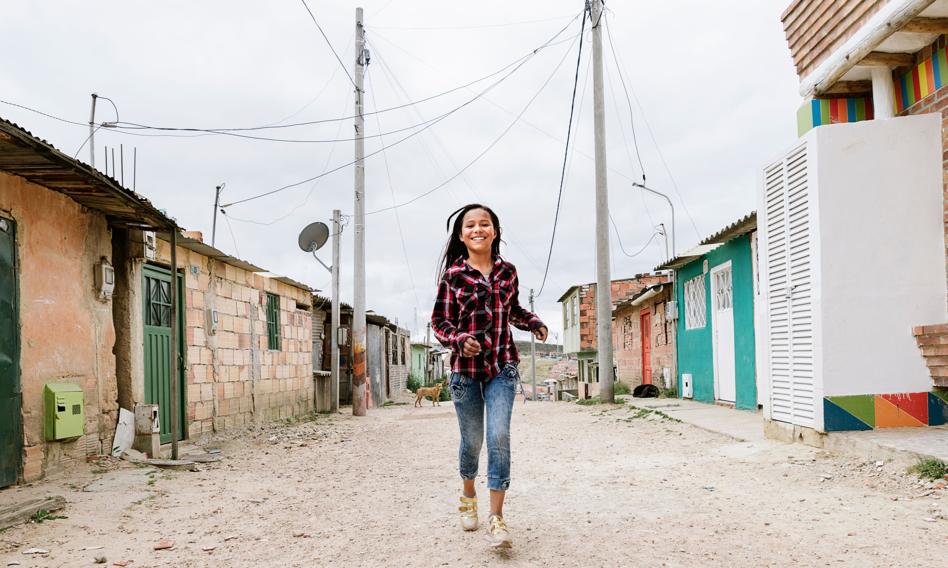
From a survey conducted among less than half a million 15 -year -olds from 57 countries – as part of a PISA study – it can be concluded that young people are nothing from the so -called They do not do the Gatsby curve. Their hopes go even across this curve: In countries where social inequalities are the largest (e.g. South America) – teenagers most often believe that they are able to earn much more than parents. In countries where social inequalities are smaller (Scandinavia), optimism about jumping on the social ladder is not so strong. Faith in “American Dream” is therefore the strongest in countries where it is difficult to realize.
Interestingly, most respondents indicated their place in the hierarchy of about 7 points (the average answer is 6.8), although according to the normal distribution it should be 5. And this means that young people usually assessed their position in the hierarchy better than it really looked.
Researchers in “Science” point out that In a society with greater economic inequalities, there is a stronger belief that talent and effort are rewarded, regardless of what place you startthan in more economically equal societies. Therefore, in countries with greater economic diversity, “young people usually put more emphasis on education as a path to success.” “Such a perspective can strengthen faith in social mobility as a way of supporting the existing order and this way legitimizes existing unevenness,” wrote scientists in the publication.
Prof. Pose explained that Poland is located more or less in the middle of this scale. Both when it comes to unevenness, promotion possibilities, as well as hopes for jumping on a ladder.
“The effects of such youthful optimism can be twofold, depending on what this optimism will come across. Some actually, thanks to their hope and hard work, will achieve these higher positions. But in some unfulfilled hope they collide with reality and it will give birth to frustration and problems,” commented prof. Sprinkling.
“It is up to us, voters, politicians and community members whether we will allow this promotion and how this youthful optimism will pay off. In my opinion, it is important that the policies are so shaped that people from different social zones will enable the implementation of themselves, and thus opening society,” the sociologist assessed.
Ludwika Tomala (PAP)
lt/ zan/ jpn/