2025-05-25 12:00
publication
2025-05-25 12:00
The risk of forest fires will double until 2100 – scientists warn in the report of the Scientific Council of the European Academy. As they explain, this is the result of, among others climate crisis, depopulation of rural areas and changes in the use of land.
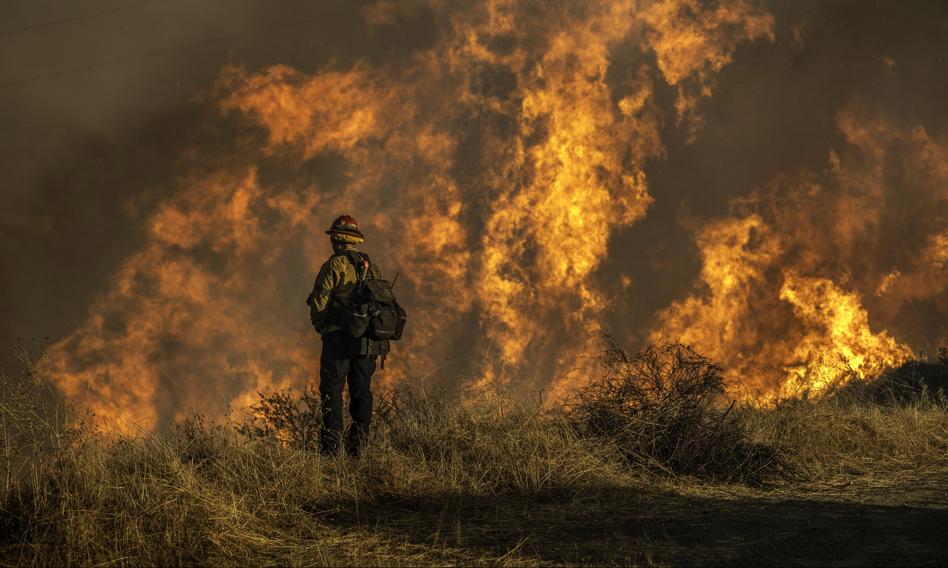
As reported in a message sent on Tuesday from the Polish Academy of Sciences (PAN) to PAP, the “Changing Wildfires in Europe” report (changing forest fires in Europe) was prepared by 23 scientists of the National Academy of Sciences, including the Polish Academy of Sciences. “It is forecasted that drought and decreasing summer rainfall will double the risk of fires by 2100,” the authors of the report pointed out.
“In many regions of Europe we are observing a rapid increase in the number of many years of drought, which leads to an increase in the risk of extreme fires,” said the environmental director at the Scientific Council of the European Academy (European Academies' Science Advisory Council, Easac) Thomas Elmqvist.
He added that Europe must learn to live with fires. “More than twice as many urban areas in Europe are threatened with fires than in North America and Asia. Already forest fires in the EU consume an average of half a million hectares a year – almost twice as much as the surface of Luxembourg,” he said.
EASAC criticizes the current EU policy in which the extinguishing of fires dominates, instead of preventing them.
“Fire extinguishing is not enough. We must remove source causes, fight climate change, invest in fire resistant landscapes and engage society in life with fire,” emphasized the co -chairman of the Easac Working Group, quoted in the announcement, Dr. Cathelijne Stoof.
Scientists are calling for immediate implementation of climate policies, including a new EU law on the reconstruction of nature, and to take into account the risk of fires in plans to protect biodiversity and afforestation. According to experts, it is also necessary to educate society in terms of resistance to fires.
Several political recommendations for the EU were formulated in the study. According to them, European countries should, among others Invest in integrated fire risk reduction, use solutions based on nature (e.g. afforestation with native species) or promote the compact urban development to reduce the growth of areas of the contact of cities with wild areas. Researchers also recommend balanced private land management and supporting land owners in implementing fire -resistant practices.
As noted in the document, the greatest risk of fires in Europe applies to the Mediterranean area, but also continental, alpine and Boreal regions (located in the north of the continent) must prepare for a new era of such disasters.
“We must promote intelligent landscape management, engage communities and integrate politics, science and technology to adapt effectively,” summed up the co-author of the report Dr. Claudia Berchtold from the German Society Fraunhofer (German Fraunhofer-Gesellschaft) focusing 76 research institutes.
The report is available (in English) on the EASAC (Easac.eu/) website.
The Scientific Council of the European Academy has been the Association of the Academy of Sciences from the European Union member states as well as Norway and Switzerland existing since 2001. It also belongs to the Polish Academy of Sciences. EASAC is developing popular science reports and publications on topics related to, among others with energy and environment, he also prepares recommendations for EU countries and EU institutions. (PAP)
Abu/ agt/