
The EU decided that only 4 countries around the world are in “high risk” of deforestation. What are the 2 in Europe

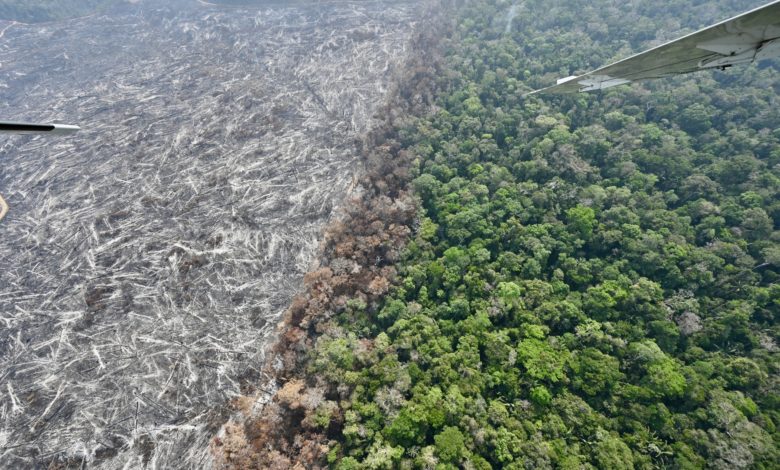
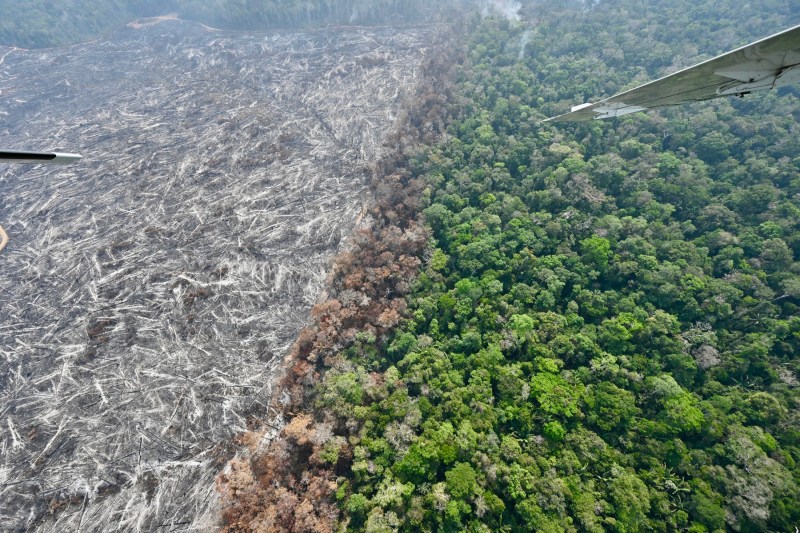
Trees burned in the Amazon forest to make room for agricultural land, photo: Evaristo SA / AFP / Profimedia Images
The goods from only four countries will be subject to the strictest controls based on the law of the European Union on combating deforestation, while large forest nations such as Brazil and Indonesia will be exempted from the hardest rules, announces Reuters.
In a legal act published on Thursday, the European Commission announced that the law will classify imported goods from Belarus, Myanmar, North Korea and Russia as “high risk” to feed deforestation.
Countries such as Brazil and Indonesia, which have been historian among those with the highest deforestation rates, will be labeled as “standard risk” – which means that they will be subjected to less strict compliance checks for goods exported to Europe.
The United States is among the countries labeled as “low risk”, thus being subject to less demanding diligence rules.
The EU law will be applied for imports of soy, beef, palm oil, wood, cocoa and coffee, as well as for some derivatives, including leather, chocolate and furniture.
Companies in high risk and standard risk countries will have to show when and where the goods were produced and provide “verifiable” information that they have not been grown on cleared land after 2020.
A key difference between categories is that EU Member States will be obliged to carry out compliance checks covering 9% of companies that export from high-risk countries, 3% of standard risk countries and 1% of low risk.
Failure to comply with the law could lead to fines of up to 4% of the turnover of a company in a EU Member State.


