How Trump is trying to recover the land lost in the production of chip / a risky strategy in front of Asian domination

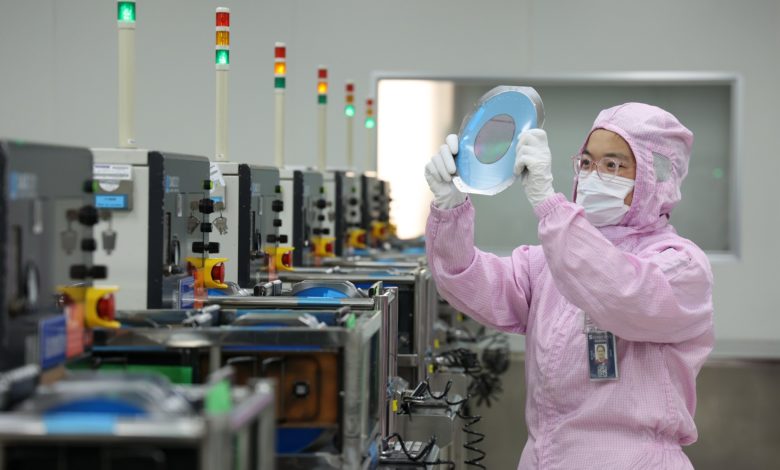
Over the years, the US “escaped the ball in hand” in terms of chip production, which allowed China, but also to other Asian centers to advance quickly. It is the expression of Gina Raimondo, former secretary of the US Chamber for Commerce, in an interview with in 2021, according to BBC.
Four years later, chips remained a battlefield in the US-China race for technological supremacy, and US President Donald Trump wants to accelerate an extremely complex and delicate manufacturing process, which in other regions required decades to be perfected.
Trump claims that his tariff policy will release the US economy and bring home jobs. But reality is a little more complicated. In the sense that some of the largest American companies have long experienced the lack of skilled workers and poor quality products made in US plants.
So what will Trump do different? And, given that Taiwan and other Asian regions have the “secret ingredient” for the manufacture of high precision chips, is it realistic for the US to produce them and, above all, on a large scale?
Microchips, secret ingredient
Semiconductors are essential to feed everything, from washing machines to iPhone, from fighter to electric vehicles. These tiny silicon plates, called chips, have been invented in the US, but today the most advanced are manufactured in Asia, on an impressive scale.
Their manufacture is expensive and extremely technologically complex. For example, an iPhone can contain chips designed in the US, manufactured in Taiwan, Japan or South Korea, using raw materials such as China.
Then the chips can be sent to Vietnam for packaging, then in China for assembly and testing, before reaching the US. It is an extremely integrated ecosystem, developed over the decades.
Trump praised the chip industry, but also threatened it with customs rates
The US president told the leader of the chip industry, Taiwan Seconductor Manufacturing Company (TSMC), that he will have to pay a 100% fee if he does not build factories in the US.
And in such a complex and competitive ecosystem, companies must be able to plan their long-term investments and costs, beyond the duration of a Trump administration. Constant policy changes do not help. However, some companies have started to invest in the US.
Incentives for companies investing in the US
This idea was the basis of Chips and Science Act, a law promulgated in 2022 under President Joe Biden, an attempt to restore the production of chips to the US and to diversify supply chains, through grants, tax reductions and subsidies to stimulate domestic production.
Companies such as TSMC, the largest chip producer in the world, and Samsung, the largest smartphone manufacturer, were large beneficiaries of this legislation. TSMC received grants and loans worth $ 6.6 billion for factories in Arizona, and Samsung received about $ 6 billion for a unit in Taylor, Texas.
TSMC has announced additional investments of $ 100 billion in the US under Trump, in addition to the 65 billion already promised for three factories. The diversification of chip production also benefits TSMC, given China's repeated threats to take control of Taiwan Island.
Despite Trump's threats, TSMC keeps most of his production in Taiwan
But both TSMC and Samsung have faced challenges, including huge cost increases, difficulties in recruiting specialized labor, construction delays and opposition from local unions.
“It is not a regular factory where you assemble boxes. Chip factories are high -tech sterile mediums and require years of construction,” said Marc Einstein, research director at Counterpoint company for BBC.
And, despite investments in the US, TSMC said that most of its production, especially that of the latest chips, will remain in Taiwan.
In addition, restrictive immigration policies could make it difficult to attract talents from China or India, a problem even recognized by Elon Musk, a visa supporter for qualified workers.
Chips as a negotiation currency
Chip companies are not completely at the mercy of the tariffs. The huge addiction to American giants like Microsoft, Apple and Cipuri Cisco could put pressure on Trump to give up the taxes in this sector.
Some believe that the intense Apple CEO, Tim Cook, has obtained the exemption of phones, laptops and electronics from the imposed rates, and Trump would have raised the ban on Nvidia to China as a result of this lobby.
Einstein believes that, finally, Trump seeks to negotiate an agreement. He and his administration know that they cannot “simply build a bigger building” to solve the problem.
A global fight for the future
Even if the US is trying to rebuild its chip industry, other emerging centers, such as India, could take advantage of opportunities faster: cheap labor, solid education and geographical proximity to Asia.
Meanwhile, China invests massively in research and development to maintain its technological advance, and companies like Huawei are facing emerging markets in Europe, Asia and Africa.
Although Trump bet on protectionism to stimulate domestic production, the Asian model lesson remains clear, the development of a competitive industry of semiconductors cannot be done in isolation, but only by cooperation in a globalized economy. And to reach Asia's excellence level, it will take a lot of time and consistent investments.