The issue of limiting children's access to social media is raised all over the world. Australia has introduced a minimum age of 16 to register accounts on some social networking sites, which will enter into force later this year.
In accordance with the content of the document that Politico reached, some Member States want Brussels to go even further and establish General age of digital age. Minors would need the parents' consent to log in to social media. In other words – children could not automatically access any of the most popular applications, such as Tiktok, Instagram and Snapchat.
The proposal is to be discussed by the ministers of the digitization of EU countries at the beginning of June. Denmark, which is preparing to take over the rotational six -month presidency in the EU Council, has already committed to take appropriate actions in Brussels.
Continuation of the material under the video
“Protection of our children on the Internet will be a key priority of the upcoming Danish presidency in the EU,” said Caroline Stage Olsen, a Danish minister for digital matters. Pemier Mette Frederiksen has already said that she was supporting the ban on the use of social media by People under the age of 15.
On Thursday, the proposal was sent to other member countries along with a request for support before the council meeting, as the EU official familiar with the trial tells us.
This action shows that European capitals are not satisfied with the pace at which Brussels regulatory authorities take action. Therefore, individual countries join forces to prevent children from spending too much time in front of the screen. Protection of minors against damage and threats on the Internet “requires joint activities at European level“, as we read in the application.
This move is a consequence of the annual efforts of French President Emmanuel Macron. – We must regain control of the lives of our children and teenagers in Europe and impose digital adults at the age of 15, not earlier – he said in April 2024, using the expression “digital adult” as a legal definition a century below which children should be banned from certain behavior on the internet.
It may take many years before the industry takes action
For now, the European Commission is working on some funds in connection with the already applicable regulations, such as the act on digital services, which sets out the rules regarding the functioning of Internet platforms.
The proposal, however, assumes that the EU will go much further – introducing compulsory, built -in age verification and parental control On devices, as well as “European standards” to minimize the so -called persuasive architecture. They include functions such as self -consumption, personalization and pop -up windows that are aimed at increasing the attractiveness of the application and stopping users for longer.
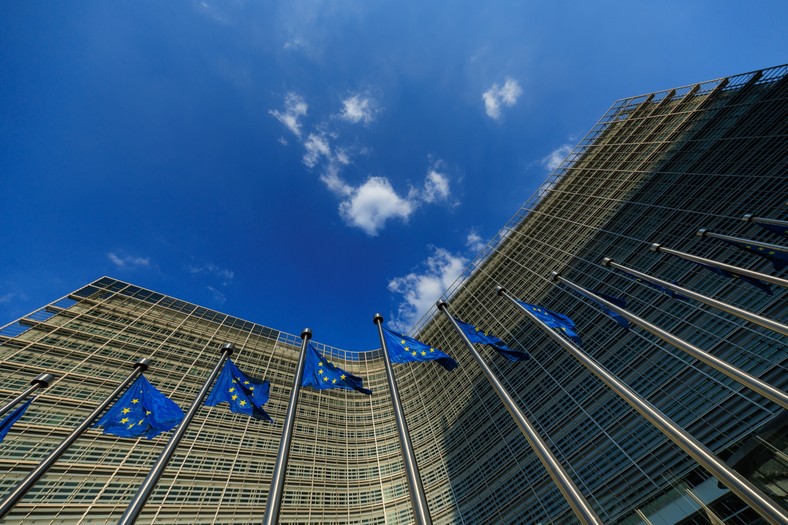
Christophe Licoppe / Shutterstock
The headquarters of the European Commission in Brussels
The document suggested that age verification takes place at the level of devices, which will probably be opposed by companies such as Apple and Google. Internet platforms, primarily the finish line, are lobbying with solutions at the level of devices or applications stores, while owners of stores with applications and operating systems claim that solutions should appear at the level of devices. This difference of sentences means that according to supporters of the regulation It may take many years before the industry takes significant actions.
None of the social media platforms with which we contacted for the needs of this article – Tiktok, Meta, X and Google – She did not answer the request to comment on the proposal.
France has already adopted funds aimed at blocking access to social media for children under 15 in 2023, although They have not yet been fully implemented. Clara Chappaz, the minister of digitization, has been conducting a campaign in recent months aimed at involving other countries in activities at EU level.
The Greeks from whom the proposal came out of a similar campaign, although In their opinion, the total ban will not workas Prime Minister Kyriakos Mitsotakis said. Instead, they want to focus on verification of age and requirement from the designing platforms of their services with a view to minors, avoiding addictive functions. As a result, many suggestions contained in the application are general.
The application was signed by Chappaz, the Greek minister of digitization Dimitris Papastergiou and the Spanish minister of Oscar Digitization Lopez Agueda. These three countries were also selected to test the application for verification of the age developed by the Commission, which Politico has already informed.
I’m Ashley Davis as an editor, I’m committed to upholding the highest standards of integrity and accuracy in every piece we publish. My work is driven by curiosity, a passion for truth, and a belief that journalism plays a crucial role in shaping public discourse. I strive to tell stories that not only inform but also inspire action and conversation.